
U.S. forces operating at Prince Sultan Air Base in Saudi Arabia have deployed a Ukrainian command-and-control counter-drone platform called Sky Map in recent weeks, and Ukrainian specialists have been on site to train American personnel in its operation, according to five people familiar with the matter. The installation and training have not been previously disclosed.
Sky Map is a software dashboard used widely by the Ukrainian military to consolidate inputs from radars and sensors, provide map and video feeds, detect incoming aerial threats - including Iranian-developed Shahed drones - and coordinate counter-attacks using interceptor drones. The platform was developed by Sky Fortress, a Ukrainian company launched in 2022 by engineers with links to Ukraine’s military who previously deployed acoustic sensors to detect Russian drone activity, one person with knowledge of the company said.
The appearance of Sky Map at Prince Sultan signals how Ukrainian counter-drone innovations that have been refined during the conflict with Russia are now being applied elsewhere, as the U.S. seeks to blunt assaults that have damaged infrastructure and aircraft at the base and caused casualties among service members. Prince Sultan sits roughly 400 miles (640 kilometers) from Iran and has been target to repeated drone and missile waves since the onset of the regional conflict.
Ukrainian military officials arrived at the Saudi base in recent weeks to provide hands-on training to U.S. warfighters in use of the platform, which synthesizes data from disparate sensors to identify threats and help coordinate responses. Sky Fortress developed Sky Map as part of a broader suite of counter-drone tools after receiving funding from the Ukrainian military’s innovation unit, Brave1, the person said.
The Pentagon has been increasing investment in counter-drone capabilities, driven in part by the prominent role cheap, mass-produced drones have played in Russia’s operations in Ukraine. Last month the Pentagon’s counter-drone unit announced a $350 million commitment to strengthen defenses in support of Operation Epic Fury. Adam Scher, a spokesperson for the unit known as Joint Interagency Task Force 401, said the unit was supplying a range of new technologies, including sensors, cameras and interceptors, adding that "There is no 'silver bullet' tool that will stop every drone threat."
In addition to Sky Map, Prince Sultan has hosted other counter-drone technologies during the recent period of heightened attacks. Sources said Merops interceptors - winged counter-drone systems developed by Project Eagle, a U.S.-based firm backed by former Google CEO Eric Schmidt - have been employed at the base. Officials reported some early testing challenges: during a recent test a Merops interceptor lost control and crashed into a toilet block on the base, two people with knowledge of the test said.
The base has also relied on longstanding command-and-control tools, including Northrop Grumman’s Forward Area Air Defense (FAAD) platform, which aggregates tracking data to help defend against a range of incoming threats from mortars and rockets to drones, according to three sources. For short-range drone interception the base has largely used Coyote interceptors made by RTX, two sources said. Those winged systems can be deployed as one-way attack drones carrying warheads or configured with microwave payloads intended to disable adversary drone electronics.
A spokesperson for Northrop Grumman said the FAAD system "is consistently dependable in theater today and we are confident in the competitive advantage FAAD provides to the warfighter." Chris Johnson, a spokesperson for RTX, said the Coyote interceptor has "proven highly effective, defeating hundreds of aerial threats during combat operations." A spokesperson for Project Eagle declined to comment. Sky Fortress declined to comment. Central Command, which oversees Prince Sultan, also declined to comment.
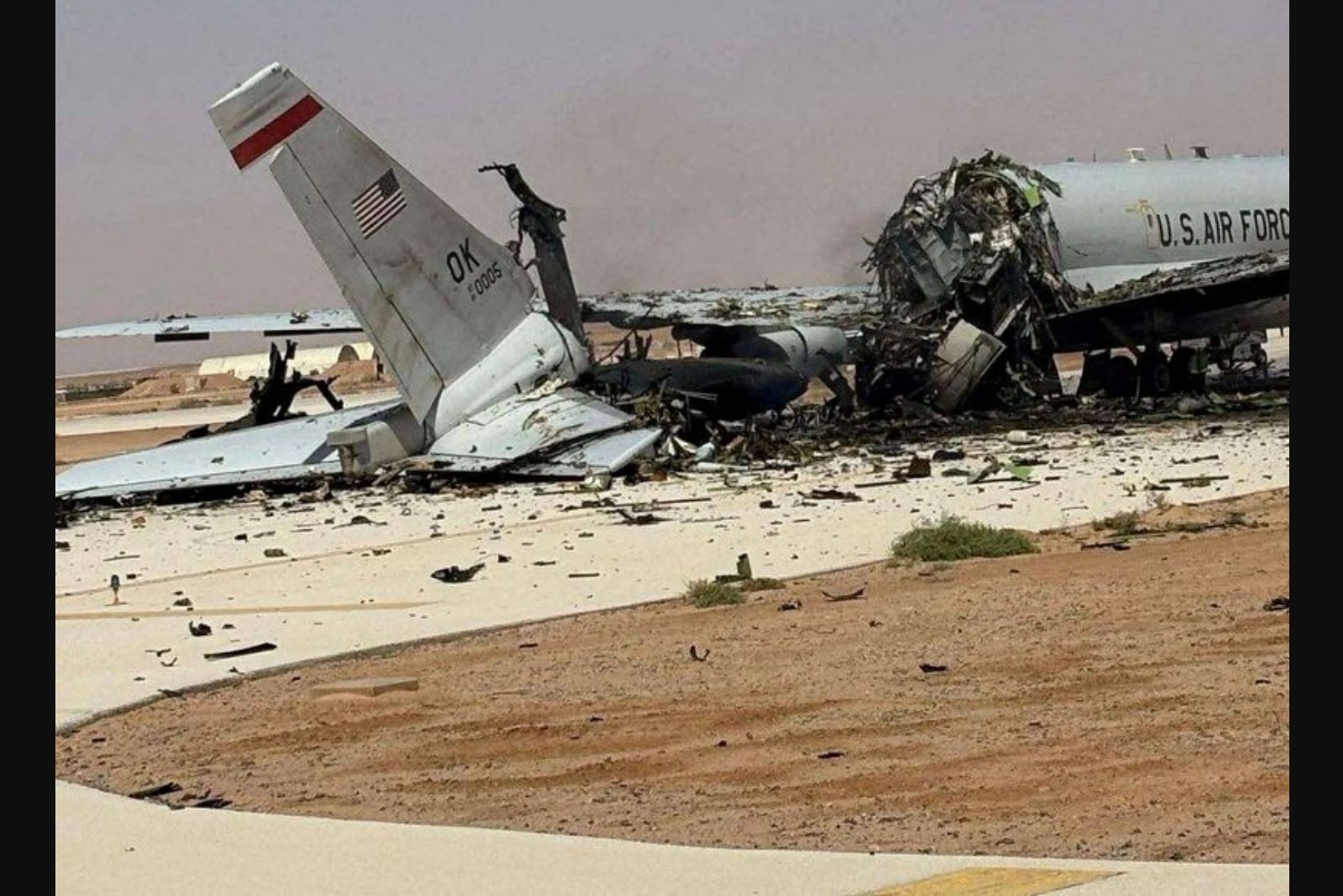
Prince Sultan has experienced a string of damaging strikes in recent weeks. One attack destroyed an E-3 AWACS airborne radar platform on March 27, while other strikes damaged multiple KC-135 refueling tankers. In another incident a tent thought to be sheltering a radar system that supported the base’s THAAD counter-missile battery was destroyed. The assaults have prompted a stepped-up search for workable layers of detection and interception technology.
The U.S. adoption of Ukrainian counter-drone software follows a public exchange in which President Donald Trump rejected assistance offered by Ukrainian President Volodymyr Zelenskiy to help counter Iranian drone strikes. On March 6, President Trump told Fox News, "We don't need their help in drone defense." The Sky Map deployment at Prince Sultan occurred about a month after that public assertion.
Analysts say that the situation at Prince Sultan exposes persistent gaps in U.S. air and missile defense coverage worldwide. Timothy Walton, a senior fellow at the Hudson Institute, said, "There's been longstanding gaps in U.S. air missile defense coverage around the world. This has been well understood. However, it hasn't been addressed." The presence of Ukrainian systems at a key U.S. base underscores both the urgency of filling those gaps and the practical appeal of technologies that have been battle-tested on the front lines of Ukraine’s conflict.
Officials involved in fielding new defensive measures acknowledge trade-offs and complexities. Counter-drone operations typically involve layered systems - sensors, command-and-control platforms, and interceptors - rather than a single universal solution. The testing incidents at Prince Sultan, including the Merops crash, illustrate integration and reliability challenges that arise when introducing new hardware and software into active defense networks.
As the Pentagon continues to allocate funds and field new tools to guard against drone threats, the mix of U.S. and allied technologies on bases such as Prince Sultan will be watched closely by military planners and defense contractors. For now, Sky Map’s deployment, Ukrainian trainers on site, and the testing of a roster of interceptors and sensors demonstrate a pragmatic approach: leveraging available, proven tools to address a persistent and evolving threat environment.
Key points
- Ukrainian Sky Map command-and-control software has been deployed at Prince Sultan Air Base and Ukrainian personnel have trained U.S. forces in its use.
- Prince Sultan has experienced multiple drone and missile strikes that have destroyed aircraft, damaged tankers, and killed at least one service member, prompting a search for layered counter-drone defenses.
- Pentagon counter-drone investments include a $350 million commitment and a portfolio approach of sensors, platforms and interceptors; systems at the base include FAAD and RTX Coyotes as well as Merops interceptors.
Risks and uncertainties
- Persistent gaps in U.S. air and missile defense coverage leave key facilities vulnerable to drone and missile strikes - a concern for defense and aerospace sectors and for base operations.
- Early testing issues and integration challenges, such as the Merops interceptor losing control and crashing during a trial, create operational and reliability uncertainties for deployed counter-drone systems.
- Political friction over foreign assistance - exemplified by public statements rejecting external help - could complicate operational decisions on adopting allied technologies, affecting procurement and deployment timelines in the defense sector.