
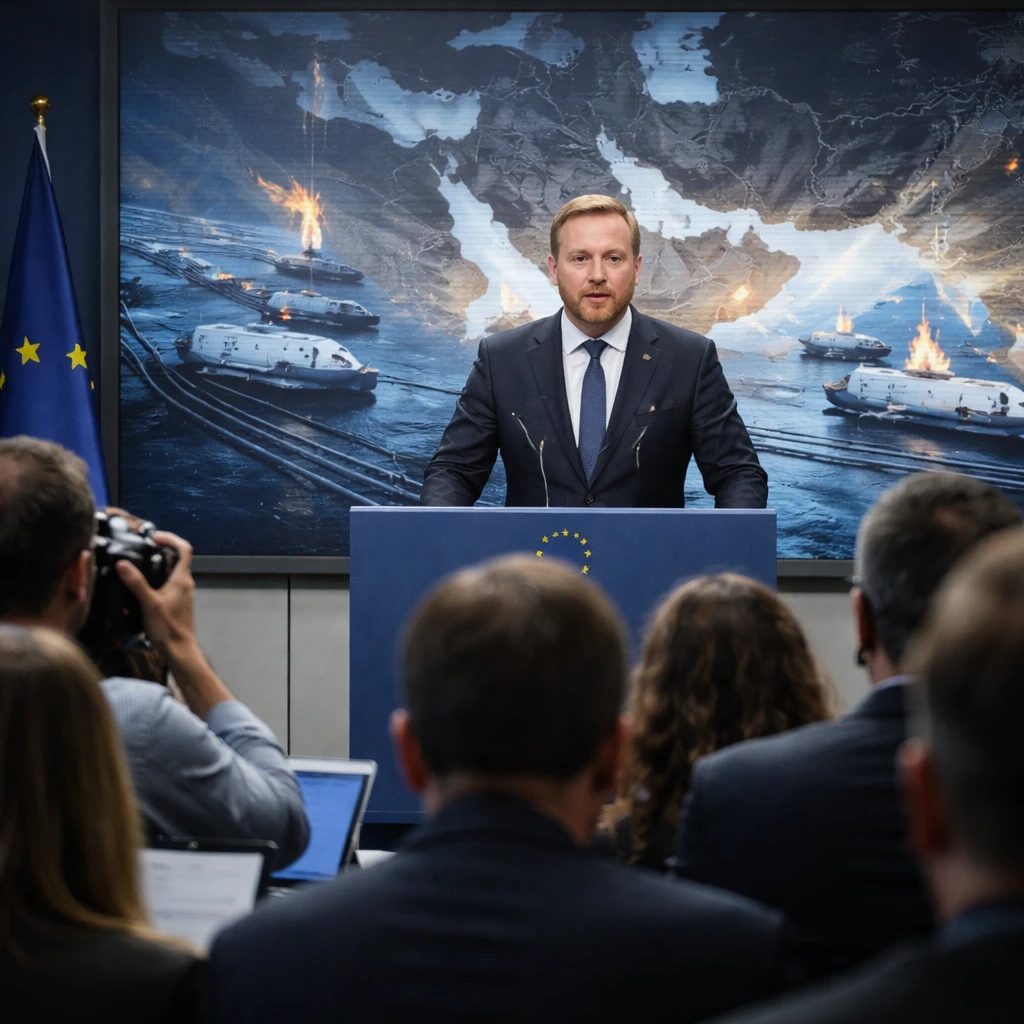
European Energy Commissioner Dan Jorgensen issued a stark warning on Tuesday about the state of global energy markets, saying that the outlook remains bleak even under the most favourable circumstances. He linked the ongoing disruption to the U.S.-Israeli conflict with Iran and suggested that the resulting strain on supplies could drag on for an extended period.
At a news conference, Jorgensen drew a direct comparison between current conditions and the combined severity of the 1973 and 2022 energy crises, noting that the environment may remain difficult for months or potentially years depending on how events unfold in the Middle East. That comparison underscores the scale of the challenge facing energy markets today.
The commissioner stressed that a rapid return to normal market conditions is unlikely, even if a peace agreement were reached immediately. He pointed specifically to Qatar's gas production and transport infrastructure, saying it would take approximately two years or longer to rebuild. That timeline, he said, limits the potential for quick relief to supply constraints.
On pricing, Jorgensen stated that global liquefied natural gas - LNG - prices are not expected to stabilise or decline over the next couple of years. He framed this as part of a best case scenario that nevertheless represents a demanding outlook for energy markets across the coming months.
The commissioner's remarks highlight persistent vulnerabilities in supply chains and infrastructure that are central to the global gas market. By emphasising both the possible duration of disruption and the lengthy time required to restore key production and transport capabilities, his comments signal continued volatility for energy prices and for market participants reliant on LNG and related fuels.
Summary of the situation
- Ongoing geopolitical tensions tied to the U.S.-Israeli conflict with Iran are disrupting global energy supplies.
- Reconstruction of Qatar's gas production and transport systems would take about two years or longer, delaying supply relief.
- Global LNG prices are not expected to stabilise or decline in the next couple of years, even under a best case scenario.
Jorgensen's comments leave open a range of outcomes determined by developments in the Middle East, but they make clear that energy markets face a protracted period of elevated uncertainty.