
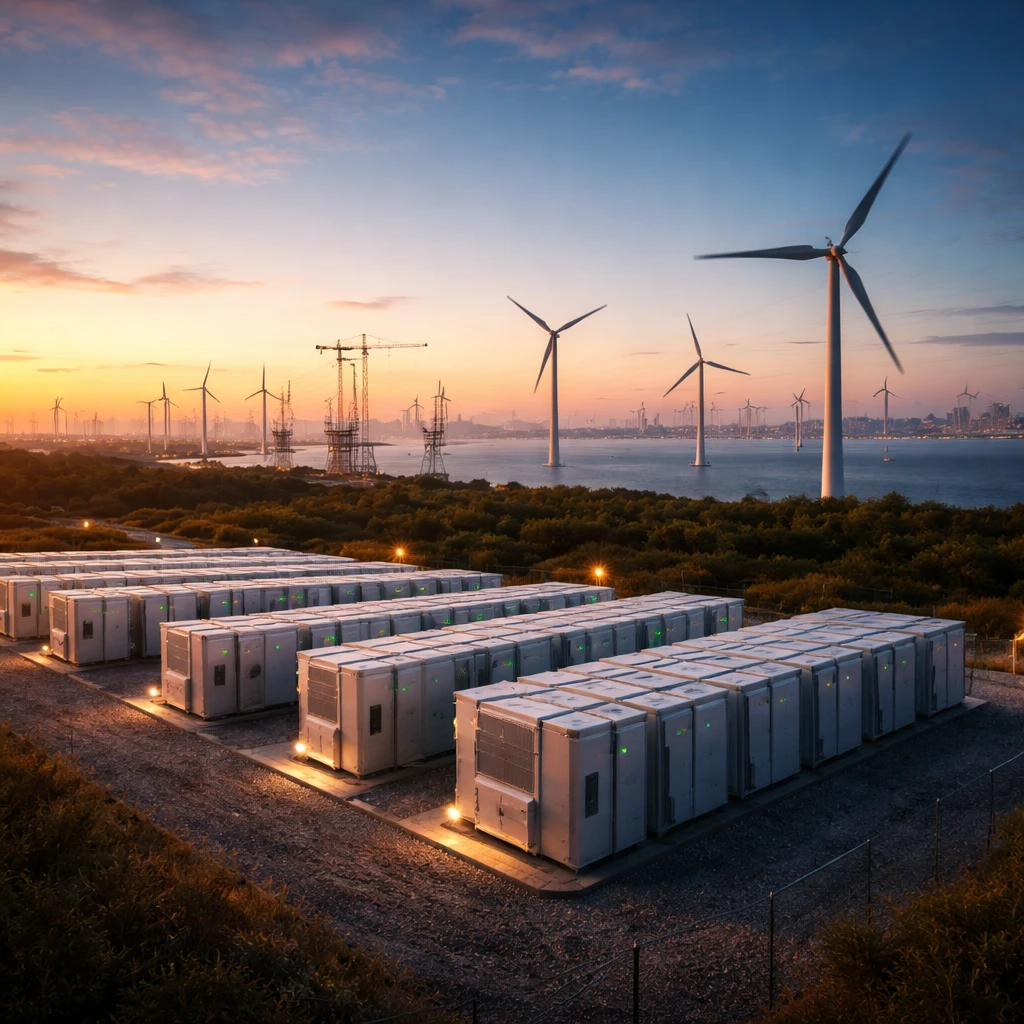
European utilities have outpaced the wider market so far in 2026, rising 14% year-to-date compared with a 5% gain in the Eurostoxx 600, driven largely by companies focused on battery energy storage and renewables.
Among the best performers this year have been Grenergy, Orsted, Solaria and RWE. By contrast, the sector's largest names - Iberdrola and Enel - have lagged the rally.
Analysts at UBS argue that the sector's strength is warranted. They say recent gains largely reflect a recovery from the multiple contractions that began in 2022 and extended through 2024, and they point to an acceleration in earnings growth relative to historical norms.
"We and our strategists have a positive outlook for 2026," the UBS team led by Mark Freshney wrote in a note.
UBS currently has Buy ratings on 13 utilities stocks, representing approximately 59% of the sector's market capitalization. The bank's ranking of preferences places renewables ahead of integrated utilities, integrated utilities ahead of networks, and networks ahead of generators. Geographically, UBS favors continental European names over U.K. peers.
At the top of UBS's list are RWE, Orsted and Grenergy. The bank views RWE's diversified portfolio - combining renewables with flexible generation - as a strength if market volatility increases, and projects an 11% compound annual growth rate in earnings per share through 2031 for the company.
For Orsted, UBS contends that the company's development pipeline beyond the next 18 months is not fully reflected in the share price, and that competitiveness in offshore wind has effectively reset. Grenergy is singled out for its exposure to battery energy storage systems, with UBS forecasting roughly 40% annual net income growth through 2029.
On the other side of the ledger, UBS identifies National Grid, Verbund and Drax as its most negative convictions. The bank cautions that National Grid's valuation - a high premium to its regulated asset base - has not been reliably defensive in the past, and that the company's returns on equity appear to be at or near a peak.
UBS expects Verbund's EBITDA to fall by about 16% by 2027, driven by lower power prices that are not expected to be offset by additions from new renewables projects. Drax is described as continuing to suffer from cost pressures in pelletisation alongside declining volumes.
Impacted sectors: The outlook and risks discussed by UBS primarily affect the utilities sector, with knock-on implications for power generation, renewable project developers, and energy storage providers. Network owners and integrated utilities are also implicated by the bank's preference hierarchy.