
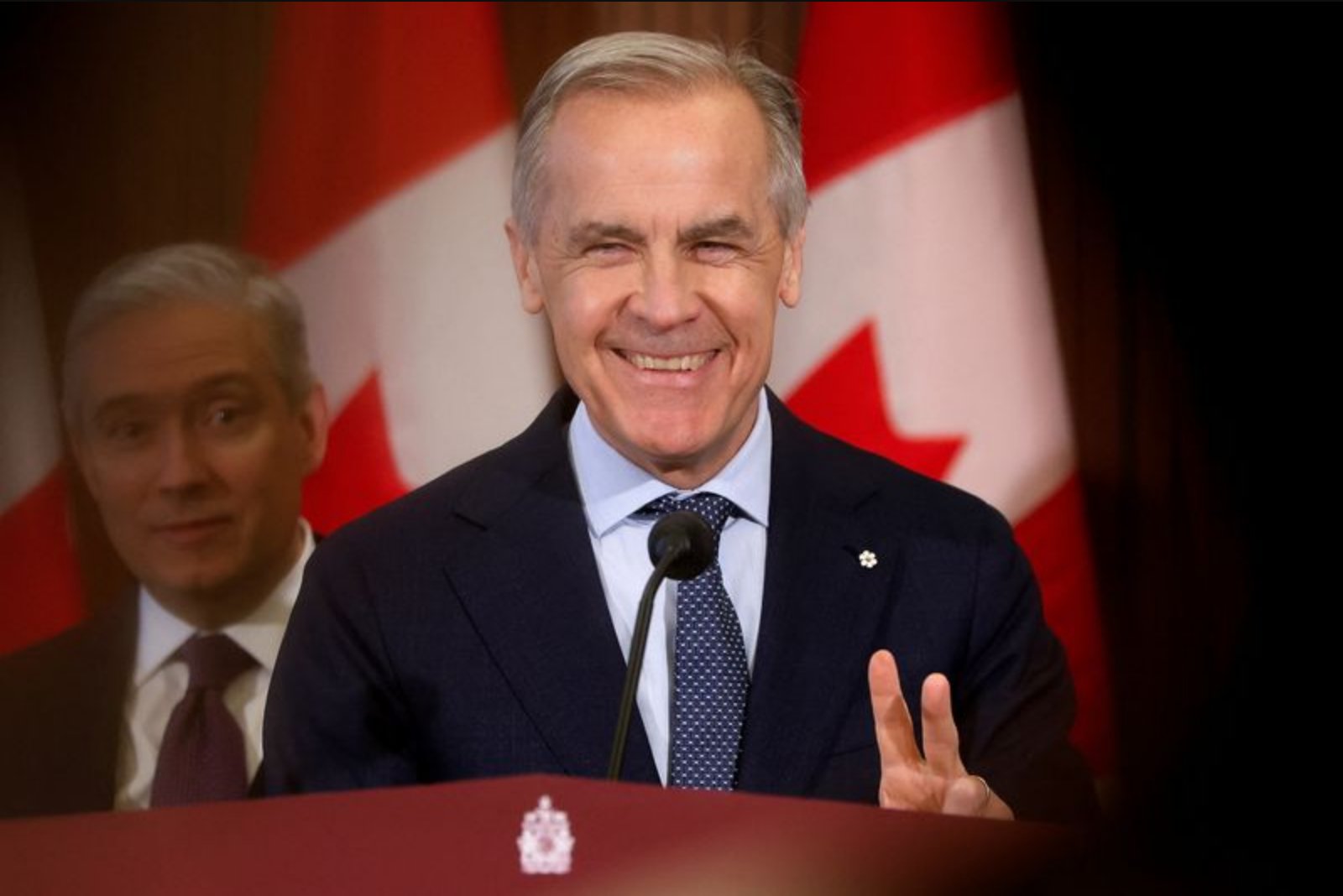
OTTAWA, April 22 - With a parliamentary majority secured last week, Prime Minister Mark Carney now confronts one of his most consequential tasks: redefining Canada’s trade relationship with the United States under President Donald Trump. Canada, the U.S. and Mexico face a July 1 deadline to either maintain their current deal, reopen talks and reach an updated agreement, or move to annual reviews until the pact expires in 2036.
Carney is expected to pursue a renegotiated agreement this year aimed at protecting Canadian exporters from tariffs that have targeted steel, aluminum and autos. Those tariffs, raised by the U.S., have placed Ottawa under pressure to make concessions while seeking to shield key parts of the Canadian economy.
Political context and mandate
Carney told voters ahead of three special elections that he needed a parliamentary majority to better manage the escalating trade tensions with Washington. With that majority now in hand, advisers and analysts say the prime minister must translate campaign commitments into concrete outcomes: reshaping Canada’s economic posture and striking terms with the U.S. that ease tariff pressures.
Political figures and industry observers note that while Carney has received international attention for urging middle powers to coordinate against dominant global players and for signing new international trade accords, Canadians expect him to tackle the immediate problem of U.S. tariffs while also confronting rising domestic economic problems.
“Dealing with Trump and negotiating a trade deal with the U.S. is what Canadians hired Mark Carney to do,” said Dan Arnold, a former senior staffer in the previous government. “He now has to rise to the moment and show us the fruits of these deals he’s been signing.”
Economic priorities and public concerns
Recent polling by Nanos Research showed Canadians list the economy and inflation as top concerns, followed by the country’s relationship with the United States. Those worries include high food inflation and unemployment levels relative to peer economies in the Group of Seven, according to government data cited by experts.
Carney has signaled a desire to reduce Canada’s economic dependence on its neighbour, noting that roughly 70% of Canadian exports still flow to the U.S. In a weekend video message, he described the close ties with the U.S. as “weaknesses that we must correct.” He invoked historical figures such as Chief Tecumseh as symbols of unity in the face of expansionism, saying, “I will never sugarcoat our challenges.”
Carney also warned Canadians that the U.S. has shifted its trade stance, raising tariffs to heights not seen since the Great Depression era. The prime minister has spent the past year signing more than 20 economic and security agreements, including deals with China, and continuing negotiations with other markets such as India.
Negotiation challenges and options
The U.S. trade representative held meetings in Mexico City recently, but formal talks between Washington and Ottawa on renewing the North American agreement have not taken place. Ottawa must weigh three broad paths before the July 1 deadline: accept the deal as currently written and maintain tariff protections, seek a negotiated update to address tariffs and other disputes, or agree to annual reviews leading up to the agreement’s 2036 expiry.
Analysts say Carney’s fresh parliamentary majority provides political room to make potentially unpopular concessions that could be required to secure a deal, such as adjusting access to protected Canadian sectors. Fen Hampson, a professor of international affairs, said the majority could enable the prime minister to pursue actions like opening parts of the dairy market to U.S. producers or persuading provincial leaders to change policies on items such as alcohol sales.
“It’s time for the prime minister to take the gloves off and start negotiating in the trenches,” Hampson said. “If he had a minority, the prime minister might not be able to absorb these concessions. But he has the political capital to do it and he can also use his influence to address provincial premiers who have been obstacles.”
Dominic LeBlanc, the minister responsible for U.S. trade, told a parliamentary committee that Canada hopes to secure a broader agreement covering sector tariffs and the trilateral North American deal. Representatives for the prime minister’s office and for LeBlanc did not respond to requests for comment. Government officials have previously asserted publicly that Canada’s dairy supply management framework would not be on the negotiating table.
The White House did not respond to a request for comment.
Domestic governance and policy priorities
Observers note that Carney’s majority also allows him to weather uncertainty in Washington ahead of the November U.S. midterm elections, with no Canadian election expected until 2029. Diamond Isinger, who worked on Canada-U.S. relations for the previous government, said the prime minister now has time to pursue a better renegotiated deal without the immediate threat of a snap Canadian vote.
Conservative leader Pierre Poilievre criticized Carney’s approach, asserting the prime minister “refuses to stand up against these wrong-headed American tariffs,” and pointing out that formal bilateral talks have not occurred in five months.
Experts urge Carney to focus now on concrete domestic policy choices that will shape medium-term economic performance. Asa McKercher, a professor of public policy and governance, said the prime minister must make decisions on defence procurement, including the imminent purchase of the next fleet of fighter jets, and on projects intended to spur infrastructure investment announced last year. “He’s done the world circuit and made some great speeches, but now he has to actually focus on being a domestic politician,” McKercher said.
Rising living costs are another pressing domestic issue. Drew Fagan, a visiting professor at Yale University, highlighted that Canada has among the higher unemployment rates in the G7 and the highest rate of food inflation in that group. “This is a country that’s fundamentally getting poorer for many people,” Fagan said. “Given what’s happened in the world in the last 18 months, Carney is not being blamed for the price of cheese and juice. Canadians have put up with a lot but at some point, they will hold somebody accountable.”
As the July 1 deadline approaches, the government faces a narrow set of choices with significant implications for manufacturing sectors such as steel, aluminum and autos, agricultural sectors tied to supply-managed products, and broader consumer-facing markets affected by food inflation and import costs. How Carney balances international negotiation demands with domestic political and economic pressures will shape Canada’s trade and economic trajectory in the coming months.