
BRIGHTON, Michigan - A campaign theme that once helped elect Republicans has been turned against them as gasoline prices surge again, sharpening a political vulnerability in several competitive House districts. In Michigan, the issue is front and center for Representative Tom Barrett, who made public appeals about high pump prices during his successful 2024 run and is now facing sustained criticism from Democrats who see an opening to capture his seat.
Barrett used social media in August 2023 to dramatize the strain of filling a car, filming himself at a service station and declaring, "Gas in Michigan is four bucks a gallon," while promising voters that his election to Congress would help produce more domestic energy and "get gas under control so that this will be a lot more affordable for families like yours and families like mine." The clip and related posts became part of his message that he would address inflation and household costs under President Joe Biden.
Nearly three years after Barrett posted that video, the average price of gasoline in Michigan climbed back into the same neighborhood. Pump prices briefly exceeded $4 in early April and then settled around $3.80 in the week that followed - a level the campaign notes is about 27% higher than before the start of the Iran war on February 28. That rise has complicated Republicans' strategy of faulting the Democratic administration for energy costs at a moment when control of the House is at stake and the Senate could also be competitive in November.
For Barrett, the rebound in fuel prices threatens a particularly fragile margin. His district is widely regarded as one of the most competitive in the country, and Democrats have already made gas costs a focal point of their effort to flip the seat. Local demonstrations and campaign events have emphasized the link between the war, fuel prices, and everyday household budgets.
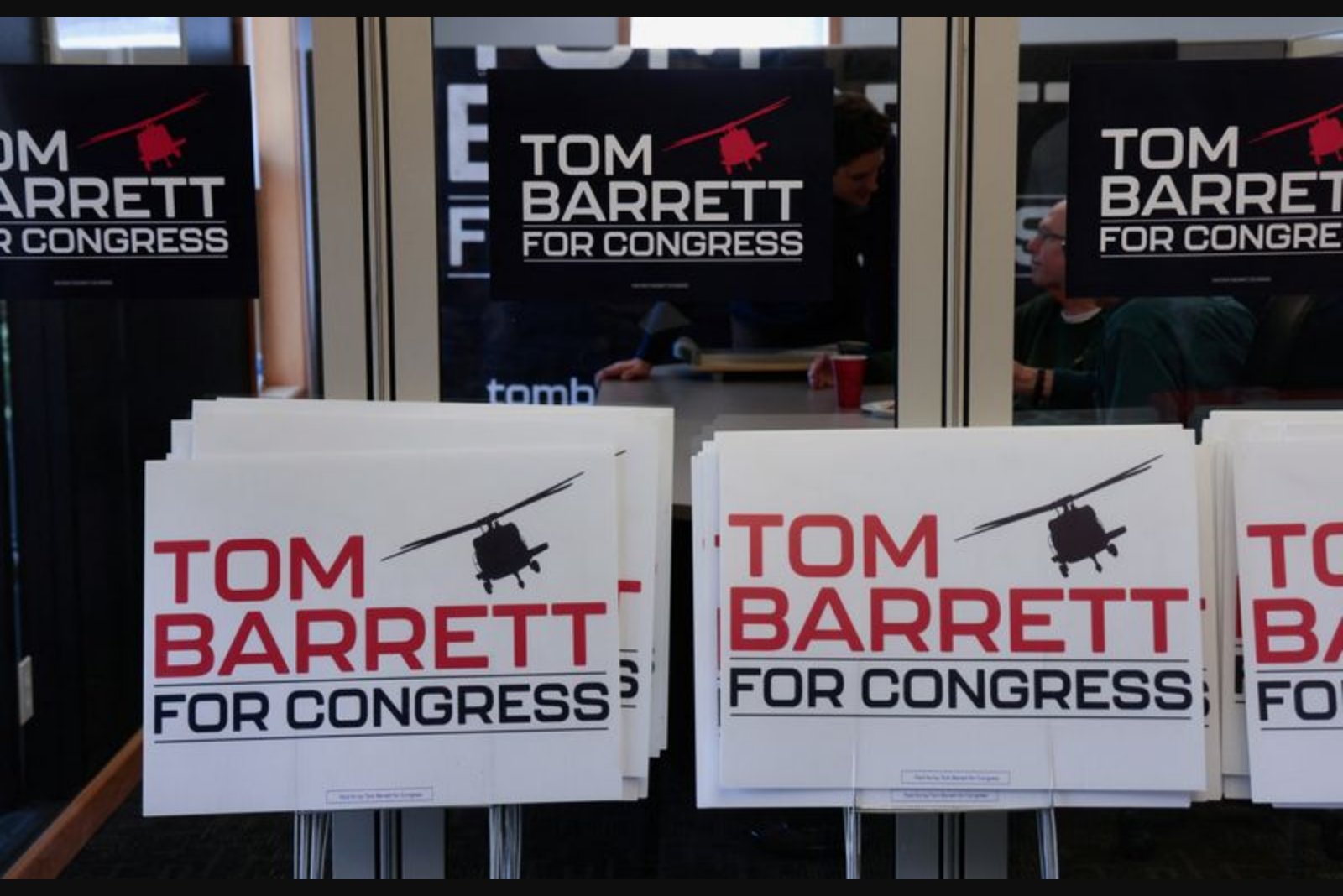
Speaking at the opening of a new campaign office in Brighton, Barrett acknowledged that gasoline prices were straining his constituents. He emphasized that he was not dismissing the economic pressure families face - "Gas is an issue that affects people’s livelihoods, the affordability of things ... I’m not dismissing any of that," he said - but he also framed the price spike as tied to foreign-policy choices he supports on national security grounds and expressed hope that prices would fall before Election Day.
He added, "But that doesn’t mean gas is going to be the same price on Election Day as it is today." That expectation, however, has been complicated by acknowledgments from national Republican figures that elevated pump prices could persist through the fall campaign season. Both the former president and his energy secretary have said gasoline may remain high through Election Day, making it harder for GOP candidates who campaigned against fuel costs under a Democratic administration to keep the issue on offense.
Republicans have few attractive options as prices climb. During the Biden years, the party frequently pointed to rising energy costs as a central grievance, and the resurgence of prices has undercut that line of attack. The earlier spike in June 2022 - when national averages topped $5 a gallon during a period of energy-market disruption tied to Russia's war on Ukraine - had already been a rallying point for GOP messaging. The current rebound, tied by many observers to the conflict in Iran, has renewed voter concern about the affordability of basic necessities.
High fuel costs add to a broader sense of financial strain among voters already feeling the effects of high food prices, rising housing costs, and healthcare spending. For many Republican candidates, the higher price of gasoline has complicated a key part of their November playbook. While they still plan to emphasize the benefits of the 2025 tax bill, including provisions such as an expanded child tax credit, the short-term blow of rising gasoline and other everyday costs makes it harder to convince voters that proposed tax changes amount to meaningful relief.
One Republican strategist working on a competitive House campaign described the tension within the party: primary voters and the most conservative supporters often demand a firm alignment with the party's national leader and support for the administration's foreign-policy choices, yet appealing to independent and moderate voters in the general election may require candidates to step back from some national rhetoric. The strategist, who asked not to be named, said candidates might be compelled to criticize national decisions in the general election in order to attract those swing voters.
Democrats have moved to seize on that vulnerability. Gasoline was not Barrett's only campaign issue in 2024, but he returned to it repeatedly as part of a promise to combat inflation and reduce costs under Democratic leadership. A 22-year Army veteran, Barrett carried his district by nearly four percentage points in the 2024 congressional contest, outperforming the Republican presidential margin there by about three points. He used visuals in late July 2024 to make his case, posting images from multiple stations showing prices clustered around $4 a gallon.
Now, local Democrats are staging protests and events aimed at linking the war, elevated fuel and fertilizer costs, and Barrett's votes and statements. On April 13, a gathering that included party activists, farmers, and other locals convened at a gas station outside Lansing to decry high prices and call for an end to the conflict. Protesters carried placards and chanted messages tying the war to household hardship.
Bridget Brink, a former U.S. ambassador to Ukraine who has raised the most money so far in the Democratic field ahead of the party's August primary, has signaled that she would make Barrett's posture on the war and the resulting spike in costs a central theme of her messaging if she secures the nomination. Brink argues that the net effect of proposed tax cuts in the 2025 Republican tax package is being overshadowed by the immediate pain of rising prices on essentials such as fuel, groceries, and housing.
"When Republicans say they’re cutting your taxes, all of that gets lost in bigger prices on gas, healthcare, groceries, and housing," Brink said, adding that Democrats would keep the issue in public view on a weekly basis because it is tangible and widely felt.
Barrett has tried to strike a nuanced line on the issue. He publicly criticized the former president's inflammatory threat to "destroy" an adversary's "whole civilization," calling that rhetoric an affront to human dignity. Yet Barrett voted against a congressional resolution that sought to restrict the president's wartime authorities, and he has framed the current high gas prices as a consequence of a foreign-policy decision he deems warranted - a distinction he makes between the current situation and earlier spikes he attributes to constraints on domestic oil production.
At a campaign stop, when a reporter raised the case of a constituent who said she could afford only $14 worth of gasoline, Barrett shifted the conversation back toward the strategic justification for confronting the foreign threat, repeatedly asking whether the constituent had been polled on the question of nuclear proliferation. "Did you ask her if she thought Iran should develop a nuclear weapon?" he pressed. The constituent in that exchange, identified as Danielle Lewis, did not answer questions about the adversary's nuclear ambitions in the reporting but spoke about how the conflict had affected her fuel costs. Lewis, 39, said she liked Barrett and was likely to support him in November.
Public opinion on the war is mixed. Recent polling by a national survey shows that just 36% of Americans express support for the conflict, indicating that a majority of voters are either opposed or uncertain. That environment gives Democrats an opening to press a narrative that ties cost-of-living pressures to the foreign-policy choices the incumbent supports.
At the Brighton campaign event, Barrett and other Republicans outlined the party's economic arguments for the midterms, emphasizing the 2025 tax bill and its provisions. Barrett highlighted the expanded child tax credit as a benefit of the legislation, while Representative Lisa McLain delivered sharper partisan rhetoric aimed at contrasting Republican positions with what she described as the more extreme stances of Democrats on cultural issues. McLain urged the crowd to frame the election as a contrast between "normal" and "crazy," and neither speaker mentioned gasoline prices during their set remarks.
Meanwhile, voters on the ground expressed a range of reactions to the rising cost of fuel. Christine Waugh-Fleischmann, a 70-year-old art teacher who drives regularly to visit grandchildren, said she spends as much as $200 a week on gasoline. After conversations with friends across the political spectrum about the effects of inflation, she said she believes the district is winnable for Democrats. "I do see a lot of people in my conservative neighborhood here who are very upset," she said as she topped off her SUV at the same Quality Dairy station in Charlotte where Barrett filmed his earlier social media post. "It’s gas. It’s grocery prices, it’s healthcare costs."
Not all voters view the matter the same way. Alexander Melton, a 38-year-old HVAC technician, said he planned to remain with Barrett despite the strain of higher pump prices because he feels the congressman aligns better with his conservative values. Melton added a cautionary note about the limits of political control over global fuel markets, saying, "We don’t dictate the price of gas. We’re getting it from overseas, and at this point now we’re at the mercy of everybody else."
The renewed prominence of gasoline costs in this district highlights the challenge for Republican candidates who must reconcile national party positions with the pocketbook concerns of local voters. Democrats are seeking to keep the issue in front of constituents between now and November, while Republican incumbents and challengers wrestle with how to respond when an issue they once used to criticize the opposing party returns to bite them at the pump.
Key developments to watch:
- How the trajectory of gasoline prices evolves ahead of the midterm elections and whether Republicans can persuade voters that broader policy measures like tax changes will offset current cost pressures.
- Whether Democratic efforts to tie local economic pain to wartime decisions gain traction in swing districts with narrow margins.
- The response of Republican candidates who may face pressure to align with or distance themselves from national leaders depending on primary and general election dynamics.