
Uncertainty over the next phase of diplomacy between Washington and Tehran mounted on Wednesday after President Donald Trump said he would extend a ceasefire with Iran indefinitely. The announcement came mere hours before the truce was due to lapse and has left scheduled talks and regional shipping operations in a state of limbo.
Trump said in a social media statement on Tuesday that he agreed to the extension at Pakistan's request, describing the move as a pause in hostilities "until such time as their leaders and representatives can come up with a unified proposal - and discussions are concluded, one way or the other." The White House decision was publicized ahead of planned negotiations that had been brokered with Pakistan acting as a frequent intermediary between the United States and Iran.
Iranian and Israeli officials had not publicly responded to the extension as of Wednesday. Israel, a U.S. ally that joined the joint campaign in late February, and Iran have both been central actors in the months-long tensions that prompted the ceasefire.
The extension has already affected scheduled diplomatic travel. A planned trip to Pakistan by U.S. Vice President JD Vance for a fresh round of talks with Iranian representatives was put on hold after Iranian state media reported that Tehran's delegation had labeled the discussions a "waste of time because the U.S. prevents reaching any suitable agreement." Pakistan's senior political and military leadership, according to reporting citing Pakistani officials, has continued efforts to keep the dialogue from collapsing.
Pakistan is also awaiting a formal reply from Iran on the timing of a delegation to Islamabad for a second round of discussions with U.S. officials. Earlier talks this month concluded without a peace agreement.
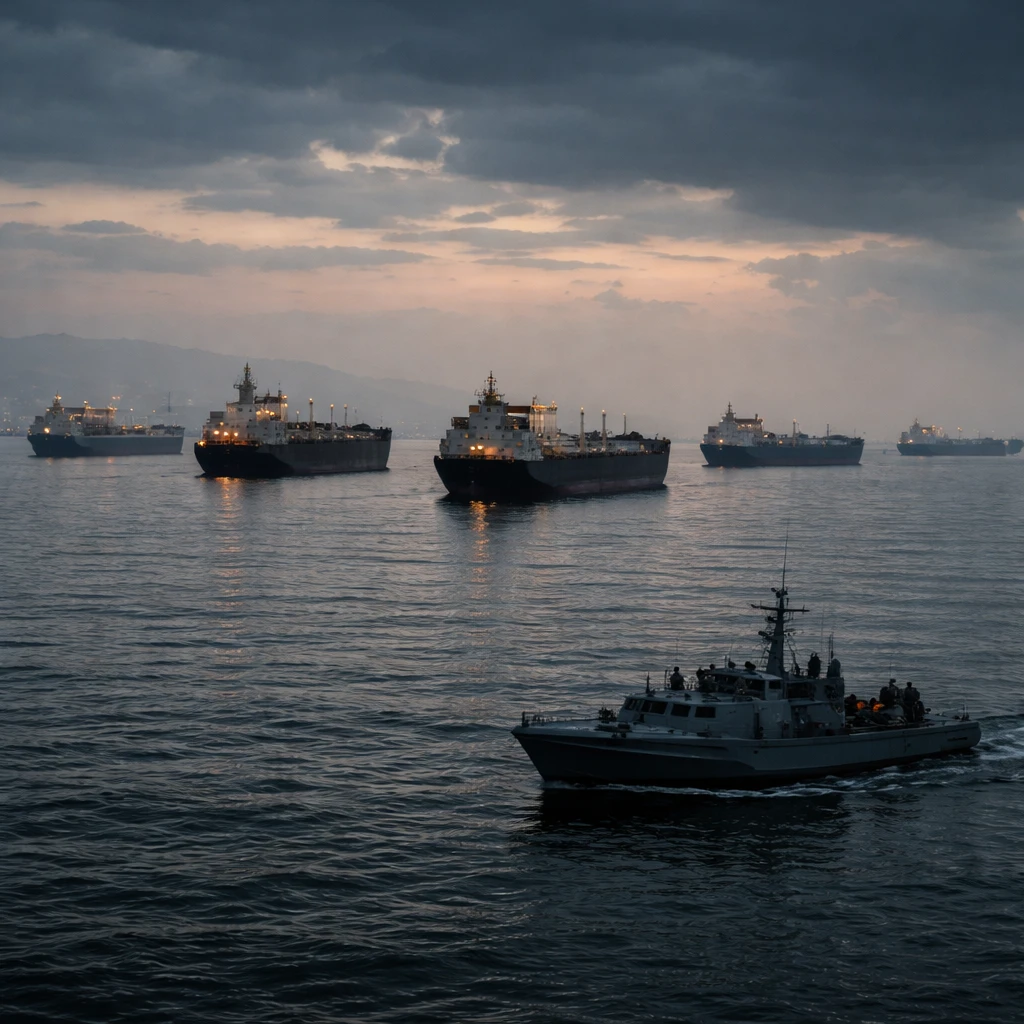
Concurrently, commercial passage through the Strait of Hormuz - the narrow maritime corridor off Iran's southern coast through which roughly one-fifth of the world's oil moves - is reported to be almost entirely closed. Media accounts, citing the shipping monitor U.K. Maritime Operations, said a container ship in the strait was attacked on Wednesday. Those reports followed an earlier incident in which a boat belonging to Iran's Islamic Revolutionary Guards Corps struck a vessel in the area.
Trump has emphasized that a U.S. blockade of Iranian ports and coastline will remain in place, despite Iranian objections. Iran's foreign minister has characterized that blockade as an "act of war." The president argued that Iran is "collapsing financially!" and pressed for the strait to be "opened immediately," asserting that Tehran is "Starving for cash."
Oil markets reacted to the ongoing instability. Brent crude futures, the global benchmark, traded just under $100 a barrel on Wednesday, reflecting a marked increase from pre-war levels. That rise in crude has intensified concerns about an inflationary surge that could damp global growth and prompt central banks to raise interest rates.
International diplomatic activity is continuing in parallel. British Prime Minister Keir Starmer and French President Emmanuel Macron planned a meeting in London with more than 30 countries aimed at restoring navigation through the Strait of Hormuz. A prior gathering produced a plan to form a defensive mission to help escort tankers through the shipping corridor.
Summary of current situation:
- The U.S. has extended a ceasefire with Iran indefinitely at Pakistan's request.
- Scheduled talks, including a proposed U.S. vice-presidential trip to Pakistan, are on hold amid Iranian criticism of the negotiation process.
- Shipping through the Strait of Hormuz is effectively halted after reported attacks on vessels, with oil prices reacting upward.
The immediate outlook remains unsettled. Pakistani officials continue to seek ways to sustain the talks, but Iran has yet to confirm participation in a follow-up delegation to Islamabad. Meanwhile, international efforts to reopen the strait and protect commercial shipping are being pursued by a coalition of nations led by Britain and France.