
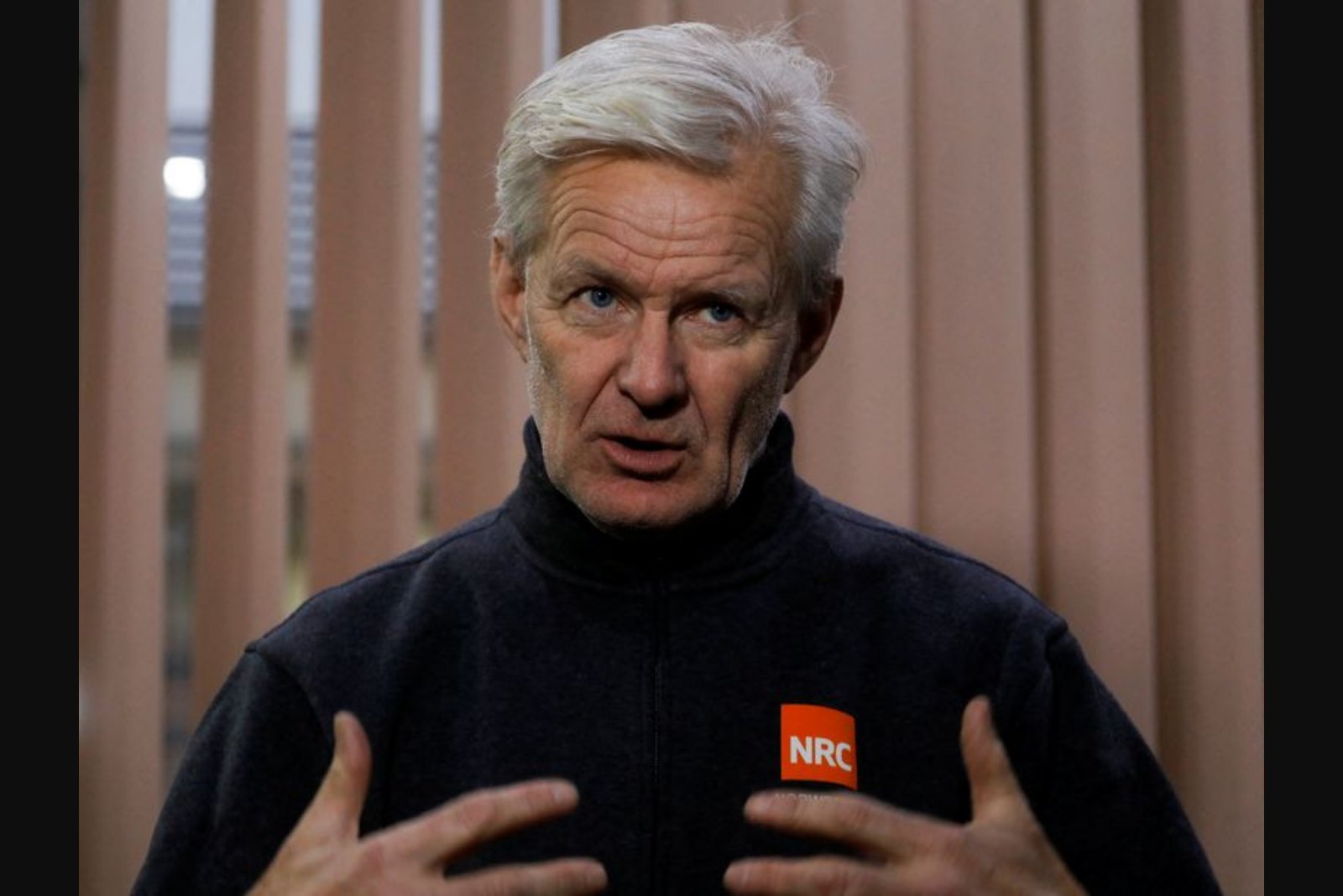
Jan Egeland, head of the Norwegian Refugee Council (NRC), has urged Norway to consider using a portion of the returns from its $2.2 trillion sovereign wealth fund to provide humanitarian aid to civilians impacted by the war in Iran.
Egeland drew a direct comparison to Norway’s response following Russia’s 2022 invasion of Ukraine. After that conflict began, Norway established a bipartisan, long-term assistance plan for Kyiv totalling about $28 billion between 2023 and 2030, making it one of the most generous per-capita backers of Ukraine.
"Norway has now given enormous sums to Ukraine. And one of the arguments is that 'we earned a lot of money on oil and gas prices going through the roof. Why not say the same here?'" Egeland said to foreign reporters at NRC headquarters in Oslo. He added: "Let's give to the Lebanese and the Iranians and the other victims of this war, direct and indirect, because the oil prices are now $100 per barrel."
Egeland is a long-standing figure in humanitarian circles, having served as the top U.N. humanitarian official from 2003 to 2006 and as a deputy Norwegian foreign minister in the 1990s. The NRC is an established non-governmental aid organisation that focuses on displacement and related humanitarian needs.
Norway is a major energy exporter, described in public commentary as Europe’s largest gas supplier and Western Europe’s largest crude producer. Egeland did not provide details on how a mechanism to channel wealth fund income toward Iran-war relief would be structured.
Government and fund responses
Norwegian officials are sensitive to criticism that the country might be perceived as benefiting from conflicts that drive up energy prices. Finance Minister Jens Stoltenberg has argued it would be wrong to assume Norway was gaining from the war, saying Norway’s export-led economy benefits most from a stable, peaceful international world order and that a fall in global stocks damages the overall value of its wealth fund.
The Norwegian government has also never stated that its support for Ukraine stems from earning extra income from higher gas prices - those extra petroleum revenues have been estimated at 1,270 billion crowns ($136.07 billion) in 2022 and 2023 according to finance ministry calculations.
Sovereign wealth fund CEO Nicolai Tangen said last month that any benefit to the fund from higher petroleum revenues due to the Iran war is smaller than the negative effects of lower share prices abroad and a strengthening of the crown currency. In the first quarter the fund reported a loss of 636 billion crowns as the Iran war weighed on global stocks.
The wealth fund and the finance ministry did not immediately reply to requests for comment. Currency conversion used in public reporting for reference is $1 = 9.3334 Norwegian crowns.
Context within Norway’s policy debate
Egeland’s proposal revives a policy choice Norway has faced publicly before: whether to earmark portions of sovereign wealth gains for targeted humanitarian responses when global commodity prices spike in the context of geopolitical crises. Supporters of such an approach point to Norway’s prior decision on Ukraine as a model for a long-term, cross-party commitment. Critics and government officials caution that fluctuations in the fund’s value are affected by multiple market forces, and that overall returns can be offset by drops in global equity markets and currency moves.
At this stage, the suggestion remains a policy proposal rather than a defined plan. Details on eligibility, size of allocations, duration, or governance of any prospective assistance program were not provided by Egeland or other officials quoted in public remarks.
The debate touches on issues core to Norway’s international role and to how sovereign wealth should be deployed during periods of geopolitical strain: balancing fiscal stewardship of a very large public endowment with demands for timely humanitarian support to civilians harmed by distant conflicts.