
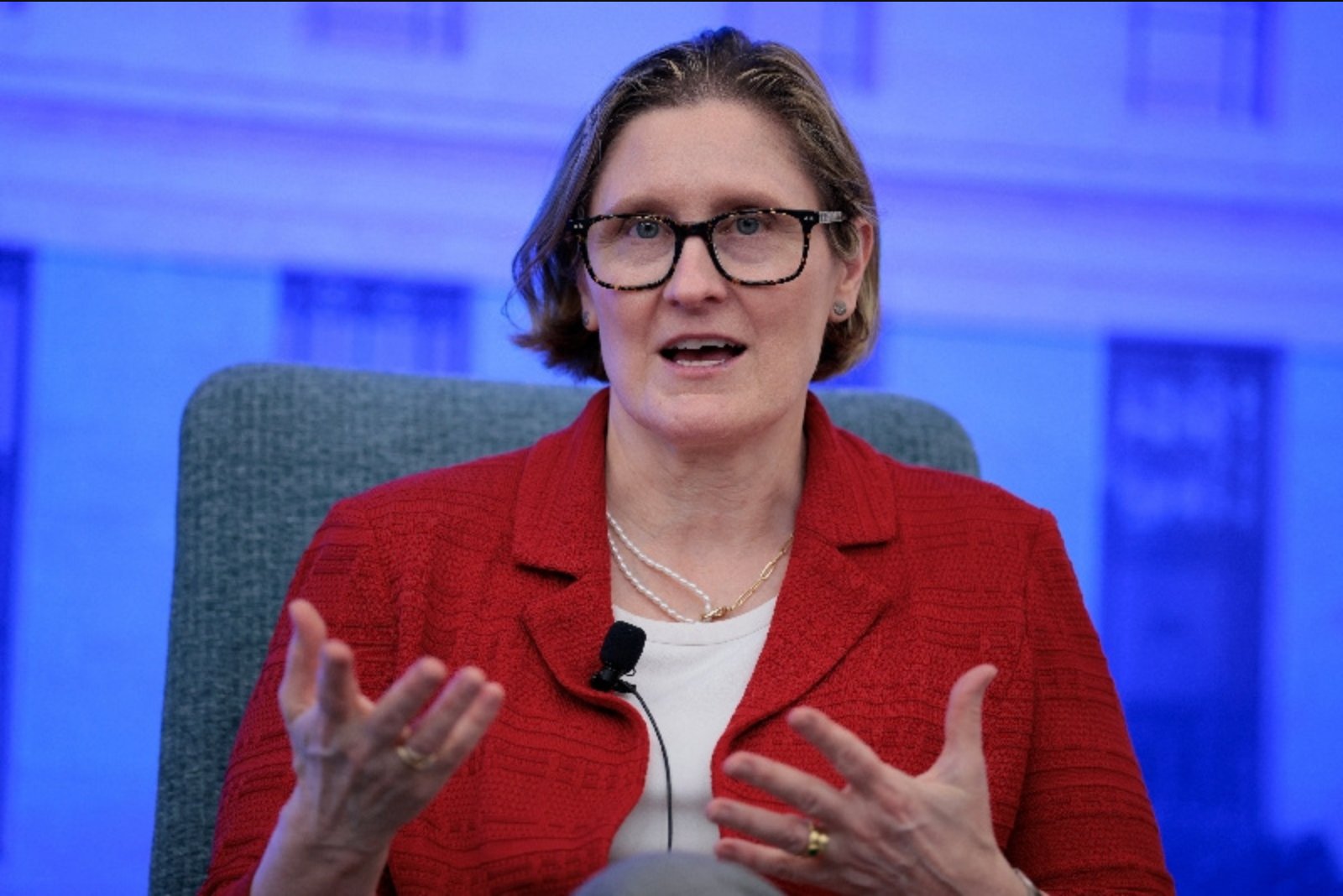
Speaking in Amelia Island, Florida, Philadelphia Federal Reserve Bank President Anna Paulson stated on Tuesday that the current level of interest rates is appropriate for the present economic environment. This stance is intended to exert downward pressure on inflation at a time when price pressures continue to show signs of being elevated.
Paulson described monetary policy as currently being mildly restrictive. She indicated that this level of restrictiveness is playing a role in managing the inflationary impacts stemming from both tariffs and price increases linked to the conflict in the Middle East. By addressing these combined factors, Paulson believes the current stance of monetary policy remains suitable for the economic climate.
"I believe the current stance of monetary policy is appropriate," Paulson remarked during her prepared comments.
Despite her confidence in the current placement of policy, Paulson observed that investor sentiment and market movements have begun to align with a different set of expectations. Rather than focusing on the rate cuts that were anticipated at the beginning of the year, markets have been building positions around the possibility of an upcoming rate hike. Paulson noted that the way the market has responded to economic developments over several months largely corresponds with her own perspective.
Paulson emphasized that while she views the current monetary policy as being in a good place, it is "healthy" for market participants to consider various future scenarios. These include situations where the funds rate might stay unchanged for an extended duration or instances where further tightening of monetary policy becomes a necessity.
Key Economic Observations
- Policy Appropriateness: The current mildly restrictive policy is viewed as a necessary tool to counter price pressures from tariffs and Middle East conflict-related increases.
- Market Alignment: There is an observed alignment between market reactions to recent economic data and the views held by Paulson regarding risk.
- Scenario Planning: Investors are increasingly preparing for two specific paths: a long-term hold of current rates or additional rate hikes.
Impacted Sectors: The shifts in interest rate expectations primarily affect capital allocation strategies across various markets, particularly those sensitive to the cost of borrowing and interest rate volatility.
Risks and Uncertainties
- Inflationary Pressures: While Paulson downplayed some risks, the ongoing influence of tariffs and Middle East conflicts remains a factor in price management.
- Rate Volatility: The shift from expectations of rate cuts to potential hikes or extended holds creates uncertainty for market participants.
Impacted Sectors: Financial markets and sectors reliant on predictable interest rate environments face uncertainty as investors adjust to new potential policy paths.
Regarding the broader economic outlook, Paulson suggested that the risks of a worsening inflation problem are mitigated by the fact that long-term inflation expectations remain contained. Additionally, she noted that economic growth is currently running near estimates of its potential level.
The Federal Reserve is anticipated to maintain its policy rate within the current range of 3.5% to 3.75% during the upcoming meeting in June. This session will be the first overseen by incoming Fed Chair Kevin Warsh, following his scheduled swearing-in this Friday.