
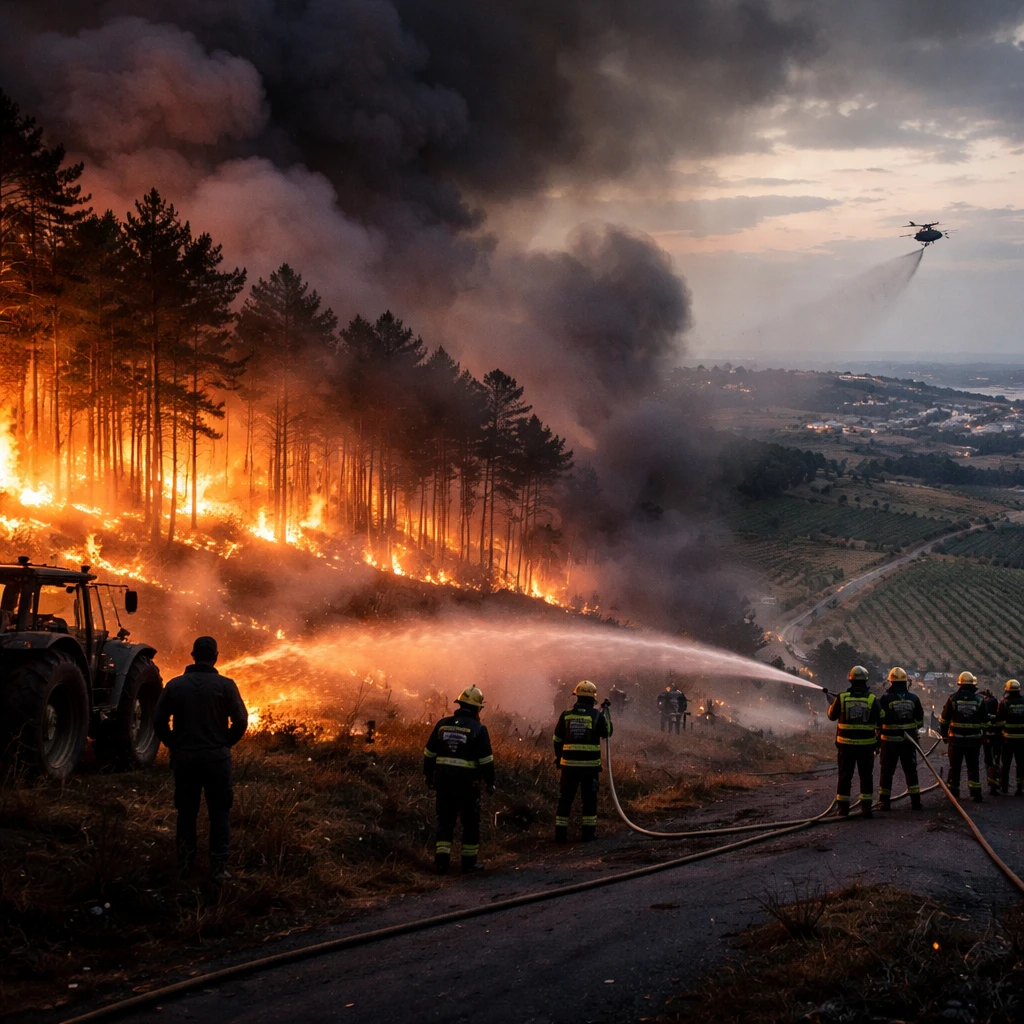
Firefighters were working on Sunday to control multiple wildfires that have pushed dangerously close to populated areas around Bordeaux, local authorities said. The blazes advanced rapidly overnight, prompting officials to broaden evacuation measures across southwestern France as teams raced to protect communities.
Farmers have joined emergency personnel in an effort to slow the spread of the fires and shield nearby villages and homes. Since the outbreaks began earlier this week, authorities estimate about 220,000 people have been evacuated from parts of southwestern France. The affected zone has extended to Cap Ferret, a well-known Atlantic coast holiday destination in the Aquitaine region.
Bordeaux serves as a key transport hub for visitors heading to coastal resorts and stands at the centre of a globally recognised wine-producing area. That geographic role has amplified concerns about potential harm to vineyards, farmland and tourism-related businesses, though officials have not provided immediate figures for homes, farms or commercial properties damaged near the city.
The fires have been fuelled by an unusually intense heatwave and prolonged dry conditions. In Aquitaine, average temperatures reached 32.2 degrees Celsius in July, about 7.3 degrees above the region's normal monthly high recorded between 1961 and 1990. Those higher-than-normal temperatures and parched landscapes have contributed to the rapid advance of the flames.
Authorities warned that ongoing wildfires could disrupt ground and air transportation - including road and rail links around Bordeaux and flight schedules - and place added pressure on the region's summer tourism season. Hotels, restaurants and holiday operators may face cancellations if evacuation zones continue to widen.
Wine producers are also at risk. Vines can suffer direct damage from flames, heat and smoke, and exposure to smoke near harvest time can alter grape quality. The eventual financial impact for winegrowers will depend on how far the fires extend into established vineyard areas.
The heatwave affecting France is part of a broader pattern across Europe. Spain declared a national emergency while crews battled separate fires, including a blaze near Valencia that resulted in the death of an elderly man. Repeated episodes of extreme heat and wildfire activity in recent summers have driven up insurance claims and heightened disruptions to agriculture and tourism, increasing the financial burden on governments and companies operating in exposed regions.
Officials have not released immediate, detailed damage assessments for residential or commercial properties near Bordeaux. For now, firefighting operations and evacuation efforts continue amid concerns about additional spread while authorities monitor transport networks and tourism impacts.