
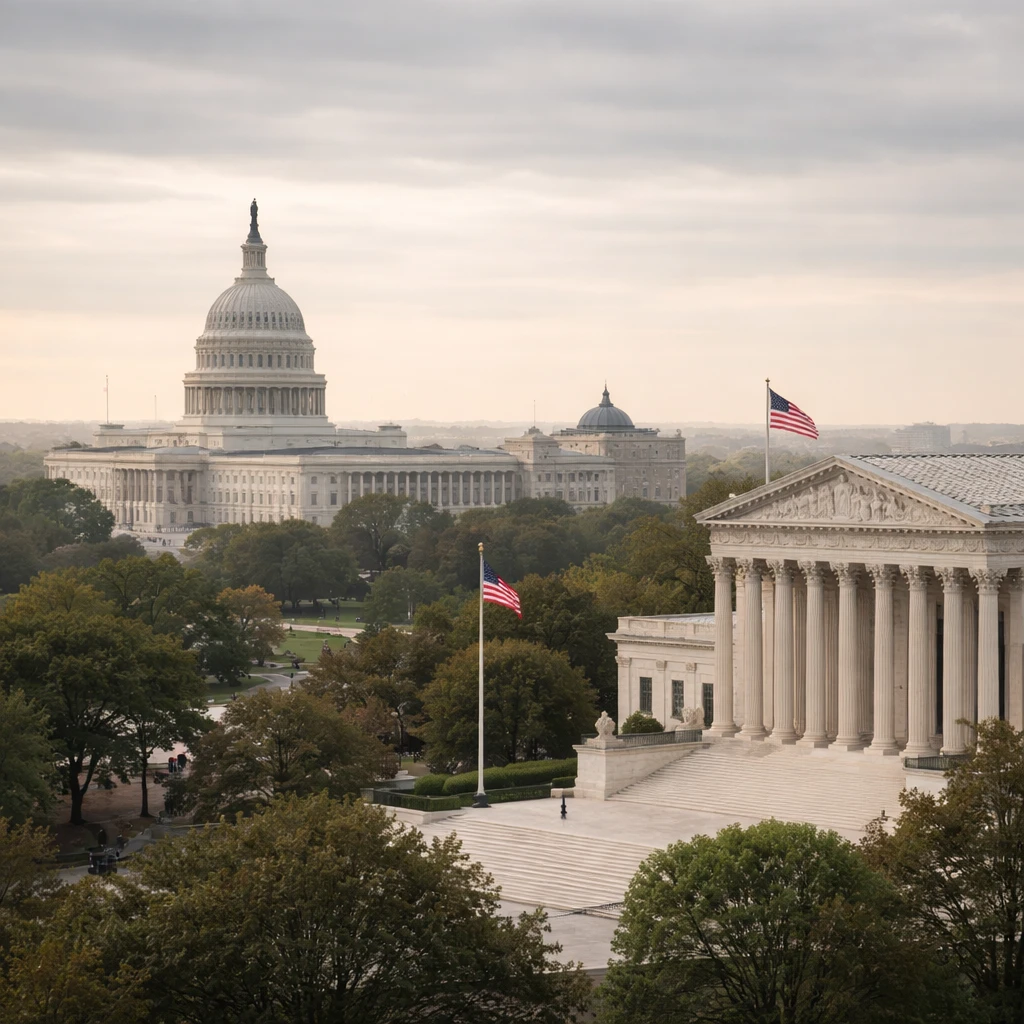
A recent analysis from BCA Research concludes that the degree of institutional erosion in the United States has been overstated, even as concerns about governance under President Donald Trump have grown. The firm acknowledges declines in the rule of law over the last 20 years and notes that political polarization remains close to historic highs, but argues that multiple institutions continue to serve as substantive counterweights to executive power.
In its report, BCA points to actions by the Supreme Court, resistance within the Senate and the independence of the Federal Reserve as concrete examples of institutional pushback. The research highlights Supreme Court rulings that blocked sweeping tariffs and rulings that safeguarded the Fed's autonomy by preventing the removal of Governor Lisa Cook. It also cites Senate reluctance to approve politically driven appointments to the Federal Reserve and bipartisan opposition to certain administration policies as evidence that Republican control of government has not removed internal checks on presidential authority.
The report further examines concerns about potential politicization of both the military and election administration. BCA says those risks are constrained by legal frameworks, oversight by the judiciary and prevailing public sentiment. The firm argues that the military remains oriented toward the Constitution rather than allegiance to any individual leader, and that the decentralized, state-run model for administering elections makes large-scale federal interference difficult to carry out.
From a market perspective, BCA finds that institutional durability has helped sustain demand for U.S. financial assets despite governance-related anxieties. The analysis notes that foreign investors have continued to raise their holdings of U.S. debt in absolute terms and that the U.S. dollar has preserved its role as a safe-haven currency during episodes of global stress, even as some central banks progressively diversify reserves toward other developed-market currencies.
Looking toward the political calendar, the report views the 2026 midterm elections as another mechanism that could check the Trump administration. BCA suggests that inflation and affordability pressures could boost Democratic performance relative to expectations, potentially increasing legislative gridlock—a condition that, historically, has tended to be supportive for U.S. equities.
At the same time, the research underscores a significant structural concern: long-term fiscal deterioration. BCA identifies ongoing fiscal weakness as a material, persistent risk to the U.S. economic outlook.
Context and implications for markets
BCA's assessment implies that, notwithstanding political tensions and institutional strains, existing legal and institutional checks are continuing to limit abrupt shifts in governance. For investors, this institutional resilience is cited as a factor preserving the appeal of U.S. assets, particularly government debt and dollar-denominated instruments.