
World July 26, 2026 04:38 AM

Fire Crews Struggle to Contain Blazes Encroaching on Bordeaux

Authorities expand evacuations as wildfires driven by an intense heatwave threaten vineyards and coastal transport links

By Hana Yamamoto
Share
Twitter Reddit Facebook LinkedIn

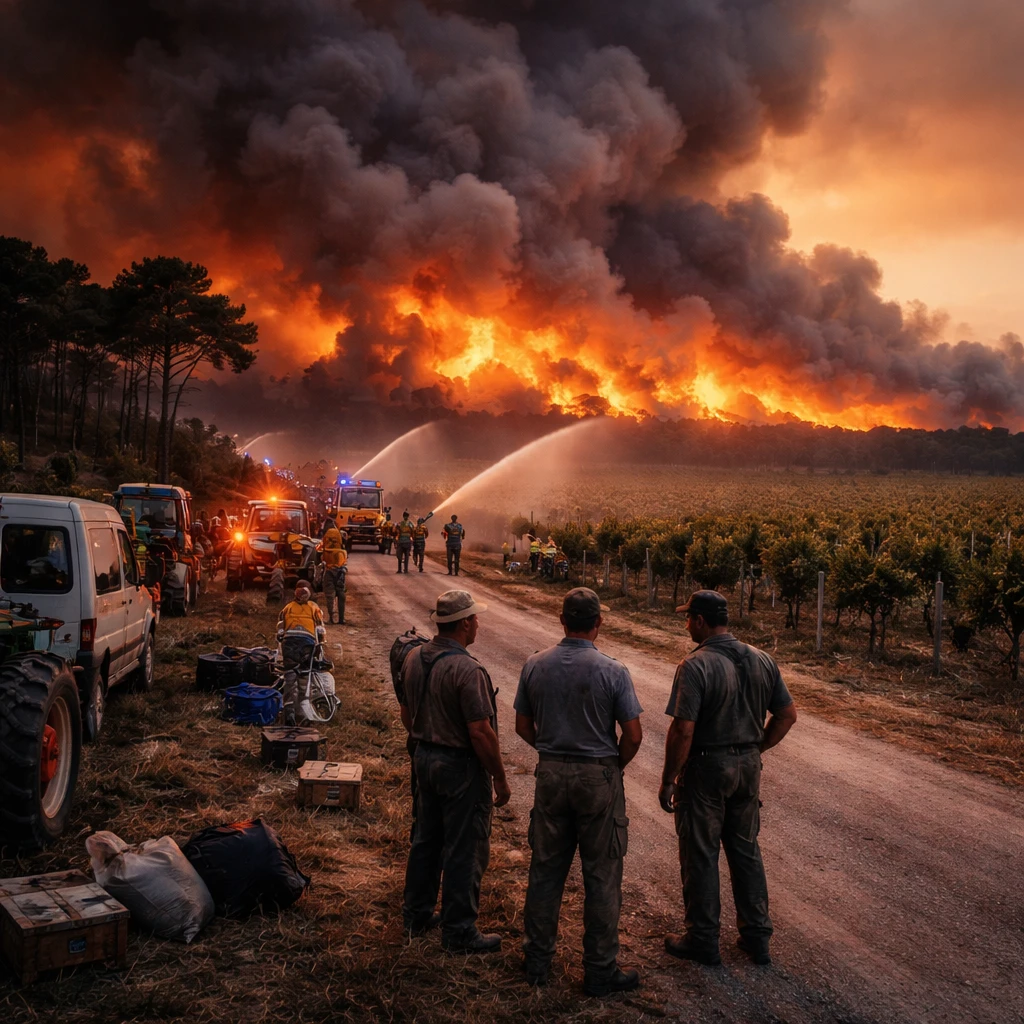
Firefighters in southwestern France continued operations to contain wildfires edging toward the city of Bordeaux as officials increased evacuations from suburban areas. The region, known for its vineyards and as a transport hub for Atlantic coastal tourism, has seen tens of thousands moved from their homes amid a heatwave that has also prompted a national emergency declaration in Spain.

Fire Crews Struggle to Contain Blazes Encroaching on Bordeaux
Summarize with
ChatGPT Perplexity Claude Grok Gemini

Key Points

  • Firefighters are actively battling wildfires threatening Bordeaux and expanding evacuations from its suburbs; 220,000 people have been evacuated in southwestern France so far.
  • The Bordeaux area is an important wine region and transport hub for tourists visiting nearby Atlantic coast resorts, raising potential impacts on tourism and local economic activity.
  • Local farmers, including 65-year-old Pascal Roudier, have volunteered to assist firefighting efforts as authorities coordinate evacuations and containment.

Fire crews worked on Sunday to limit the advance of wildfires that have posed a mounting threat to Bordeaux and its surrounding suburbs, with authorities ordering an increasing number of residents to leave the area. The blazes form part of a wider pattern of wildfires affecting southwestern France during an intense summer heatwave that has impacted several parts of Europe.

Officials said that "Over the course of last night, the fire was observed to have made rapid progress," in a statement on Sunday from the local authority responsible for the Bordeaux area. That progress underlined the urgency of evacuation efforts and the strain on firefighting resources as the fires spread.

So far, authorities have evacuated 220,000 people from southwestern France after fires that ignited earlier in the week extended as far as Cap Ferret, a well-known summer destination in the Aquitaine region. The evacuations covered communities in the suburbs of Bordeaux and other vulnerable coastal areas.

The Bordeaux region is famous for its vineyards and serves as a key transport hub for tourists travelling to nearby holiday resorts on the Atlantic coast, heightening concerns about the fires' potential disruption to travel and local tourism patterns.

Local farmers have stepped forward to assist firefighting efforts. "We came to lend a hand because if it were our region, we’d want others to do the same. And given the scale of the disaster, we think our efforts are very welcome too," said Pascal Roudier, a 65-year-old farmer who volunteered to help.

The heat has been exceptional in July. In the Aquitaine region, high temperatures have averaged 32.2 degrees Celsius (90 degrees Fahrenheit) so far this month, a figure that is 7.3 C above the month’s normal high for the 1961-1990 period, Reuters Climate Monitor shows.

The wave of wildfires is not limited to France. Spain has declared a national emergency, and a wildfire near Valencia resulted in the death of an elderly man, demonstrating the broader human toll of the heatwave and fires across the region.

Firefighting teams, supported by volunteers, continued containment and evacuation operations as authorities monitored the shifting situation and prioritized civilian safety in zones at immediate risk from advancing flames.

Risks

  • Ongoing fires and rapid nightly advances create continued evacuation and displacement risks for residents around Bordeaux - impacts on the housing and local services sectors.
  • Disruption to transportation and tourism linked to Bordeaux and nearby Atlantic resorts due to fires and evacuations - potential short-term pressure on regional travel and hospitality businesses.
  • Sustained high temperatures in Aquitaine (average July highs of 32.2 C, 7.3 C above the 1961-1990 norm) may prolong fire risk and complicate containment efforts - implications for emergency services and agricultural operations.

More from World

Brazil Withdraws Ambassador to Argentina After Milei's Public Attacks on Lula Jul 26, 2026 Diaz-Canel Brands U.S. Oil Embargo 'Political Genocide' as Cuba Struggles with Deepening Crisis Jul 26, 2026 Kremlin Says It Is Too Early to Assess Reports of U.S.-Ukraine Talks on Air Ceasefire Jul 26, 2026 Wildfires Encroach on Bordeaux as France and Spain Race to Contain Blazes Jul 26, 2026 Ex-President Juan Orlando Hernandez to Return to Honduras Following U.S. Pardon Jul 26, 2026