
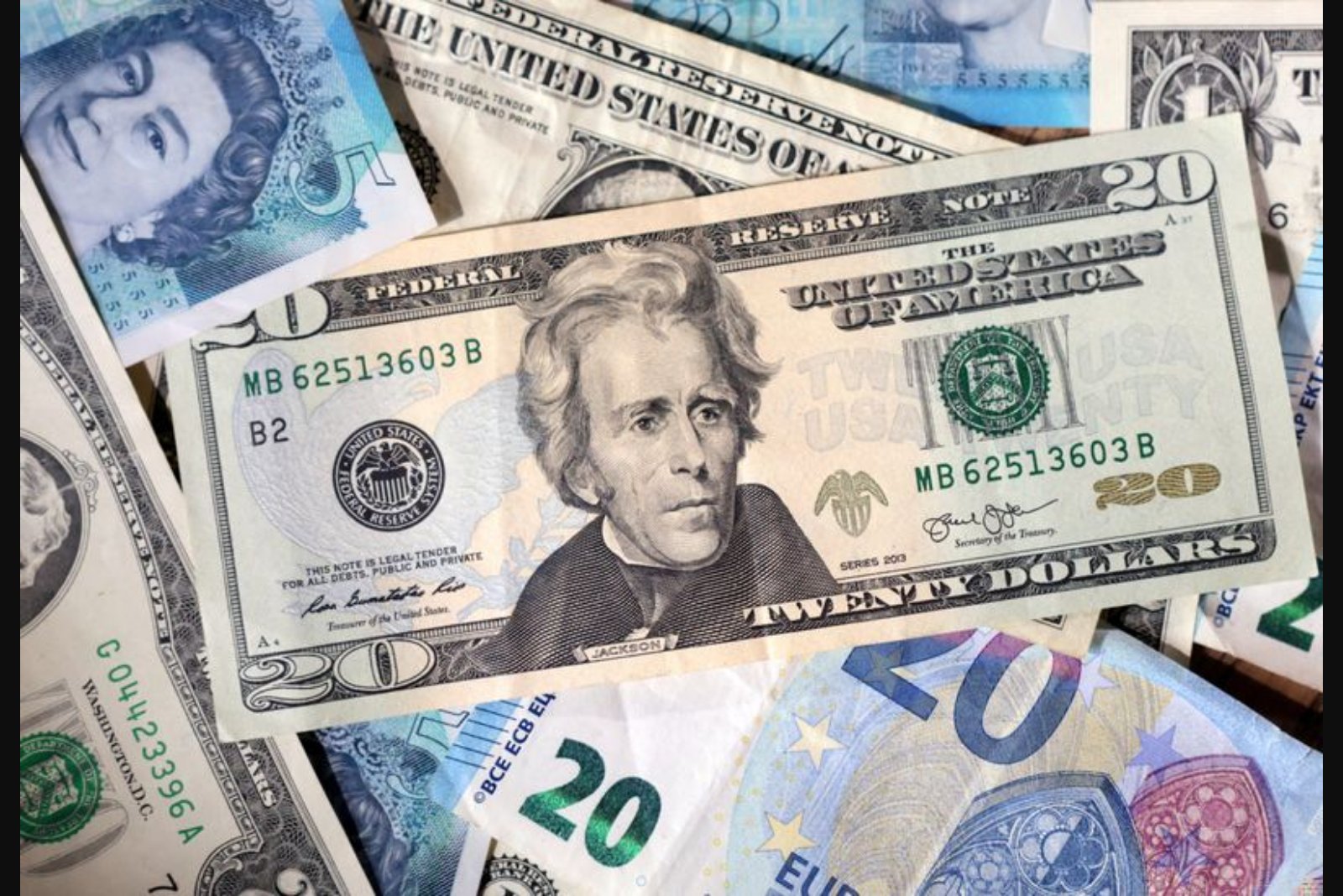
The U.S. dollar found firmer footing in early Asian trading on Wednesday, reaching a one-week high as market participants reacted to fresh doubts surrounding U.S. President Donald Trump’s announcement of an indefinite extension to a ceasefire with Iran. That skepticism helped drive flows into the dollar as investors sought safety.
On the policy front, remarks from Federal Reserve nominee Kevin Warsh during his Senate confirmation hearing were widely viewed as lightly hawkish, while robust U.S. retail sales for March offered further evidence of American economic resilience. Together, those developments supported the greenback against a range of currencies.
The U.S. dollar index, which tracks the greenback versus six major currencies, stood at 98.415 - its highest reading since April 13.
Market strategists noted a modest risk-off tone as the ceasefire extension generated renewed uncertainty around the prospects for a lasting peace in the region. "There was a modest risk-off tone overnight amid renewed uncertainty around U.S.-Iran peace talks," analysts at Westpac said in a research note.
Most other major currencies showed little change in response to the extension. The euro was unchanged at $1.1739, and a separate currency moved 0.1% higher to $1.3519. The Australian dollar was little changed at $0.7152, while the New Zealand dollar held at $0.5894.
Against the Japanese yen, the dollar dipped about 0.1% to 159.26 yen. Earlier data indicated Japan’s exports rose for a seventh consecutive month, a result that market participants interpreted as evidence that disruptions from the Gulf conflict had not inflicted a material blow on external shipments.
Market watcher Tony Sycamore, a market analyst at IG in Sydney, pointed to internal Iranian divisions as a primary factor complicating the path to a durable agreement. "Make no mistake, this internal power struggle remains the single biggest obstacle to any lasting deal, and how it resolves remains to be seen," he said.
The Iran developments coincided with other U.S. policy and political storylines. President Trump said he will "remember" companies that choose not to seek refunds for tariff payments that the Supreme Court deemed illegal. He did not, however, specify what benefits those companies might expect if they abstain from using the government's new refund portal.
U.S. retail sales rose 1.7% in March, beating expectations for a 1.4% gain. The rise was driven in part by higher gasoline prices linked to the conflict with Iran, which produced a record surge in receipts at service stations. Tax refunds also helped underpin spending in other categories.
In Washington, Warsh sought to reassure senators that he would preserve central bank independence if confirmed and would not act on requests from the White House to cut interest rates. Warsh said he had made no promises to President Trump about cutting rates.
Junya Tanase, chief Japan FX strategist at JPMorgan Chase & Co in Tokyo, interpreted Warsh’s testimony as emphasizing independence and rejecting any request from the president to cut rates. "The most interesting points were probably that he emphasized the Fed’s independence and clearly rejected any request from President Trump to cut rates; taken together, the overall tone could be described as slightly hawkish," Tanase said.
Despite that interpretation, overnight OIS pricing showed little movement after Warsh’s remarks. That suggests the previous day’s uptick in U.S. yields and the dollar’s strength were driven more by rising oil prices tied to Iran-related developments than by any immediate change in rate expectations linked to Warsh’s testimony.
The confirmation hearing also included political sparring. Republican Senator Thom Tillis used his allotted time to outline why he would seek to delay Warsh’s confirmation until the administration drops an ongoing criminal probe of current Fed Chair Jerome Powell.
In other markets, major cryptocurrencies posted small gains. Bitcoin was up 0.2% at $75,894.67, while ether similarly nudged higher to $2,321.92.
With multiple moving parts - geopolitics, central bank oversight and stronger consumer spending - market participants are weighing the relative influence of each on rates, currencies and commodity prices. For now, the dollar’s advance appears linked more closely to safe-haven demand and higher oil prices than to a decisive shift in Federal Reserve expectations.
Summary
Renewed skepticism about the durability of an indefinite U.S.-Iran ceasefire lifted safe-haven flows into the dollar, pushing the U.S. dollar index to its strongest level since April 13. Fed nominee Kevin Warsh’s Senate testimony was read as slightly hawkish, while U.S. retail sales for March beat expectations. Currency moves were otherwise muted and political tensions - both in Iran and within U.S. confirmation politics - added to market uncertainty.
Key points
- Safe-haven demand pushed the U.S. dollar index to 98.415, a one-week high, as doubts surfaced over the ceasefire with Iran.
- Kevin Warsh emphasized Fed independence and denied making promises to the president about rate cuts; markets interpreted his testimony as modestly hawkish, though OIS pricing showed limited reaction.
- Stronger-than-expected U.S. retail sales (up 1.7% in March) were supported by higher gasoline receipts and tax refunds, signaling consumer resilience - with implications for rates, energy and consumer discretionary sectors.
Risks and uncertainties
- Political divisions within Iran could derail prospects for a lasting ceasefire, prolonging safe-haven demand and elevating oil price volatility - impacting energy and inflation-sensitive assets.
- Domestic U.S. political dynamics around Fed confirmations could delay appointments and create policy uncertainty, with potential spillovers into financial markets and bank-sensitive sectors.
- Oil-price driven shifts in yields have been a key driver of recent dollar moves; further moves in crude tied to geopolitical developments could change rate and currency dynamics quickly.