
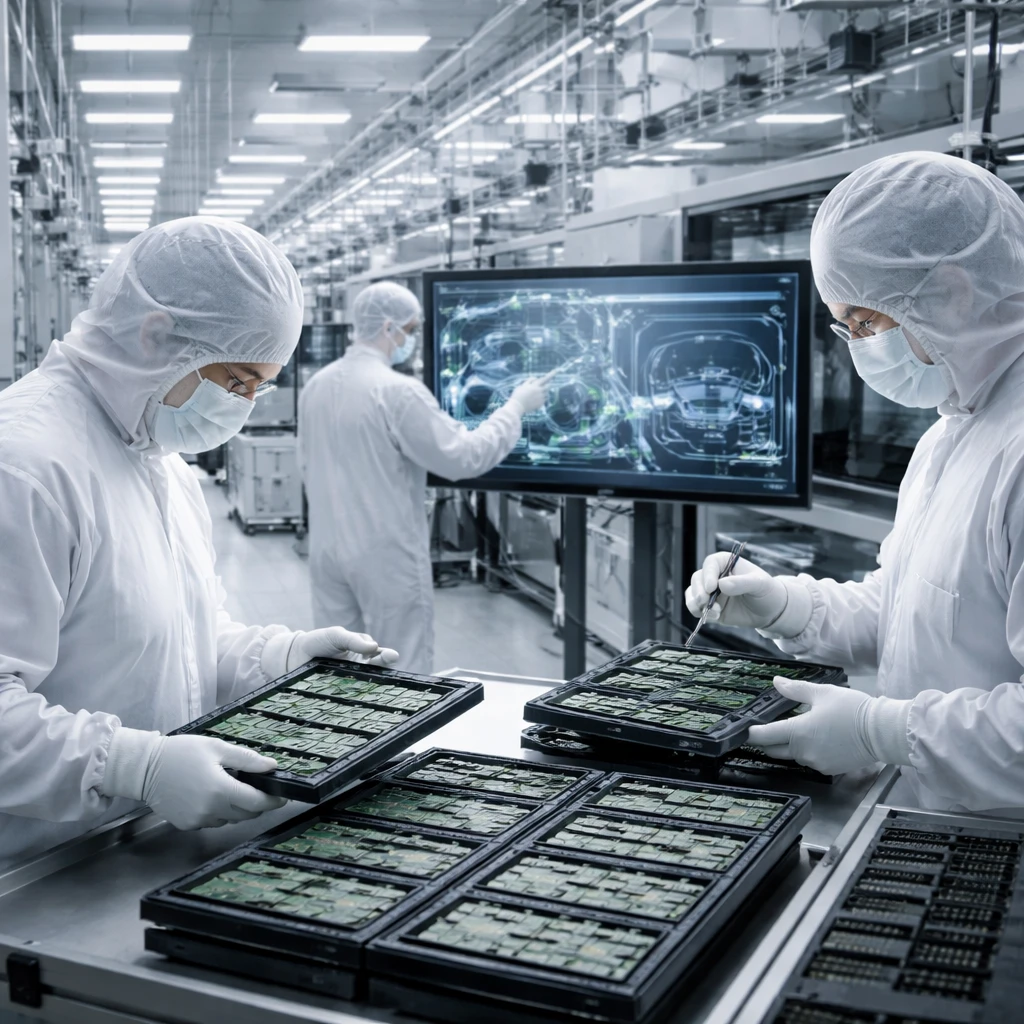
Samsung Electronics Co Ltd has significantly expanded the volume of 8GB GDDR6 DRAM it supplies to Tesla Inc, with monthly deliveries in April rising to four times the rate seen in the first quarter, South Korean reporting indicates. The step-up in shipments aims to address memory constraints the automaker has been facing for its vehicle systems.
Samsung’s response included a production ramp at its Hwaseong campus to meet Tesla’s increased requirements. The company primarily supplies DRAM used in Tesla’s in-vehicle infotainment systems and autonomous driving platforms, according to the report.
These supply changes occur within the framework of a previously announced long-term semiconductor manufacturing agreement between Samsung and Tesla, a deal valued at roughly $16.5 billion. The partnership also envisages expanded collaboration: Samsung plans to begin producing advanced artificial intelligence chips for Tesla at its Texas foundry later in 2026, the reporting notes.
Market conditions for memory chips have tightened considerably since mid-2025, driven by strong demand from the AI sector. As part of its strategic production adjustments, Samsung has been reducing the output of traditional DRAM in favor of higher-margin AI-focused products, notably high-bandwidth memory. That repositioning reflects shifting end-market priorities across chipmaking and AI hardware.
NVIDIA Corporation is identified as a major purchaser of Samsung’s high-bandwidth memory products, underscoring the concentration of AI-related demand among leading GPU and AI-platform providers.
Implications for industry participants
The increase in Samsung’s DRAM deliveries to Tesla directly addresses an operational bottleneck for the automaker’s vehicle electronics. For Samsung, the ramp reflects flexible capacity deployment between traditional automotive memory and emerging AI-focused memory products. Both automotive and semiconductor sectors are affected by these supply dynamics.
The arrangement between Samsung and Tesla, as well as Samsung’s planned AI chip production in Texas, signals continued vertical integration and long-term supply commitments in the semiconductor-automotive interface.
Limitations
The available reporting specifies the scale-up in April relative to the first quarter but does not furnish monthly absolute shipment figures beyond the relative increase. It also does not provide explicit timelines for Tesla’s memory supply recovery or the pace of Samsung’s broader product mix transition.