
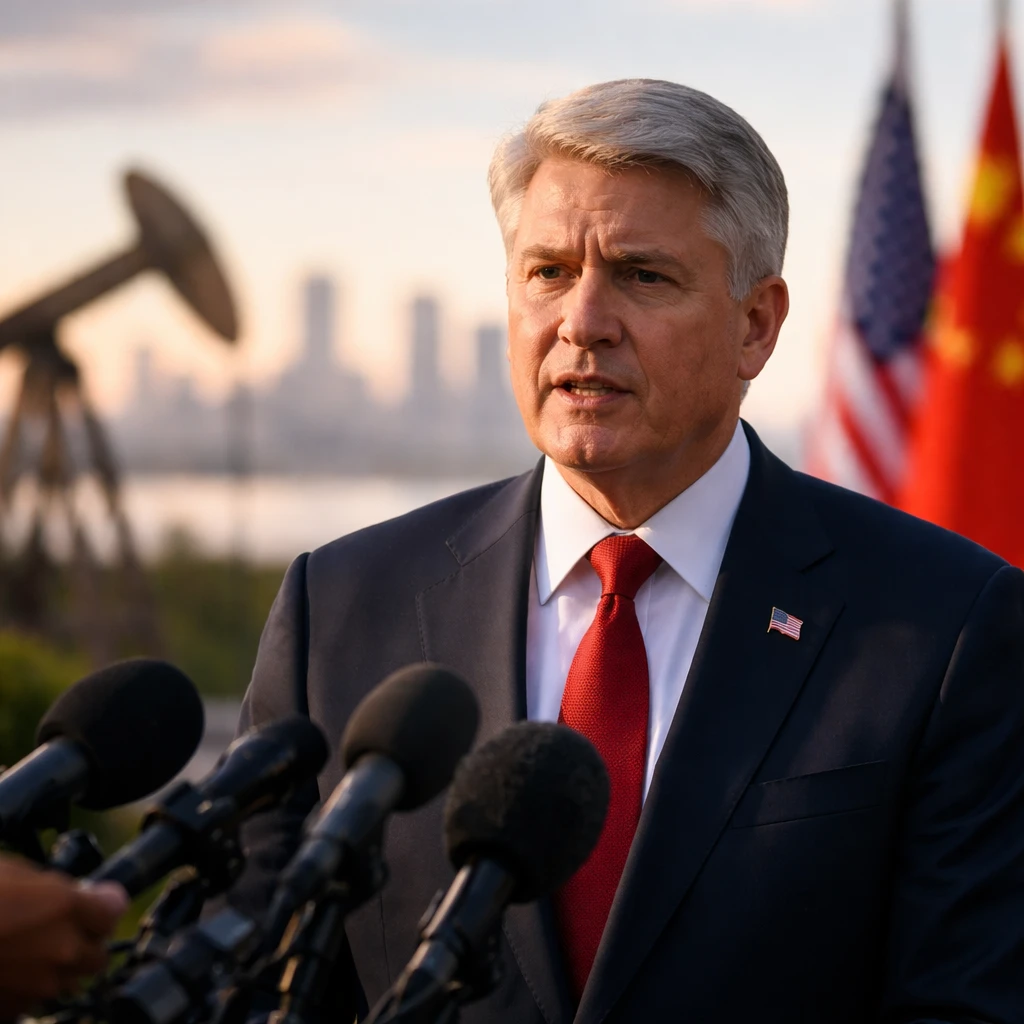
Treasury Secretary Scott Bessent said Thursday that he expects price pressures to ease after a recent run of unfavorable inflation reports, warning that the U.S. may still see "one or two more 'hot inflation numbers, but then I think we're going to see substantial disinflation.'"
Speaking to CNBC while attending President Donald Trump's summit with Chinese President Xi Jinping, Bessent attributed much of the recent rise in inflation to higher energy costs. He said the United States would respond by keeping production levels elevated to blunt the supply disruption tied to the Iran war, noting that the country is "going to keep pumping" oil to help address that shock.
"I firmly believe that nothing is more transient than a supply shock, and we can, we can look through that, because before the Iranian conflict began, core inflation was coming down," Bessent said. "So I think core inflation will continue coming down."
Bessent's remarks came amid a string of fresh inflation data showing a notable pickup in prices. Consumer prices rose 0.6% in April, while core costs excluding food and energy increased 0.4% for the month. On a 12-month basis, headline inflation reached 3.8% and core inflation stood at 2.8%.
Wholesale inflation also moved higher, with producer prices jumping 1.4% in the latest report and lifting the 12-month PPI to 6%, the highest level since late 2022. Import and export price indexes recorded their strongest readings in roughly four years.
Bessent stressed the temporary character of supply-driven price shocks and reiterated his view that energy-related inflation should normalize. "I was never on team transitory during Covid," he said. "We'll get to the other side of this, and I don't know whether it's a few days or a few weeks, and energy inflation will come back down."
The comments arrived as the Federal Reserve prepares for a leadership transition. Incoming Fed Chair Kevin Warsh was confirmed by the Senate on Wednesday and is set to assume the post on Friday, the same day incumbent Chair Jerome Powell's term ends.
Against that backdrop, Bessent's outlook ties near-term inflation volatility largely to energy-market developments and emphasizes the expectation that core inflation will resume a downward path once the supply disruption eases.