
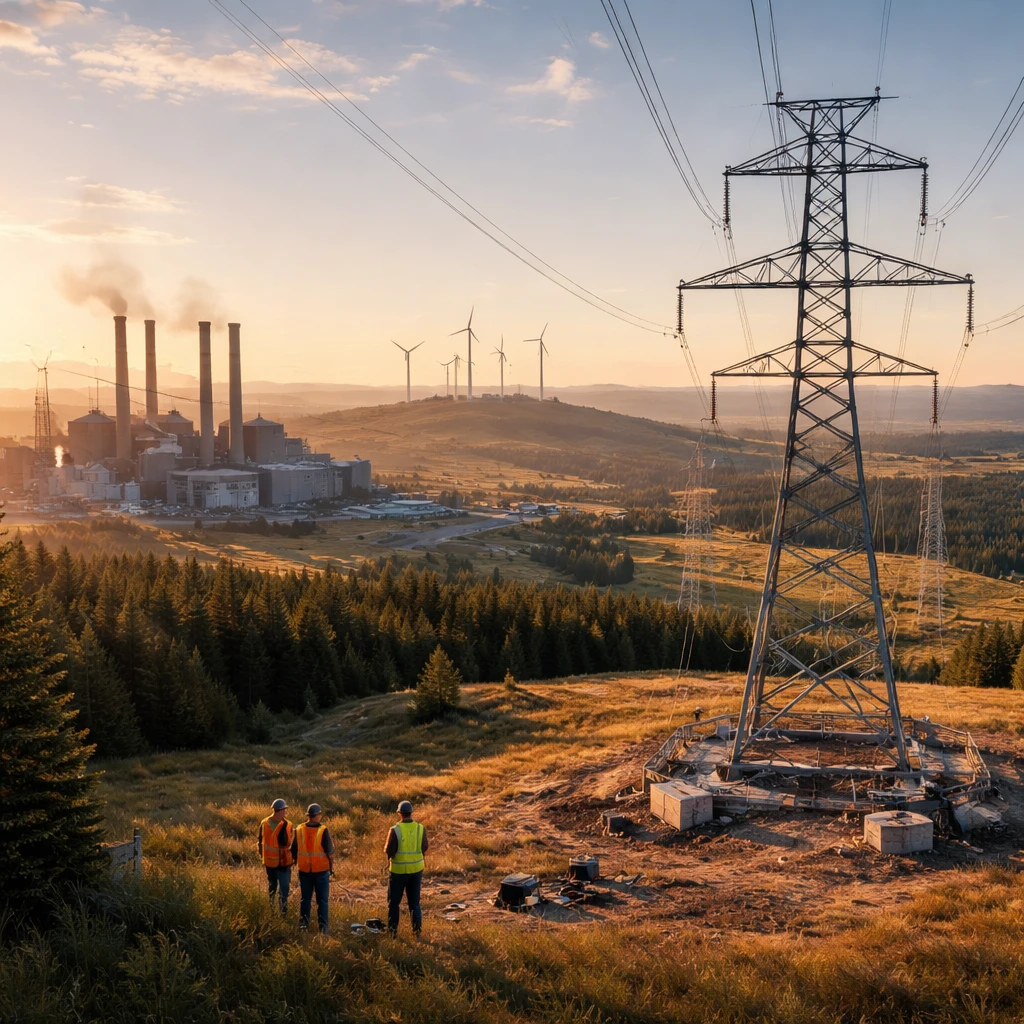
Prime Minister Mark Carney unveiled a national strategy on Thursday that targets a twofold increase in Canada’s electricity generation by 2050 while permitting greater flexibility for natural gas-fired power within the country’s clean electricity rules.
The strategy places the price tag for expanding the power system at more than C$1 trillion ($729 billion). It states that financing for the buildout will come from a mix of federal and provincial government allocations as well as investments by private sector participants.
Carney released the electricity strategy one day ahead of a separate announcement planned by his government on an industrial carbon pricing agreement with Alberta. That agreement is described in the strategy as a mechanism to allow construction of a new oil pipeline to the west coast and to support a major carbon capture project in Alberta’s oil sands.
While the strategy sets long-term ambitions, it does not include a catalogue of specific actions or a detailed timeline to reach the doubling target. Instead, it says the federal government will begin consultations with provinces, territories, Indigenous groups, utilities and unions to work through implementation details and next steps.
Among the concrete commitments in the document is a financing and grants program aimed at supporting energy retrofits for up to one million Canadian homes. Those measures include incentives to encourage households to switch to electric heat pumps. The strategy frames these measures as a way to lower energy bills for roughly 70% of Canadian households.
The government emphasized the need to preserve affordability and reliability while pursuing emissions reductions, stating: "Realizing these savings will require a willingness to use most sources of energy - including natural gas." The plan adds: "That’s why we intend to adjust clean electricity regulations to provide the flexibility needed to keep energy costs for all Canadian families reliable and affordable, while reducing emissions and building the clean energy system of the future."
The clean electricity regulations referenced in the strategy were introduced under Carney’s predecessor, Justin Trudeau. The previous rules had sparked friction with Alberta, which argued they would effectively require the province to phase out natural gas generation.
To support an interconnected national grid, the strategy directs the federal Major Projects Office to develop an investment strategy focused on building transmission interties to strengthen east-west connections across Canada.
The document does not provide further operational details, funding schedules or procurement plans. It instead outlines the federal government’s framework and intentions, leaving key implementation questions to the forthcoming consultations and the Major Projects Office work.
Key points
- The strategy aims to double Canada’s electricity generation by 2050 and contemplates regulatory changes to allow continued use of natural gas in the power mix - impacting utilities and power producers.
- The estimated cost of the grid expansion exceeds C$1 trillion, with funding expected from federal and provincial governments as well as private investors - relevant to infrastructure, finance and construction sectors.
- The plan includes grants and financing for energy retrofits for up to one million homes and incentives for heat pump adoption, targeting lower household energy costs for about 70% of Canadians - affecting home energy, equipment manufacturers and installers.
Risks and uncertainties
- The strategy lacks specific implementation measures and timelines, creating uncertainty for utilities, grid builders and investors who require clarity on project pipelines and procurement.
- Adjustments to clean electricity regulations to permit more natural gas use may prolong tensions with provinces like Alberta and influence the pace and composition of decarbonization efforts in the power sector.
- The reliance on a mixed funding model - federal, provincial and private participation - introduces execution risk if all parties do not commit the expected capital or if cost-sharing arrangements are delayed.
Summary conclusion
The federal electricity strategy sets an ambitious long-term goal and signals willingness to balance affordability, reliability and emissions reduction by keeping natural gas as an option during the transition. The plan’s heavy emphasis on consultation and the absence of detailed actions leave major implementation and financing questions to be resolved in the months and years ahead.