
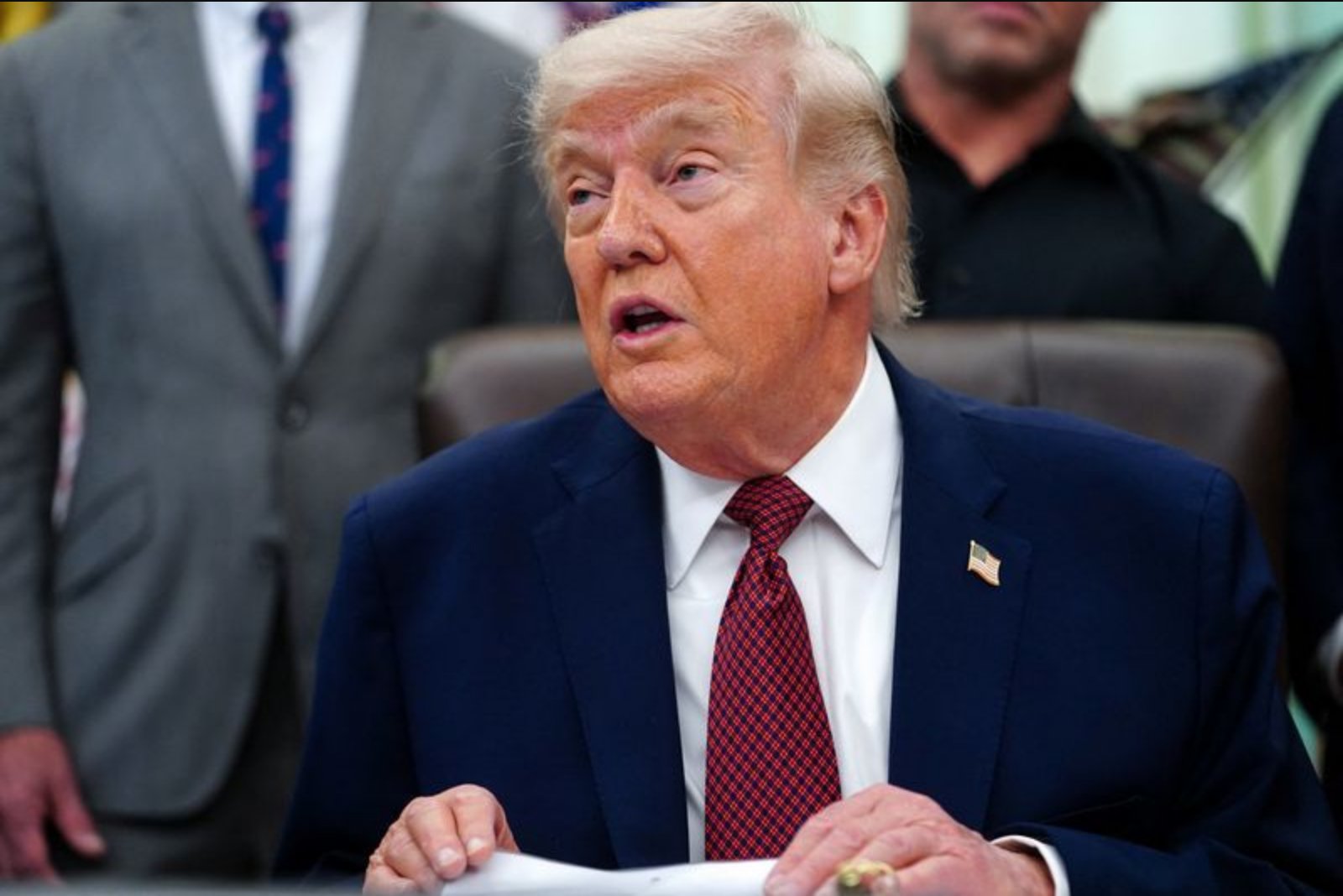
WASHINGTON - President Donald Trump said on Sunday that Iran could reach out to the United States if it wanted to negotiate an end to the war between the two countries, offering an open channel for talks.
Speaking in an interview on Fox News' "The Sunday Briefing," the president addressed the possibility of direct contact, saying: "If they want to talk, they can come to us, or they can call us. You know, there is a telephone. We have nice, secure lines."
Separately, Mr. Trump canceled a planned trip on Saturday by his envoys, Steve Witkoff and Jared Kushner, to Pakistan. That cancellation was described in the reporting as dealing a new setback to prospects for peace following recent diplomatic movements in the region.
Iranian Foreign Minister Abbas Araqchi had departed Islamabad after speaking only with Pakistani officials. The article notes that Araqchi has since returned to Pakistan despite the absence of U.S. counterparts, a detail that underscores the current gaps in direct U.S.-Iran engagement described in the reporting.
The president's remarks, delivered in the televised interview, framed the possibility of talks as straightforward and accessible, pointing to secure telecommunications as an available channel for dialogue. The reporting presents the exchange of statements and the canceled envoy trip as linked developments that together reflect ongoing diplomatic uncertainty.
Key points
- President Trump said Iran can call or come to the United States to negotiate an end to the war between the two countries, and he noted the availability of secure telephone lines in a Fox News interview.
- The president canceled a Saturday trip by envoys Steve Witkoff and Jared Kushner to Pakistan, a move described as a new setback to peace prospects after Iranian Foreign Minister Abbas Araqchi left Islamabad following talks only with Pakistani officials.
- Araqchi has since returned to Pakistan despite the absence of U.S. envoys; the reporting does not provide further details about subsequent meetings or outcomes.
Sectors potentially relevant: The article does not specify particular economic sectors or market impacts.
Risks and uncertainties
- Diplomatic setback: The cancellation of the U.S. envoys' trip to Pakistan is described as a setback to hopes for peace, introducing uncertainty into negotiations that could otherwise have involved multiple parties.
- Engagement uncertainty: It is unclear from the reporting whether Iran will make contact in response to the president's public offer to negotiate, leaving the prospect of direct talks unresolved.
- Absent U.S. counterparts: The reporting notes that Abbas Araqchi returned to Pakistan despite U.S. envoys not being present, highlighting gaps in trilateral or multilateral diplomatic coordination that remain unresolved in the article.