
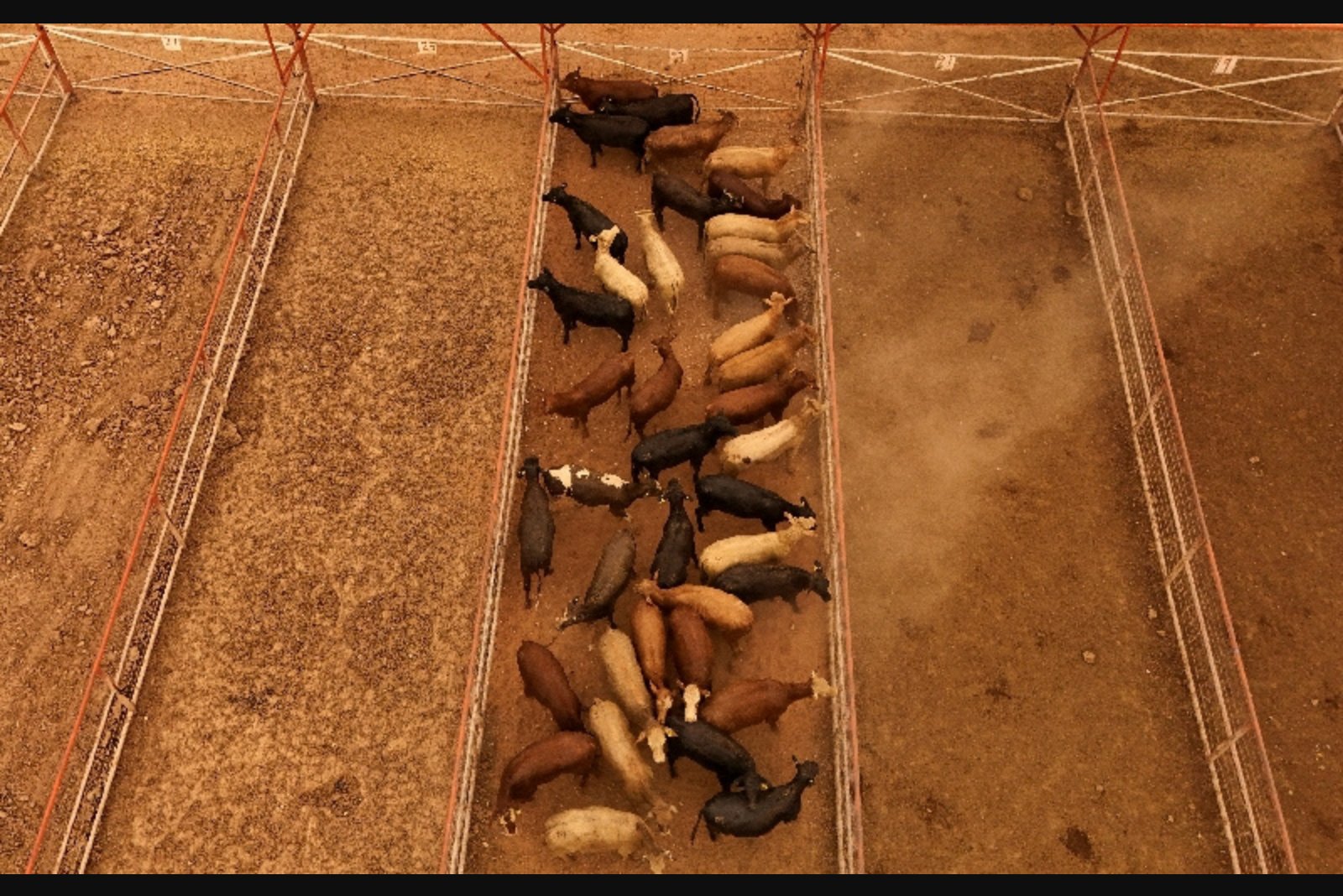
Mexico's primary meat industry association announced plans to significantly expand beef shipments to the United States next year in an effort to compensate for revenue lost after live-animal exports were halted by a prolonged screwworm outbreak.
The Mexican Meat Chamber said exports of beef to the U.S. have already risen in the early part of the year, and leaders at a chamber event described a goal of doubling those exports next year. Officials noted that fresh meat constitutes the majority of current outbound volumes.
Chamber data show Mexican beef exports to the United States increased by about 23% in the first four months of the year, and that for the full year 2025 exports rose 10.6% to reach approximately $2.3 billion. Macarena Hernandez, the chamber's general director, said at the event, "We’ve increased it...if it can be doubled, that would be excellent."
The U.S. border has been closed to Mexican livestock for about a year while Mexican authorities work to contain an outbreak of the flesh-eating screwworm parasite. The infestation, which moved northward from Central America, has disrupted trade and imposed costs across the cattle sector.
With live exports blocked, producers who ordinarily ship animals north are retaining them in Mexico. That has forced ranchers to provide feed, space and other inputs while holding animals until they can be processed for beef - a conversion that typically takes around 18 months. Hernandez described the demands on producers, saying they are having "to keep those animals, feed them, have the space and supplies" to sustain them.
The chamber estimates the border disruption has cost Mexico's livestock sector about $1.8 billion. While shifting to exports of slaughtered, processed beef provides an alternative to sending live animals, volume growth has been limited because the industry pivot is only beginning.
On the public health front, Mexico has recorded 25,107 screwworm cases since November 2024 through May 17, with 1,190 cases still classified as active according to government figures. Although the southern state of Chiapas still reports the largest cumulative caseload, the pattern of active infections has shifted. Veracruz and Puebla now account for the largest concentrations of ongoing cases.
The outbreak has not been limited to livestock; officials say cases in dogs have increased, and a canine infection was confirmed in Mexico City in April.
Containment efforts include coordinated work with U.S. authorities to release sterile flies across northern Mexican states such as Tamaulipas, Nuevo Leon and San Luis Potosí, and within a buffer zone extending roughly 89 kilometers (55 miles) south of the Texas border. The sterile-insect strategy is a central part of authorities' attempt to stop the parasite's northward advance.
A further element of Mexico's response is the construction of a sterile fly production facility in Metapa, Chiapas. The government reported the plant is about 75% complete and expected to begin operating by the end of June.
The combined effect of trade restrictions, disease containment activities and the industrial shift from live-animal shipments to processed exports is reshaping operational needs across the cattle sector. The speed and scale of the transition to more slaughter-and-export activity will determine how quickly producers can recuperate lost sales brought on by the border closure.