
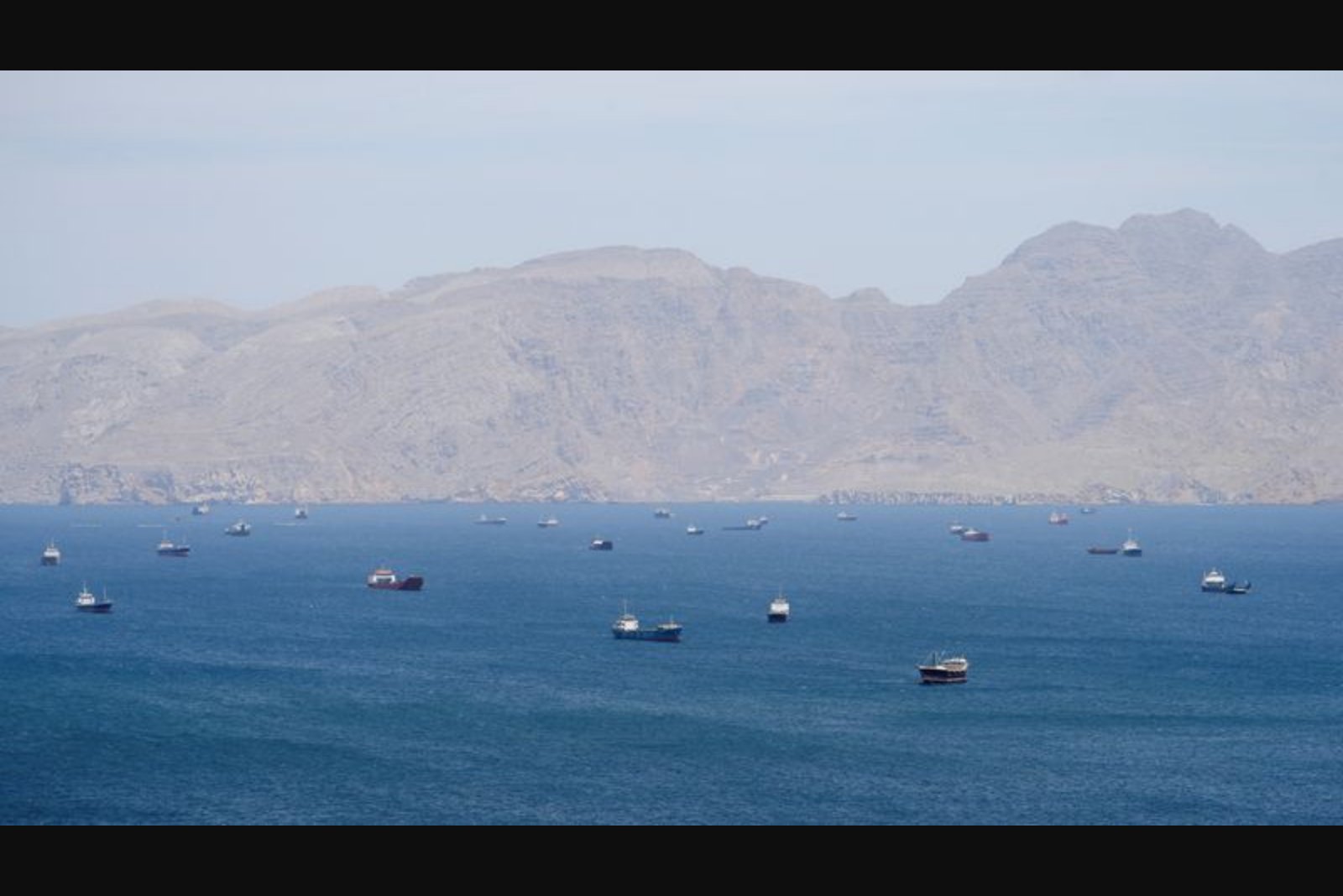
Recent statements from Iran have underscored concerns that submarine cables routed through the Strait of Hormuz are a potential vulnerability for the region’s digital infrastructure. The Strait, long recognised as a maritime chokepoint for oil, is also a concentrated corridor for undersea fibre-optic links that transmit data between Asia, the Gulf states and Europe via Egypt.
Why undersea cables matter
Subsea cables - whether fibre-optic lines that carry data or electrical cables that transport power - are laid along the sea floor to link countries and continents. According to the ITU, the United Nations specialised agency for digital technologies, these cables account for roughly 99% of global internet traffic. In addition to internet data, they transmit telecommunications signalling and electrical connections that underpin cloud services and online communications.
Geopolitical and energy analyst Masha Kotkin summarised the potential fallout from damaged cables: "Damaged cables mean the internet slowing down or outages, e-commerce disruptions, delayed financial transactions ... and economic fallout from all of these disruptions." That risk is particularly relevant to Gulf economies. The UAE and Saudi Arabia have channelled significant investments into artificial intelligence and digital infrastructure as part of efforts to diversify away from oil, establishing national AI companies and other digital services that rely on fast, reliable undersea links.
Cables in the Strait of Hormuz
Several major systems either traverse or land in the countries bordering the Strait. Notable examples include:
- Asia-Africa-Europe 1 (AAE-1) - a route linking Southeast Asia to Europe via Egypt, with landing points in the UAE, Oman, Qatar and Saudi Arabia.
- The FALCON network - which connects India and Sri Lanka to Gulf nations, Sudan and Egypt.
- Gulf Bridge International Cable System - designed to link all Gulf countries, including Iran.
- Additional capacity is under construction, including a system led by Qatar’s Ooredoo.
Sources of damage and how common faults are
Global submarine cable length has expanded significantly between 2014 and 2025, but the annual number of faults has remained relatively steady. Data from the International Cable Protection Committee (ICPC) indicate roughly 150 to 200 faults per year in recent years.
While deliberate state-sponsored sabotage is recognised as a risk, the ICPC and industry experts note that the bulk of faults - about 70% to 80% - stem from accidental human activity, principally fishing operations and ship anchors. Natural hazards such as undersea currents, earthquakes, subsea volcanic activity and typhoons also pose threats. Alan Mauldin, research director at telecom research firm TeleGeography, highlighted those natural risks and described common mitigation practices: burying cables, armouring sections and routing lines away from known hazards.
Conflict-related risks and recent disruptions
The conflict involving Iran, now approaching two months in duration, has already caused notable disruption to regional infrastructure and energy supplies. It has also affected cloud infrastructure, with strikes hitting Amazon Web Services data centres in Bahrain and the UAE. To date, undersea cables in the Strait of Hormuz have not been directly cut; however, analysts warn of rising indirect risks.
One such indirect risk is the increased likelihood that damaged or drifting vessels could inadvertently strike submarine cables with anchors. Kotkin noted that "in a situation of active military operations, the risk of unintentional damage increases, and the longer this conflict lasts, the higher the likelihood of unintentional damage." The industry has already seen a comparable episode in 2024 when a commercial vessel, attacked by Iran-aligned Houthis in the Red Sea, drifted and severed cables with its anchor.
How severely Gulf countries would be affected by cable damage depends on operators’ reliance on specific links and the availability of alternative paths. TeleGeography emphasises that the impact varies by network operator and the redundancy built into their connections.
Repair challenges in contested waters
Repairing a damaged undersea cable is technically straightforward in controlled conditions, but conflict zones create a set of non-technical obstacles. Owners of repair vessels and insurers may be reluctant to operate where fighting or floating mines are present. Obtaining the necessary permits to enter national territorial waters can be time-consuming and may be the largest practical hurdle.
"Often one of the biggest problems with doing repairs is you have to get permits into the waters where the damage is. That can take a long time sometimes and can be the biggest source (of problems)," said Mauldin.
After hostilities conclude, the industry faces an additional task: re-surveying the sea floor to confirm safe routes for cables and to avoid wreckage or objects that sank during the conflict. That step will be necessary to reduce the risk of future accidental damage.
Alternatives and limitations
Experts are clear that a damaged subsea cable network would not produce a total loss of connectivity because land-based links would continue to provide some connectivity. However, satellite services are not a practical substitute for the bulk of international internet traffic. Mauldin said, "It’s not as though you could just switch to satellite. That’s not an alternative," noting that satellites require connections to terrestrial networks and are better suited for mobile or in-transit users such as aircraft and ships.
Low-Earth-orbit networks such as Starlink may offer focused support, but Kotkin described them as "a boutique solution, which is not scalable to millions of users, at this time." In short, while partial mitigations are available, they fall well short of replacing the capacity and economics of undersea cables.
Conclusion
The Strait of Hormuz is a concentrated corridor for both energy and data flows. Recent warnings have brought fresh attention to the interdependence of digital infrastructure and regional geopolitical tensions. While direct cable cuts have not been reported amid current hostilities, experts caution that the combination of military activity, accidental maritime incidents and the logistical challenges of repairing lines in contested waters creates a continuing vulnerability for Gulf nations and their digital-dependent economies.