
Stock Markets April 28, 2026 03:18 AM

European Stocks Slip as US-Iran Negotiations Stall; Earnings Season and Central Bank Meetings Loom

Investors weigh diplomatic deadlock and a busy week of earnings and policy decisions as STOXX 600 ticks lower

By Avery Klein BP
European Stocks Slip as US-Iran Negotiations Stall; Earnings Season and Central Bank Meetings Loom
BP

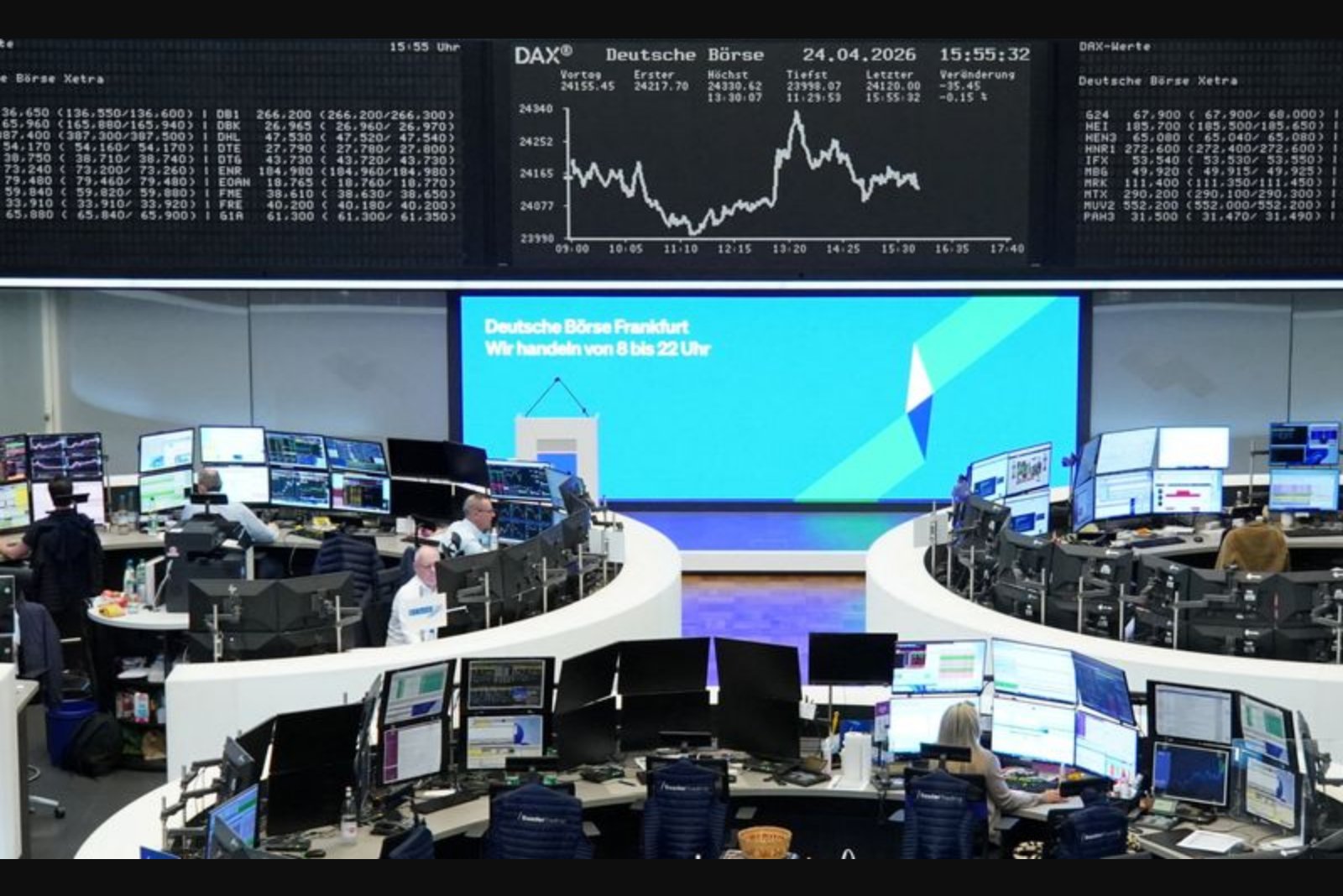
European equity markets opened modestly weaker as traders digested stalled U.S.-Iran talks, a sustained disruption to shipping routes, and a calendar crowded with central bank meetings and corporate results. The pan-European STOXX 600 fell 0.3% to 606.94 by 0704 GMT, with energy-linked names under pressure despite mixed corporate updates that drove some individual moves.

Key Points

  • Pan-European STOXX 600 slipped 0.3% to 606.94 at 0704 GMT amid heightened investor caution.
  • Geopolitical tensions and the closure of the Strait of Hormuz have driven oil prices higher and raised inflation and growth concerns, affecting energy-linked European stocks.
  • Corporate earnings were mixed: BP beat first-quarter profit expectations (+2.3% share move), Novartis missed on core operating profit and sales (-4.5% share move), Norwegian Air Shuttle reported a smaller-than-expected operating loss (+~4% share move).

European shares edged down on Tuesday as investors entered a week heavy with central bank meetings and corporate earnings, while a diplomatic impasse in negotiations between the United States and Iran added to market caution.

U.S. officials signaled that President Donald Trump was unhappy with Iran's most recent proposal to resolve the two-month-long conflict. That proposal sought to delay discussion of Iran's nuclear programme until the war is over and until shipping disputes are settled, a stance that U.S. officials indicated was unsatisfactory.

The geopolitical disruption has unsettled global markets, pushing oil prices higher and renewing concerns about inflation and economic growth. Market participants noted that the strategically vital Strait of Hormuz remains closed, amplifying the supply worries that have contributed to recent price moves.

By 0704 GMT, the pan-European STOXX 600 index was down 0.3% at 606.94 points. Traders also observed that while Wall Street and other global markets had rallied back from a sharp selloff in March, energy-dependent European equities had not regained their pre-war levels.


Corporate results produced mixed reactions. Energy heavyweight BP saw its shares rise 2.3% after reporting first-quarter profit that exceeded expectations. By contrast, Swiss drugmaker Novartis experienced a 4.5% decline in its stock after disclosing quarterly core operating profit and sales that fell short of market estimates. Airline Norwegian Air Shuttle climbed roughly 4% following a quarter with an operating loss smaller than expected; the carrier cited support from a stronger Norwegian crown, jet fuel hedges and lower prices for EU Emissions Trading System allowances.

Separately, one market analytic service highlighted BP in the context of model-driven stock evaluations, noting that its system reviews thousands of companies across many financial metrics and has identified notable past winners. The service posed the hypothetical question of whether to invest $2,000 in BP and offered to compare BP with other opportunities in the sector.

Investors will be closely watching forthcoming central bank announcements and an ongoing flow of corporate earnings for cues on economic momentum and inflation, while developments in U.S.-Iran diplomacy continue to influence risk sentiment.

Risks

  • Diplomatic deadlock in U.S.-Iran talks, including Iran's proposal to postpone nuclear discussions until after the war and shipping disputes are resolved - this poses continued uncertainty for energy and shipping sectors.
  • Persistently higher oil prices due to the closure of the Strait of Hormuz could intensify inflationary pressures and weigh on growth-sensitive sectors, particularly in energy-dependent European markets.
  • Ongoing central bank meetings and upcoming corporate earnings could produce volatility if policymakers' guidance or company results diverge from investor expectations, impacting financials and cyclical sectors.

More from Stock Markets

Taylor Wimpey flags softer southern England prices and rising build costs, holds 2026 EBIT target Apr 28, 2026 Dynatrace Stock Climbs After Starboard Value Takes Stake, Seeks Buybacks Apr 28, 2026 IQE completes placing and RetailBook offer, secures £13 million Apr 28, 2026 Iriso Shares Slip After Earnings Delay as Company Probes Possible Improper Payments Apr 28, 2026 Bayer Shares Slip After U.S. Supreme Court Hears Roundup Liability Case Apr 28, 2026