
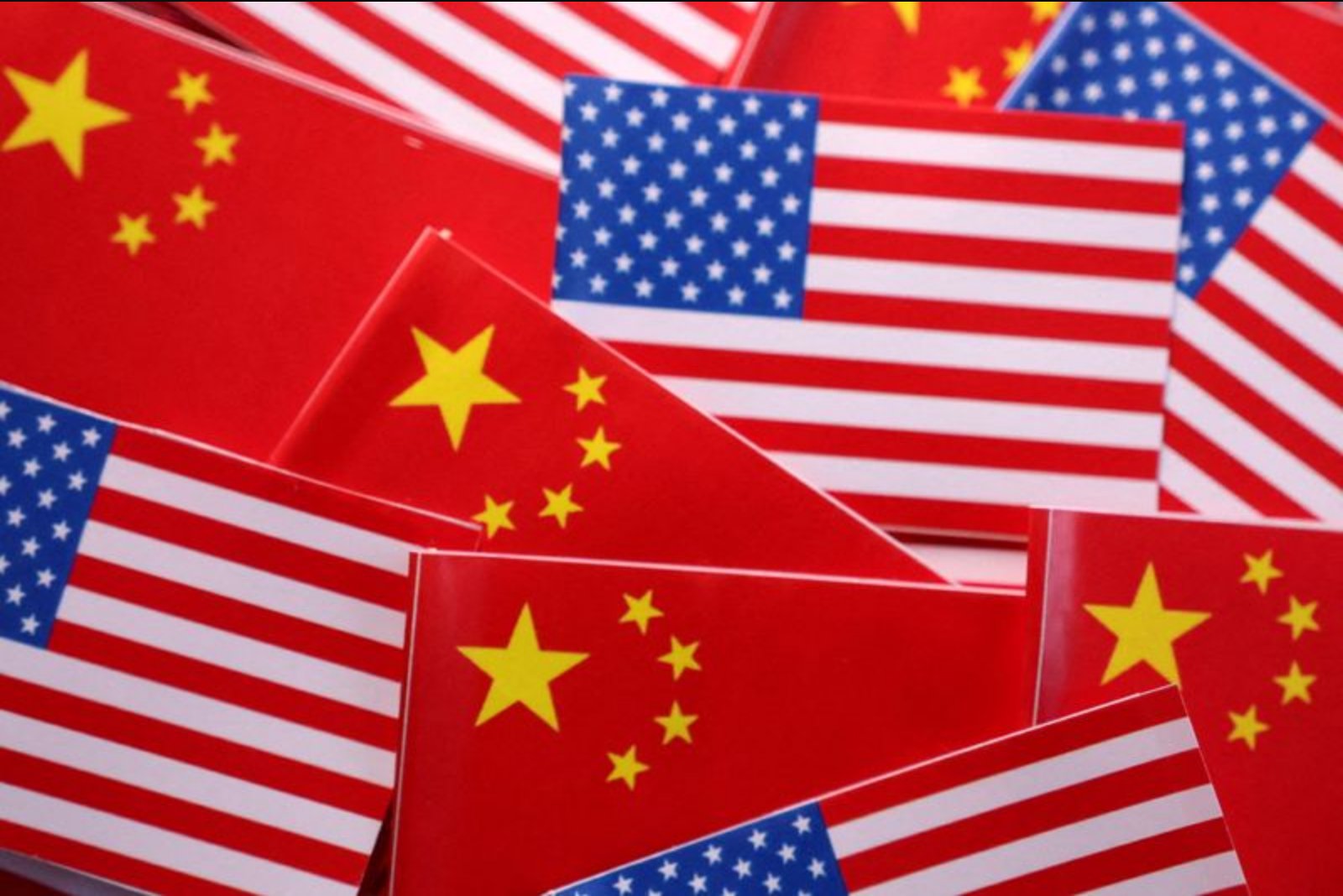
Summary: Since the October meeting between the U.S. and Chinese presidents, Beijing has used the breathing space of a trade truce to introduce a variety of economic measures that extend its options to push back against Washington and firms that shift production away from China. These moves range from legal powers to investigate foreign entities to sector-specific restrictions affecting rare earths, semiconductors, cybersecurity and solar manufacturing equipment.
Context and the truce
When the two leaders met last October, the White House reported commitments from Beijing to remove rare earth export controls and to stop retaliating against U.S. companies. The summit was later described in effusive terms by the U.S. President. Yet, rather than dismantling its leverage, Beijing has used the period since the meeting to codify and expand a set of measures that can be deployed against actions it views as harmful to China’s industrial interests.
The truce between Washington and Beijing runs through November 2026. Analysts say the accord was in part a response to Chinese threats last year to limit rare earth shipments to the U.S., moves that triggered shortages in U.S. auto supply chains within weeks and helped bring the U.S. president to the negotiating table in Busan, South Korea.
New regulatory and export measures
Since that summit, Beijing has enacted or tightened a series of measures affecting multiple economic levers:
- New laws aimed at punishing foreign entities that relocate supply chains away from China.
- Tightened licensing rules for rare earth exports.
- Regulations banning foreign AI chips from state-funded data centres.
- Bans on certain U.S. and Israeli cybersecurity software used by Chinese companies.
- Discussions with solar-equipment providers about potential curbs on exports of advanced manufacturing kit to the United States.
In April, two regulations signed by the Premier granted Chinese authorities broad powers to investigate foreign firms, governments and individuals suspected of discriminating against China’s industrial and supply chains or of enforcing what Beijing calls "unjustified extraterritorial jurisdiction." The rules allow authorities to deny entry, expel and seize assets from those judged in violation, and took effect immediately without an opportunity for business feedback.
Analysts and business groups describe these measures as more than ad hoc tit-for-tat. "The hope on the Chinese side is for a longer lasting, more broadly rooted truce, but it’s very much that 'if you want peace, prepare for war' logic," said Joe Mazur, geopolitics analyst at Beijing-based consultancy Trivium China.
How the Iran conflict sharpened focus
Officials’ attention to new economic measures intensified after public warnings from U.S. officials about sanctions related to Iranian oil. U.S. commentary in mid-April that buyers of Iranian crude could face sanctions — at a time when China purchases 80% of Iran’s oil exports — prompted state-affiliated channels to frame China’s new rules as comprehensive countermeasures.
A social media account linked to the state broadcaster described the shift in legal instruments explicitly as a response to broader international friction: "In the past, our countermeasures were largely concentrated in the trade domain. But today’s international friction is comprehensive, and those tools are no longer sufficient."
Asymmetry and business reaction
Representatives of foreign business in China point to an asymmetry created by these rules. The immediate effect of the April regulations — implemented without industry consultation — has raised concerns. "Companies now face an asymmetry: China can reduce purchases from foreign firms with little consequence, while a foreign company that cuts its dependence on China risks investigation," said Michael Hart, president of the American Chamber of Commerce in China.
Chinese ministries did not immediately provide comment on the new measures.
U.S. countermeasures and the competition for choke points
Washington has not been passive. In March it launched trade probes into excess industrial capacity and alleged use of forced labour in China, and it has enforced export restrictions on semiconductors and chipmaking equipment that have slowed China’s access to some advanced manufacturing tools.
"It’s because of export controls that China doesn’t have access to some of the most advanced semiconductor manufacturing equipment in the world," said Chim Lee, an industrial policy analyst at the Economist Intelligence Unit.
The interaction between U.S. export controls and Chinese responses has affected commercial negotiations as well. Talks for China to acquire tens of billions of dollars’ worth of Boeing aircraft have encountered complications tied to the movement of critical inputs: Washington has said it requires Chinese shipments of the rare earth yttrium to produce certain jet engines, according to officials and company representatives with knowledge of the discussions.
Domestic substitution and industrial policy measures
Beijing has taken visible steps to encourage domestic substitution and to constrain foreign suppliers’ roles in key industries. Since late 2025, rules have required chipmakers to use at least 50% domestically made equipment when adding new capacity. The government has also banned certain foreign cybersecurity software and mandated that state-funded data centres replace foreign AI chips, moves that compel domestic replacement and reduce market access for some overseas vendors.
Those export-control approaches have raised alarms about broader implications. The European Chamber of Commerce in China warned in an April report that China’s application of extraterritorial export controls could "disrupt global supply chains on an unprecedented scale, leading to both economic and non-economic damage."
Searching for vulnerability points
As the United States seeks to reduce reliance on Chinese critical minerals, Beijing is looking to identify new strategic choke points of its own. Officials have begun preliminary discussions with solar panel equipment manufacturers about limiting exports of leading-edge production technology to the United States.
"There’s going to be more effort on the Chinese side to identify where those choke points are," Mazur said. "They’re going to keep throwing things at the wall to see what sticks."
Implications for markets and industry sectors
The regulatory changes and export-control policies discussed and enacted over the past months touch several sectors: rare earths and critical minerals, automotive supply chains, aerospace components, semiconductors and data-centre infrastructure, cybersecurity products, and solar manufacturing equipment. Companies operating global supply chains or dependent on advanced imported equipment face exposure to both regulatory shifts and the operational consequences of restricted access to inputs. Business groups have already signalled concern about the immediacy of some measures and the lack of consultation prior to implementation.
Conclusion
Rather than abandoning leverage following the October summit, China appears to be institutionalising a broader set of instruments to defend and project its industrial interests. The measures enacted and discussed since that meeting give Beijing additional policy options to influence foreign firms and governments, particularly where supply chains and critical inputs are at stake. Officials and businesses watching the lead-up to the planned mid-May summit will be assessing how those tools might be used and what that could mean for global supply chains and commercial ties.