
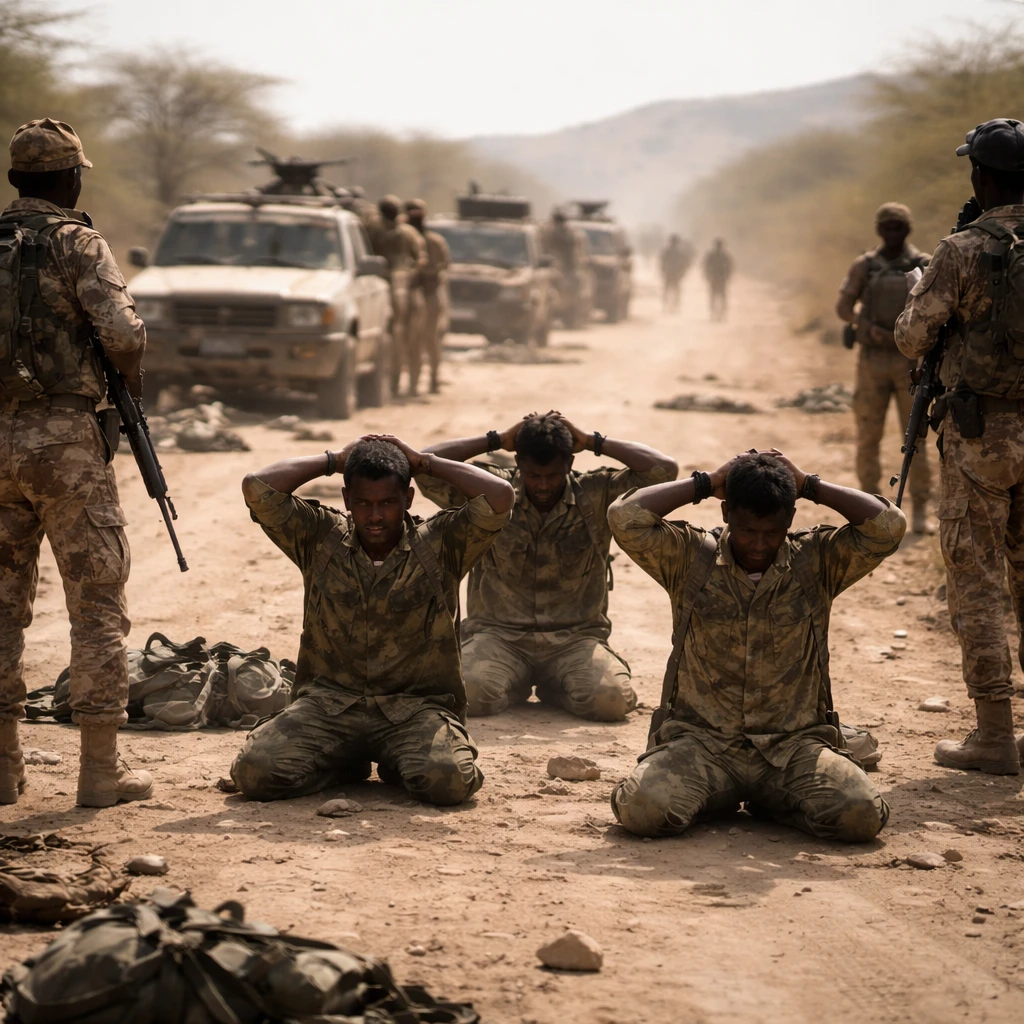
The Office of the U.N. High Commissioner for Human Rights on Thursday said it is seeking a thorough, independent investigation into reports of torture and killings of surrendering Malian soldiers after an ambush on a military convoy in northern Mali. The office said that if verified, the actions shown in footage circulated online would amount to a war crime.
The incident occurred on Saturday on the route between the town of Anefis and the city of Gao, according to statements issued by Mali's armed forces and two armed groups identified in the region - the Azawad Liberation Front, abbreviated as FLA, and Jama'at Nusrat al-Islam wal Muslimin, known as JNIM and linked to al Qaeda.
A source close to the FLA told Reuters that more than 50 pro-government fighters were killed during the ambush. The news agency noted it could not independently verify that casualty figure. Separately, footage that JNIM has shared online appears to show soldiers surrendering with their hands behind their heads and militants firing at some captives; Reuters has not independently authenticated that material.
Thameen Al-Kheetan, a spokesperson for the Office of the U.N. High Commissioner for Human Rights, said in a statement that "there needs to be a thorough and independent investigation into the circumstances of this incident, including the actions contained in the horrendous footage circulated online appearing to show FLA/JNIM members firing at the soldiers after they surrendered." He added that the office deplores "the reported torture and killing of dozens of surrendering Malian soldiers."
Requests for comment to JNIM went unanswered. Mohamed Elmaouloud Ramadane, a spokesperson for the FLA, told Reuters that his group supports independent investigations into human rights abuses in the region, and that the footage highlighted by the U.N. rights office "must first be authenticated."
The ambush follows a string of high-profile attacks earlier in the year. In April, JNIM and the FLA carried out nation-wide operations that killed Mali's defence minister, struck the airport, and forced the army to abandon several positions, according to statements at the time. On July 4, the groups made an attempt to seize Anefis, but the army retained control of the town.
U.N. rights officials and local actors point to the broader context of escalating violence in Mali. The report notes that this mounting unrest poses a challenge to the country's military-led government, which took power in coups in 2020 and 2021 and had pledged to improve security in the landlocked Sahel state.
Key elements of the incident - including the exact death toll and the provenance and authenticity of the online footage - remain unverified. The U.N. rights office's call for an independent probe underscores the need to establish the facts surrounding the ambush and any alleged violations of international humanitarian law.