
World June 24, 2026 06:58 PM

Trump Says Responsibility for Deadly Strike on Iranian Girls’ School May Never Be Determined

President questions whether investigators can identify the source of a February 28 strike that killed scores of children, as U.S. probes continue

By Leila Farooq
Share
Twitter Reddit Facebook LinkedIn

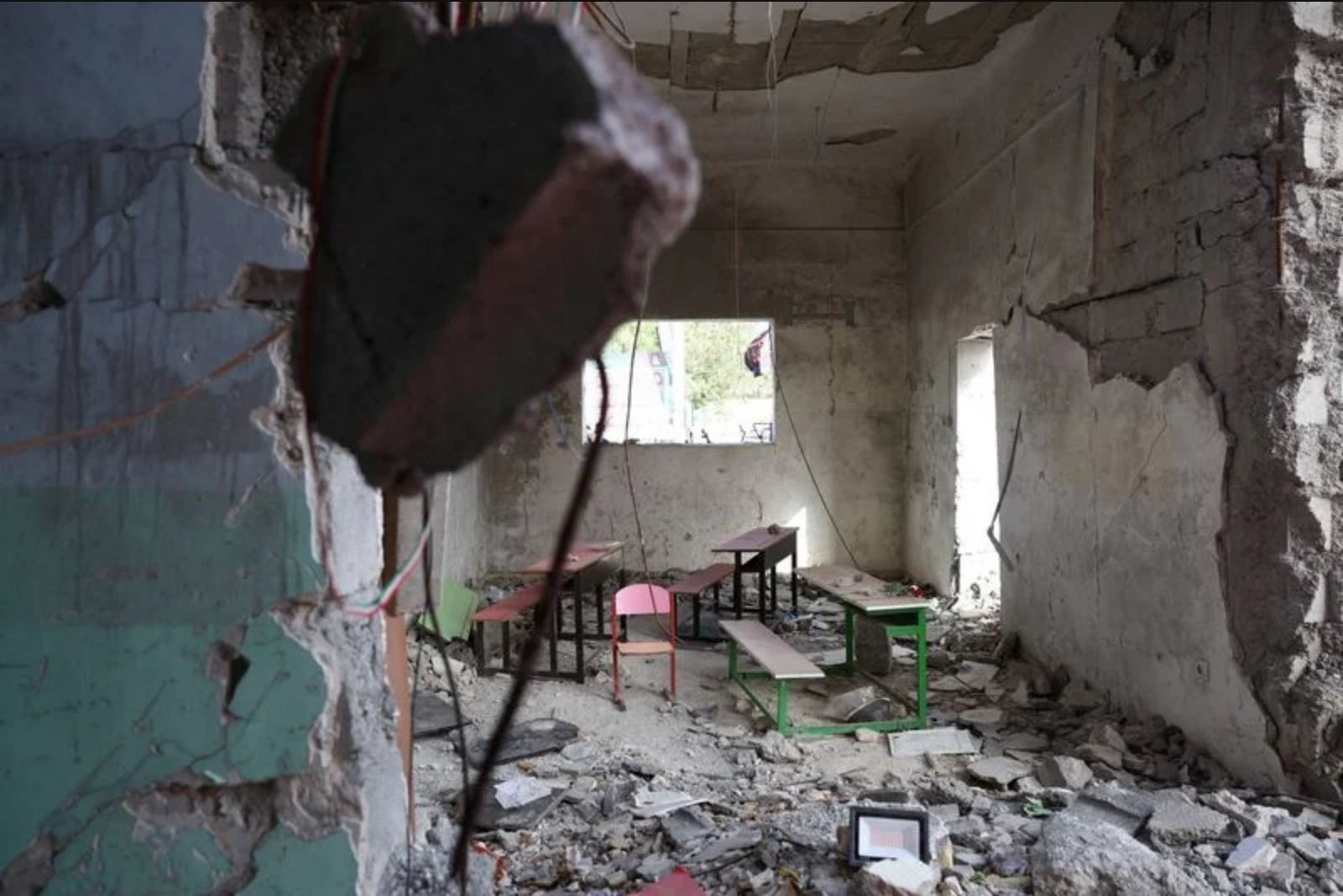
President Donald Trump said investigators may never conclusively determine who was at fault for a lethal strike on a girls’ school in Minab, southern Iran, on February 28 that killed scores of children and teachers. An initial internal U.S. military inquiry reported in March indicated U.S. forces were likely responsible, and the Pentagon has since elevated the investigation without publicly confirming preliminary findings. Trump said missiles were 'flying all over the place' that day and expressed doubt the U.S. was responsible, while Iranian authorities say the strike killed more than 175 children and teachers.

Trump Says Responsibility for Deadly Strike on Iranian Girls’ School May Never Be Determined
Summarize with
ChatGPT Perplexity Claude Grok Gemini

Key Points

  • President Trump said investigators may never determine who was at fault for the Feb. 28 strike on a girls’ school in Minab, southern Iran.
  • An initial internal U.S. military probe reported in March found U.S. forces were likely responsible; the Pentagon has elevated the investigation but not confirmed preliminary findings.
  • Iranian officials say the strike killed more than 175 children and teachers; the incident triggered international outrage and was called "absolutely horrific" by the U.N. human rights office.
  • Sectors potentially affected include defense (investigations into targeting and weapons systems), diplomacy (U.S.-Iran and allied relations), and legal/compliance areas tied to international humanitarian law.

President Donald Trump told reporters on Wednesday that it may be impossible to reach a definitive conclusion about who was responsible for a deadly strike on a girls’ school in Minab, southern Iran, on February 28 - the first day of the Iran war - a strike that Iranian officials say killed scores of children and teachers.

Trump said investigators might never resolve the question of responsibility, telling reporters: "I don’t know that they are ever going to solve that problem. I don’t know that they are ever going to solve that problem in terms of whose fault was it because there were missiles flying all over the place, and it’s horrible what happened but there were missiles flying all over the place."

In March, an initial internal U.S. military investigation was reported to have found that U.S. forces were likely responsible for the strike in Minab. The Pentagon has since elevated the probe but has not publicly acknowledged any preliminary findings.

Trump added: "Somebody said it was our missile, maybe it wasn’t our missile but I have seen nothing to lead me to believe it was," and said plainly: "I don’t think it was us."

Iranian officials say the February 28 strike, which occurred on the day U.S. and Israeli forces attacked Iran, killed more than 175 children and teachers. Sources familiar with the matter told reporters in March that the strike may have been the result of U.S. use of outdated targeting data. The available reporting noted that deliberately attacking a school would likely constitute a war crime under international humanitarian law.

U.S. officials have stated publicly that Washington would not deliberately target a school. The strike prompted international condemnation; the U.N. human rights office described the incident as "absolutely horrific."

Earlier, President Trump had publicly blamed Iran for the strike without presenting evidence. He has since said he does not yet know enough about the incident, that an investigation is ongoing, and that he will accept the inquiry’s findings. He has also stated that "nobody" intentionally attacked the school.


Context and current status

The probe into the Minab strike has been elevated within the Pentagon, but officials have not confirmed or released preliminary results. Questions remain about the source of targeting data and the sequence of events on February 28 when multiple missiles were reported in the area.

Given the claims and counterclaims, as well as the heightened attention from international bodies, the investigation and its conclusions are likely to be watched closely by governments and human rights organizations.

Risks

  • Ongoing uncertainty around responsibility for the strike creates diplomatic and reputational risks for governments and military contractors involved in operations or targeting - impact on defense sector and contractor valuations.
  • Potential legal ramifications if evidence supports claims of deliberate targeting could heighten scrutiny of military practices and procurement, affecting defense and compliance-focused firms.
  • Unresolved findings and international condemnation may exacerbate geopolitical tensions, which could influence broader markets sensitive to conflict risk such as energy and regional trade.

More from World

Why a Growing Share of Young Brazilians Are Turning Away from Lula Jun 24, 2026 White House Seeks Over $1.4 Billion in Emergency Ebola Funding, Including $800 Million for Kenya Quarantine Plans Jun 24, 2026 Moody’s shifts Gabon outlook to negative, keeps Caa2 rating amid heavy financing needs Jun 24, 2026 ICC Judges Sue Trump Administration Over Last Year’s Sanctions Jun 24, 2026 Researchers Probe Genetic Clues to Longevity in Trio of Brazilian Sisters Over 100 Jun 24, 2026