
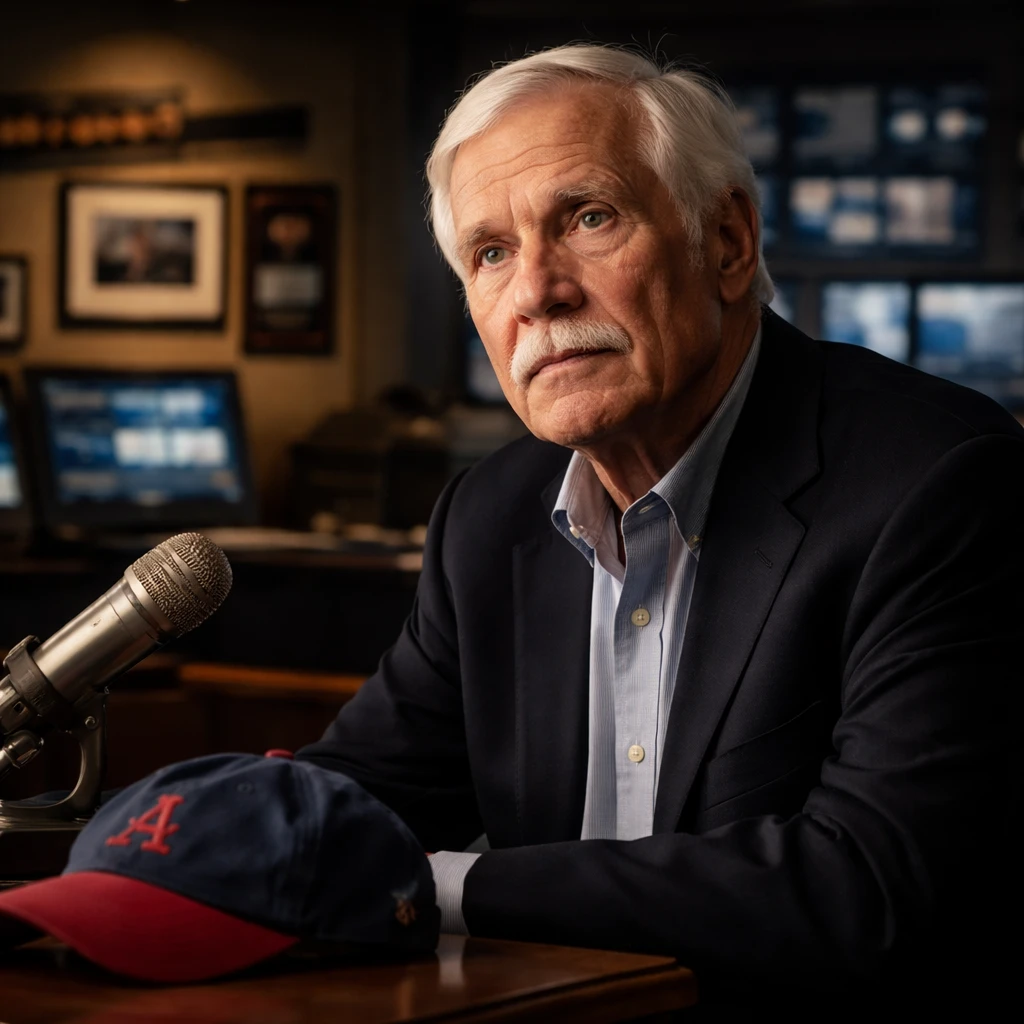
May 6 - Ted Turner, the billionaire founder of TV news network CNN, has died at 87, CNN reported on Wednesday. The announcement prompted a wave of public reaction from political figures, media executives, sports organizations and commentators who reflected on his role in shaping cable news, philanthropy and professional sports.
Donald Trump
The U.S. president posted on Truth Social, writing: "Ted Turner, one of the Greats of All Time, just died. He founded CNN, sold it, and was personally devastated by the Deal because the new ownership took CNN, his 'baby,' and destroyed it. It became woke, and everything that he is not all about. Maybe the new buyers, wonderful people, will be able to bring it back to its former credibility and glory. Regardless, however, one of the Greats of Broadcast History, and a friend of mine. Whenever I needed him, he was there, always willing to fight for a good cause!"
Walter Isaacson
Speaking at the Sir Harry Evans Investigative Journalism Summit in London, the former head of CNN described Turner as "the most fearless journalist I’ve ever seen". Isaacson said: "He was fearless when it came to his corporate overlords, when Time Warner bought him; he was fearless when it came to political leaders who tried to push back on him." Recalling a moment of newsroom urgency, he added: "I can remember in 2011 (sic), when the Twin Towers get hit, Ted had been kind of banished upstairs at CNN Center because the corporate overlords at Time Warner didn’t want him meddling with it." Isaacson said he asked Turner to come down to the newsroom. "He brought a Confederate sword he had hanging on his wall, and he rallied us. And he said, journalism is made for times like this."
Mark Thompson
The chairman and CEO of CNN Worldwide issued a statement noting Turner's enduring influence on the network's identity: "He was always and will be the presiding spirit of CNN. Ted is the giant on whose shoulders we stand."
Atlanta Braves
The baseball team, once owned by Turner, posted on X: "Our good friend and former owner, Ted Turner, was one of a kind - a brilliant businessman, consummate showman and passionate fan of his beloved Braves. Ted’s visionary leadership and innovative approach to broadcast television transformed the Braves into 'America’s Team.' Under his stewardship, the ballclub experienced one of the greatest runs of sustained excellence in Major League Baseball history and brought a World Series championship to Atlanta in 1995."
Nicholas Kristof
The New York Times columnist commented on X about Turner’s philanthropic impact: "He revolutionized philanthropy. Before him, rich people gave to museums, universities, churches. They spent more money buying paintings of women than actually helping women or girls." Referring to Turner’s 1997 announcement that he would donate $1 billion to fund United Nations operations, Kristof wrote: "That started a competition among tycoons to be more philanthropic and led many more to try to help the needy. He made giving cool, and he saved countless lives."
These public responses touch on several aspects of Turner's public life as highlighted by those who knew him or commented on his influence: his founding of a 24-hour news network, disputes and tensions surrounding later ownership of that network, his role in professional sports as an owner and promoter, and his high-profile philanthropic commitments. The statements combine personal reminiscence, institutional gratitude and broader reflections on his legacy.
Also included in the broader reporting around the announcement were promotional remarks about investment research tools. One such passage posed the question: "What are the best investment opportunities in 2026?" It went on to assert that better data underpins better investment decisions and to describe a product offering: "InvestingPro combines institutional-grade data with AI-powered insights that you don't need a finance PhD to understand. It won't guarantee winners, but it will certainly help you find more of them, more often. So what are the best investments of 2026 so far? Ask WarrenAI, then decide."
The collection of reactions illustrates how Turner's death resonated across different communities - political, journalistic, corporate and sporting - and underscores the variety of ways in which public figures measure legacy, from changes in institutions to philanthropic behavior.