
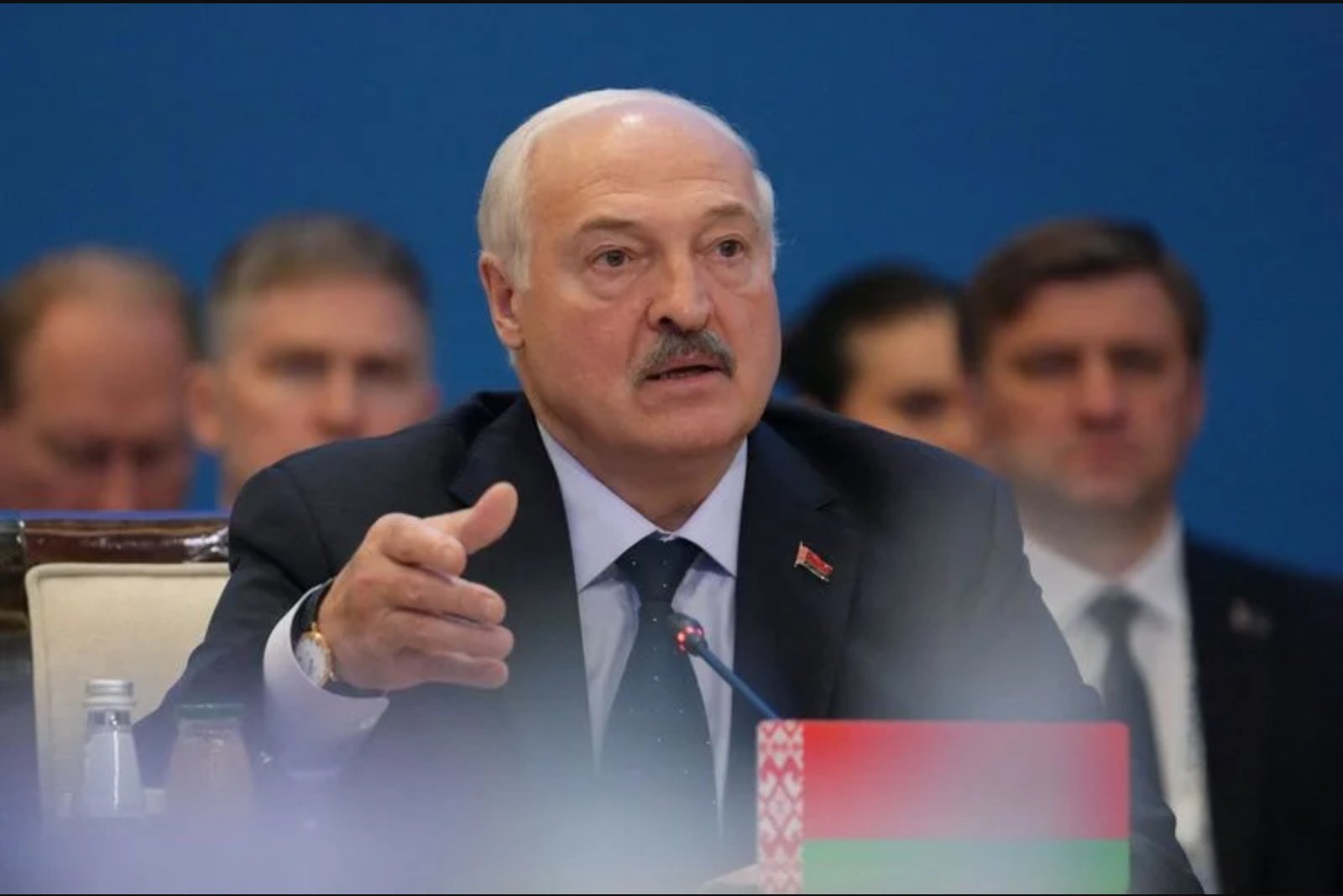
June 15 - Belarusian President Alexander Lukashenko, regarded as one of Russian President Vladimir Putin’s closest allies, said in an interview published on Monday that a negotiated compromise is necessary to end the war between Russia and Ukraine, which he noted has been ongoing for more than four years with no clear end in sight.
Speaking to Al Arabiya television in comments republished by Belarus’ Belta news agency, Lukashenko said that neither side could realistically expect a decisive victory on the battlefield. At the same time, he acknowledged that Russian forces continued to make gains.
"Today, we need to use any steps to reach a peaceful agreement through compromises. For the long term,"
He added that if forces and their supporters come to accept the limits of further advance, then a compromise could be possible. "If they realise on both sides ... you can’t go further, otherwise there will be escalation and an even worse situation ... If this sinks into the minds of the fighters and their supporters, it means a compromise can be reached," Lukashenko said in the interview.
The president reiterated Belarus’ role in the conflict’s broader geography. Belarus allowed Russia to use its territory for the 2022 full-scale invasion of Ukraine and has permitted the deployment of Russian nuclear weapons on Belarusian soil.
Lukashenko described the military trajectory of the war: Russia’s initial advance toward Kyiv failed, and since then Moscow has made incremental gains in southern and eastern Ukraine over most of the past four years, at heavy cost in personnel and equipment. He argued that a wholly military resolution to the conflict was not possible.
"Neither side has a military solution. There is no military solution in Ukraine or in the Middle East,"
He said Russian forces were "advancing step-by-step" despite determined Ukrainian defence, but emphasised a common constraint on both sides - a shortfall in troops. "Russians are experiencing this shortage. Maybe not like in Ukraine, but it’s there. But that’s the main issue of this conflict - they are running out of people," Lukashenko said.
On Belarus’ own military posture, Lukashenko has repeatedly stated that Belarusian forces would not be sent to fight in Ukraine, while also asserting that Russia and Belarus would act together to defend themselves if necessary.
Ukrainian President Volodymyr Zelenskiy has said Ukrainian forces have strengthened their battlefield positions in recent months and has warned that new Russian attacks could be launched from Belarusian territory. In response to such concerns, Lukashenko told Al Arabiya that Ukraine need not fear Belarus.
"Absolutely nothing to fear. Absolutely. They know it, the soldiers know it. The people of Ukraine know it,"
He described the topic of potential Belarusian involvement as driven by political ambitions. Meanwhile, diplomatic efforts have not advanced: U.S.-brokered talks have stalled as Washington focuses on the conflict in Iran, and Zelenskiy has repeatedly called for negotiations with Russian leadership.
The comments underscore the stalemate and the narrow range of options that leaders acknowledge as the war persists - continued incremental military actions, diplomatic deadlock, and the prospect of further escalation unless a compromise can be negotiated.