
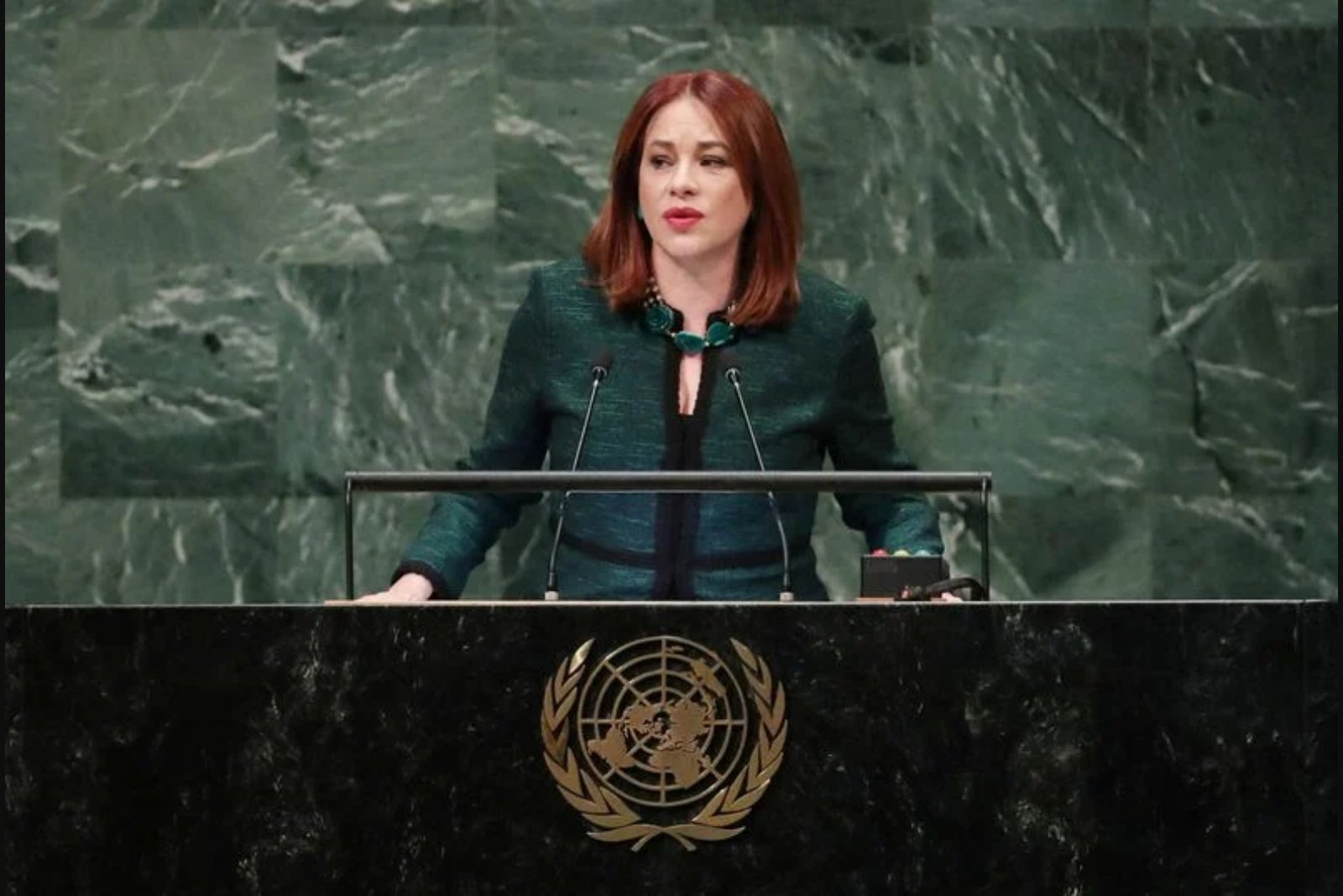
Maria Fernanda Espinosa, an Ecuadorean diplomat and former government minister, told a United Nations selection hearing on Monday that while the global body remains indispensable, it must be reduced in scope in a responsible manner.
Espinosa, who served as Ecuador's foreign affairs minister and defense minister and previously led the U.N. General Assembly from 2018 to 2019, is among six candidates competing to succeed U.N. Secretary-General Antonio Guterres when his term concludes at the end of the year. The next secretary-general will confront the challenge of revitalizing an organization described in the candidacy process as facing a crisis of declining stature.
At her hearing, Espinosa acknowledged the difficulty of the task ahead but framed her outlook as upbeat:
and emphasized her commitment to internal reform."I am under no illusion about the difficulties ahead, yet I remain optimistic,"
Echoing concerns voiced by other contenders, she said the U.N. frequently fails to act decisively, at times being sidelined or hampered by fragmentation and delays. In her words, the organization is often "slow, fragmented, and constrained," and it must restore trust by demonstrating tangible results rather than simply making promises.
Espinosa argued that it is possible to "shrink the U.N. responsibly, while strengthening national ownership and delivery, and restoring faith in the U.N." She indicated a preference for bolstering the role of national governments in areas currently managed by the U.N., but did not provide detailed plans or specific areas where such shifts would occur.
Her diplomatic résumé also includes service as Ecuador's ambassador to the United Nations. Domestically, she held posts in the administration of former President Rafael Correa; the candidate has, however, distanced herself from Correa's party in recent years.
The nomination supporting Espinosa's bid for the top U.N. job comes from the small Caribbean nation of Antigua and Barbuda. The current Ecuadorian government, led by President Daniel Noboa and described in the candidate roll as a right-wing ally of U.S. President Donald Trump, has not issued public comment on her candidacy.
Other aspirants are also pressing for reforms while reaffirming the U.N.'s foundational missions of peacemaking and development support. Guyana's President Irfaan Ali recently announced his country's nomination of U.N. Ambassador Carolyn Rodrigues-Birkett.
Earlier in April, four additional candidates declared their commitment to reform alongside support for core U.N. principles. Those candidates are Rebeca Grynspan, a former vice president of Costa Rica; Michelle Bachelet, the former president of Chile; Macky Sall, a former president of Senegal; and Rafael Grossi, director-general of the International Atomic Energy Agency from Argentina.
Elections to choose the next secretary-general are scheduled for later this year. To date, no woman has ever held the position.
Selection precedent maintains that the secretary-general should not come from one of the permanent members of the U.N. Security Council - Britain, China, France, Russia and the United States - although securing the backing of those major powers is a crucial element in the prolonged and complex appointment process.
Note: This report presents the statements and factual details provided during the candidacy process and related announcements without additional analysis or external commentary.