
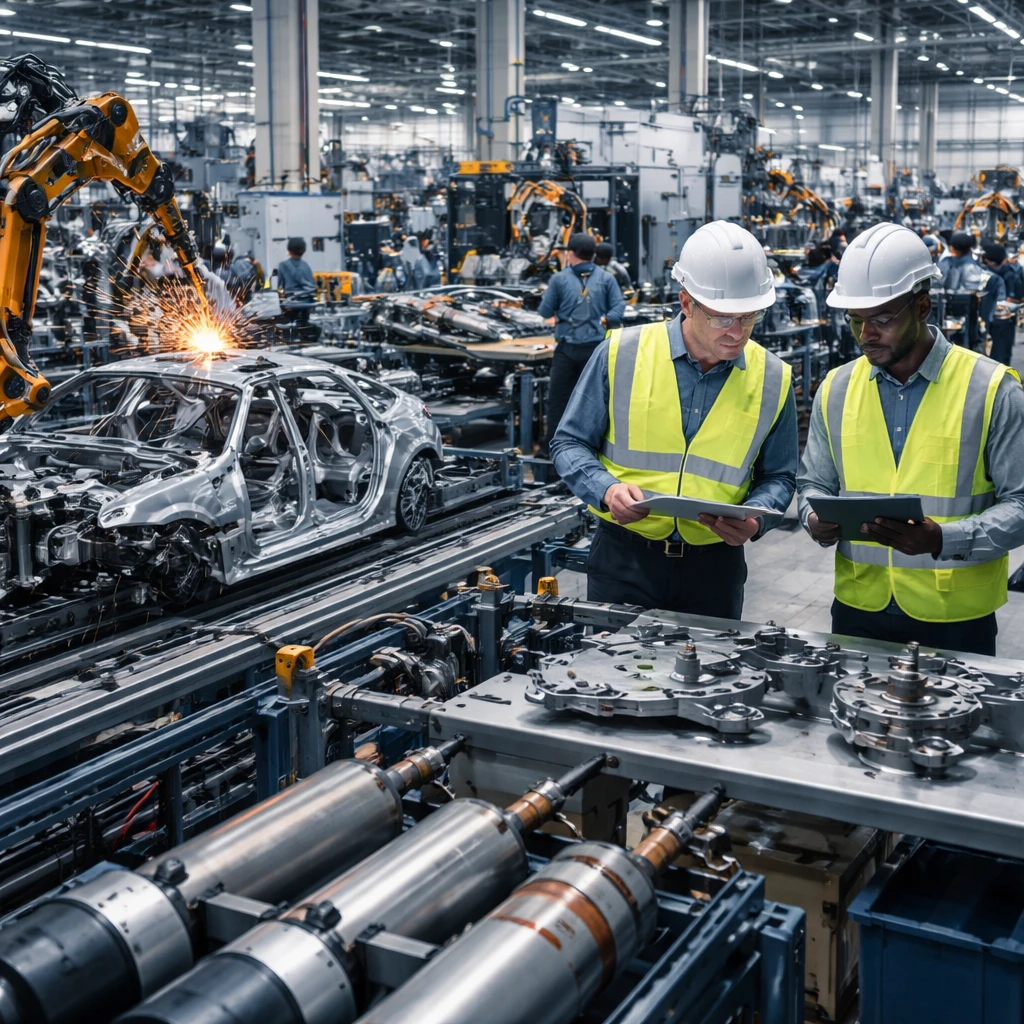
People familiar with the matter say General Motors is engaged in talks with Lockheed Martin about producing components for the defense contractor's weapons systems. The discussions center on GM manufacturing commonly used parts that would support Lockheed Martin in increasing munitions output.
Those involved in the conversations have not yet settled on which specific components GM would supply. No binding agreement has been reached and the terms under discussion remain subject to change.
The negotiations come at a time when U.S. weapons stockpiles have declined, a development attributed in the reporting to recent conflicts in Ukraine and Iran. U.S. government officials - including the administration and the Department of Defense - have been urging established defense manufacturers to accelerate production. They have also been seeking to bring non-traditional manufacturers into the defense supply chain to help expand capacity.
GM's chief executive has met with administration officials to discuss enlarging the automaker's role in defense. Those meetings reflect GM's interest in growing what the company views as a nascent military business, although the details and scope of any expansion remain unresolved.
For now, the talks are exploratory. Company representatives and Lockheed Martin have yet to finalize which parts would be produced by GM, how production would be structured, or the timeline for any potential increase in output. The outcome could still change as negotiations continue.
Observers note that bringing automotive manufacturers into defense production would involve adapting existing manufacturing capabilities and supply chains to meet defense specifications and procurement requirements. How such adaptation would proceed, and what capacity could be delivered, is part of the ongoing discussion between the parties.
Context and next steps
At issue in the talks are commonly used components that could be produced on a larger scale to support munitions manufacturing. While GM explores the potential role it might play, Lockheed Martin is assessing which items could be sourced from a partner outside the traditional defense supplier base.
Until specific components and contractual terms are agreed, the discussions remain preliminary. Any material change in the situation will depend on the parties finalizing the scope of work and the terms of a potential supply arrangement.