
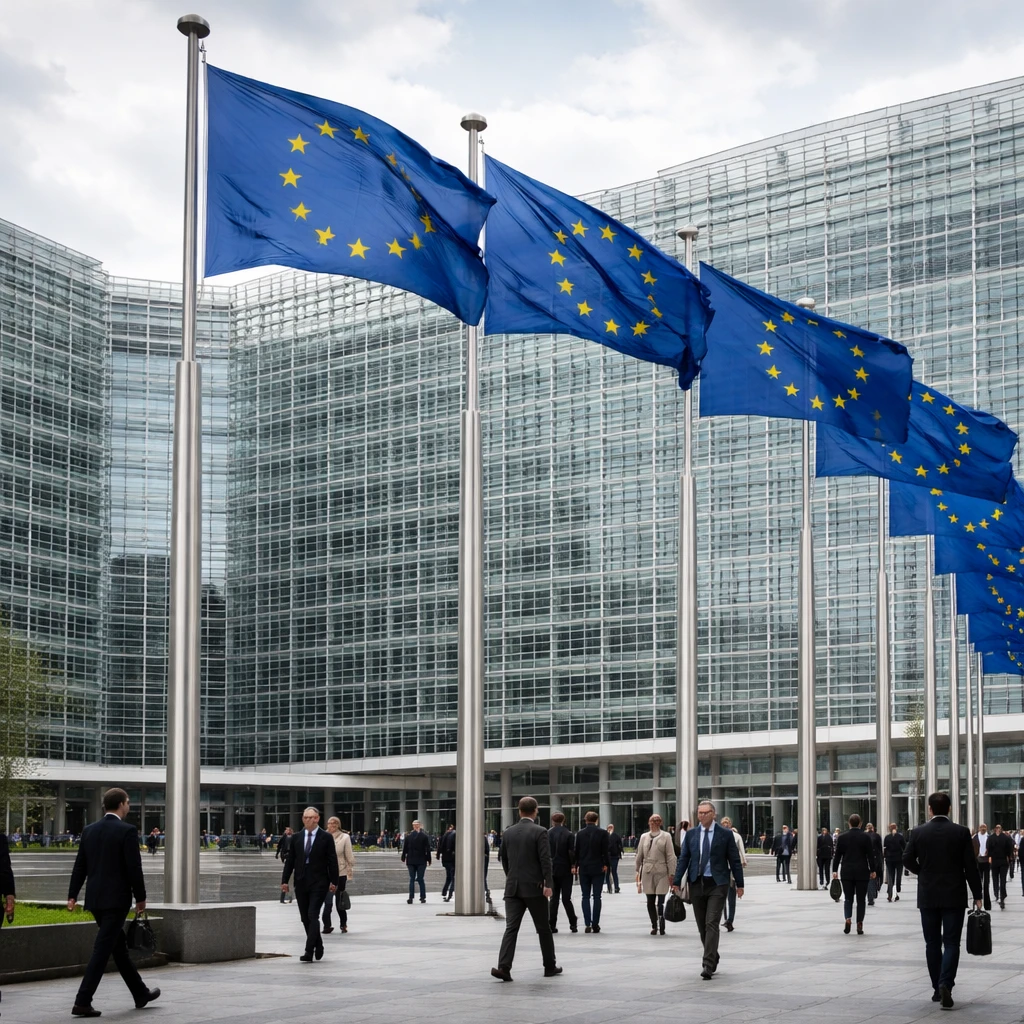
BRUSSELS, July 24 - The European Commission issued a cautious acknowledgement on Friday after the United States announced new tariffs of 10% and 12.5% on goods originating from 60 trading partners, including the European Union and China. Washington said the measures followed findings that some trading partners were not sufficiently preventing imports of products manufactured with forced labour.
A Commission spokesperson said the EU "notes positively the fact that this outcome is in line with the U.S. tariff commitments agreed under the EU-US Joint Statement," and described the development as providing "positive momentum" to continue work on exploring further tariff exemptions and deepening cooperation between the two sides.
Under the new U.S. measures, the EU is among a limited number of trading partners for which the additional tariffs do not stack on top of pre-existing "most favored nation" customs duties. The decision also restores a set of specific tariff exemptions for the EU, listing items such as cork and diamonds in addition to previously exempted categories including aircraft and parts, generic medicines, and active pharmaceutical ingredients.
The Commission spokesperson reiterated expectations that Washington would remain bound by the terms of the bilateral deal reached at U.S. President Donald Trump’s Turnberry golf resort in Scotland last July. Under that agreement, Brussels removed import duties on U.S. industrial goods while the United States implemented 15% tariffs on most products from the EU.
"This is essential to continue providing our respective markets with much-needed stability and predictability," the spokesperson said, underlining the Commission’s interest in preserving the framework established in the Turnberry understanding.
The EU has previously rejected U.S. allegations that it is not taking sufficient action against forced labour, a point that remains part of the broader trade dialogue between the two sides. The Commission’s reaction framed Friday’s tariff announcement as consistent with the earlier commitments and as a stepping stone for further discussions on exemptions and cooperative work on the issue.
While Brussels welcomed alignment with the Joint Statement, the Commission’s language was cautious, emphasizing ongoing work on exemptions and cooperation and signalling that adherence to the Turnberry commitments by both parties will be important going forward.
Summary
The European Commission issued a guarded welcome to U.S. tariffs of 10% and 12.5% on imports from 60 trading partners, noting the outcome aligns with the EU-US Joint Statement made last year. The EU benefits from non-stacking treatment of the new tariffs and sees reinstated exemptions for cork, diamonds, aircraft and parts, generic medicines, and active ingredients. Brussels called for continued compliance with the Turnberry agreement and further work on exemptions and cooperation.