
Background and charges
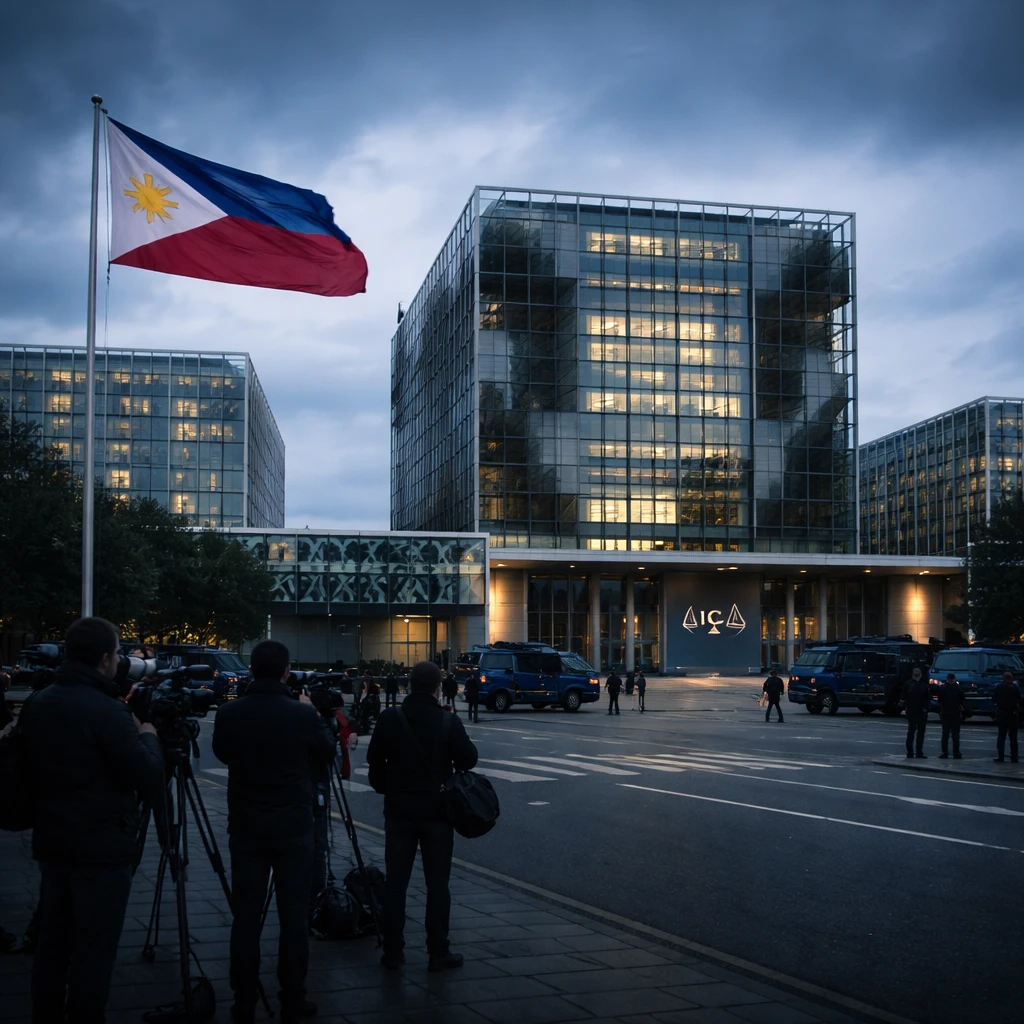
Rodrigo Duterte, an 81-year-old former president of the Philippines, appears at the International Criminal Court (ICC) in The Hague to face allegations tied to his long-running campaign against illegal drugs. Before taking office as president in 2016, Duterte spent more than two decades as mayor of Davao and earned the nickname "The Punisher" for his hardline approach to crime and drugs.
Prosecutors at the ICC accuse him of overseeing and facilitating a program in which execution squads were funded and armed to carry out killings. They allege these actions caused as many as 30,000 deaths and have brought three counts of crimes against humanity - murder and attempted murder - relating to deaths that occurred between 2011 and 2018.
Should a conviction occur on any single count of crimes against humanity, judges at the ICC may impose a sentence of up to life imprisonment. The court does not impose the death penalty.
How he reached The Hague
ICC judges issued a confidential arrest warrant for Duterte on March 7, 2025. Philippine authorities executed the warrant four days later and transported him to the Netherlands. His transfer marked a significant reversal for a political family that has been influential domestically and had allied itself with the Marcos political faction that helped bring President Ferdinand Marcos Jr to office in 2022.
Duterte's daughter, who serves as vice president, has publicly described the ICC proceedings as politically motivated and is herself subject to possible removal from office. Duterte had repeatedly denounced the court in the past, using profane and dismissive language. In 2019 he notified the international community that the Philippines would withdraw from the ICC's founding treaty following the court's investigation into alleged widespread killings during his presidency.
Fitness to stand trial and procedural limits
Defense counsel argued that Duterte suffers from cognitive decline and is not sufficiently well to participate in proceedings in person. He initially missed early hearings, attending virtually from detention, which prompted judges to order his physical presence in court. Medical examinations carried out under judicial direction led judges, in October, to rule that he is fit to stand trial.
To manage the scale of the case, judges have directed prosecutors to restrict both the number of witnesses and the volume of evidence they present. Court days will be shorter than typical ICC hearings. Prosecutors have indicated they expect to call fewer than 100 witnesses and estimate needing about 150 hours to present their core body of evidence.
Opening of the trial and the first week
On the trial's opening day, Duterte will be formally asked to enter a plea. His legal team has already rejected the allegations, and he is expected to plead not guilty. The court has scheduled a week of hearings dedicated to opening statements. Prosecutors will deliver their overview of the case first, followed by the defense response.
Witness testimony is scheduled to begin the day after opening statements. The schedule reflects the court's attempt to balance the scope of the charges against practical limits on time and witness examination.
Duration and potential sentence
Court officials and participants anticipate a lengthy process. The trial is expected to extend well into 2027, with a final verdict not likely until 2028. If convicted on any of the counts of crimes against humanity before the court, Duterte could face life imprisonment under ICC sentencing provisions.
Contextual notes
Observers have noted that Duterte will be the first former Asian head of state to appear before the ICC and only the second former national leader to be tried by the court for acts alleged to have been committed while in office. Beyond the legal mechanics of the case, the proceedings intersect with ongoing domestic political dynamics in the Philippines, including questions about succession and accountability at the highest levels of government.