
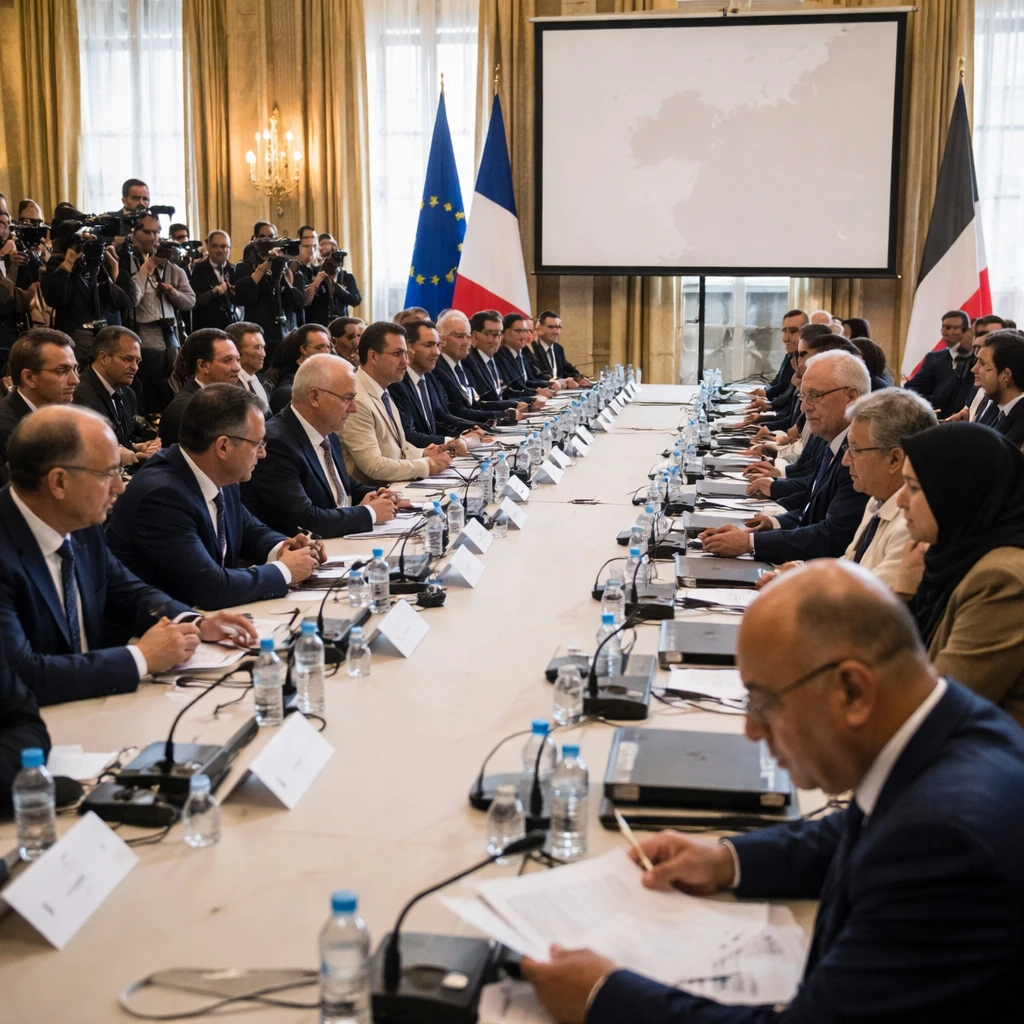
Israeli and Palestinian civil society groups convened in France on Friday to press the international community to keep alive the prospect of a two-state solution, even as the Middle East war has made advances on that front appear increasingly precarious.
The meeting, which brought together foreign ministers and senior officials from dozens of countries, coincided with the one-year mark of the U.N.-backed New York Declaration. That declaration laid out a path toward Palestinian statehood and prompted roughly a dozen nations - including France, Britain and Canada - to recognise a Palestinian state.
France's Foreign Ministry, in remarks to reporters on Thursday ahead of the conference, framed the gathering as urgent in the current regional circumstances. "Given the current situation in the region, marked by seemingly endless conflicts, too many civilian casualties and a cycle of violence, and in light of the stalled implementation of the Gaza ceasefire ... we believe this conference is now more essential and urgent than ever," the spokesperson said.
Delegates agreed to conclude the meeting with an eight-point "Call for Action." The plan urges a permanent ceasefire; a halt to settlement activity; reconstruction efforts in Gaza; reforms in governance; and expanded international backing for civil society. Organisers plan to deliver the document to G7 leaders convening in the French Alps from Monday.
The action plan, seen by Reuters and summarised by conference participants, warned that the region is continuing to fracture. "Gaza is devastated, Israel remains under threat. Settler terrorism, settlement expansion, and de facto annexation and threats to the Palestinian Authority continue to undermine the viability of a future Palestinian state," the document states. It adds that "Israelis and Palestinians alike remain trapped in fear, insecurity, and trauma. We return because, as the G7 convenes in Evian, this conflict risks once again being set aside. The window for a solution remains open; but it is narrowing."
The conference took place against a backdrop of rising violence by Israeli settlers in the occupied West Bank, an issue that has provoked anger in many Western capitals toward Prime Minister Benjamin Netanyahu's government. Diplomats attending or following the talks described settlement expansion as a deliberate initiative that is eroding prospects for an independent Palestinian state.
One particular point of concern highlighted by participants is Israel's planned E1 settlement east of Jerusalem. Conference participants said the E1 project would bisect the West Bank and sever it from East Jerusalem, fragmenting the territory Palestinians aim to include in an independent state.
In a coordinated diplomatic move on Tuesday, Britain, Canada, France and Norway announced new sanctions targeting Israeli networks alleged to be involved in financing, enabling and carrying out violence in the Israeli-occupied West Bank.
Notably, Israel and the United States declined to participate in the French-hosted meeting. The Israeli embassy issued a statement saying: "The ambassador was invited but will not attend the conference, as it has nothing to do with promoting peace." The statement added: "France cannot act as a mediator between Israel and the Palestinians. Regarding the two-state solution, the ambassador recalls that the Palestinians have rejected proposals to establish a Palestinian state on five occasions."
The conference organisers and participating delegations emphasised that their effort aims to prevent the issue from falling off the international agenda as major leaders meet elsewhere. They underscored the urgency of tangible measures - from an immediate ceasefire to reconstruction planning - while also pressing for international support that would strengthen local civil society actors.
Context and next steps
The eight-point Call for Action will be handed to G7 leaders in the French Alps, where conference backers hope the document will shape discussions among major powers. The exact reception the plan will receive from those leaders is not detailed in the conference materials.
Conference participants stressed the deteriorating security and humanitarian situation and framed their appeal as an attempt to keep diplomacy and civil society initiatives visible during a period of sustained conflict and mounting international concern.