
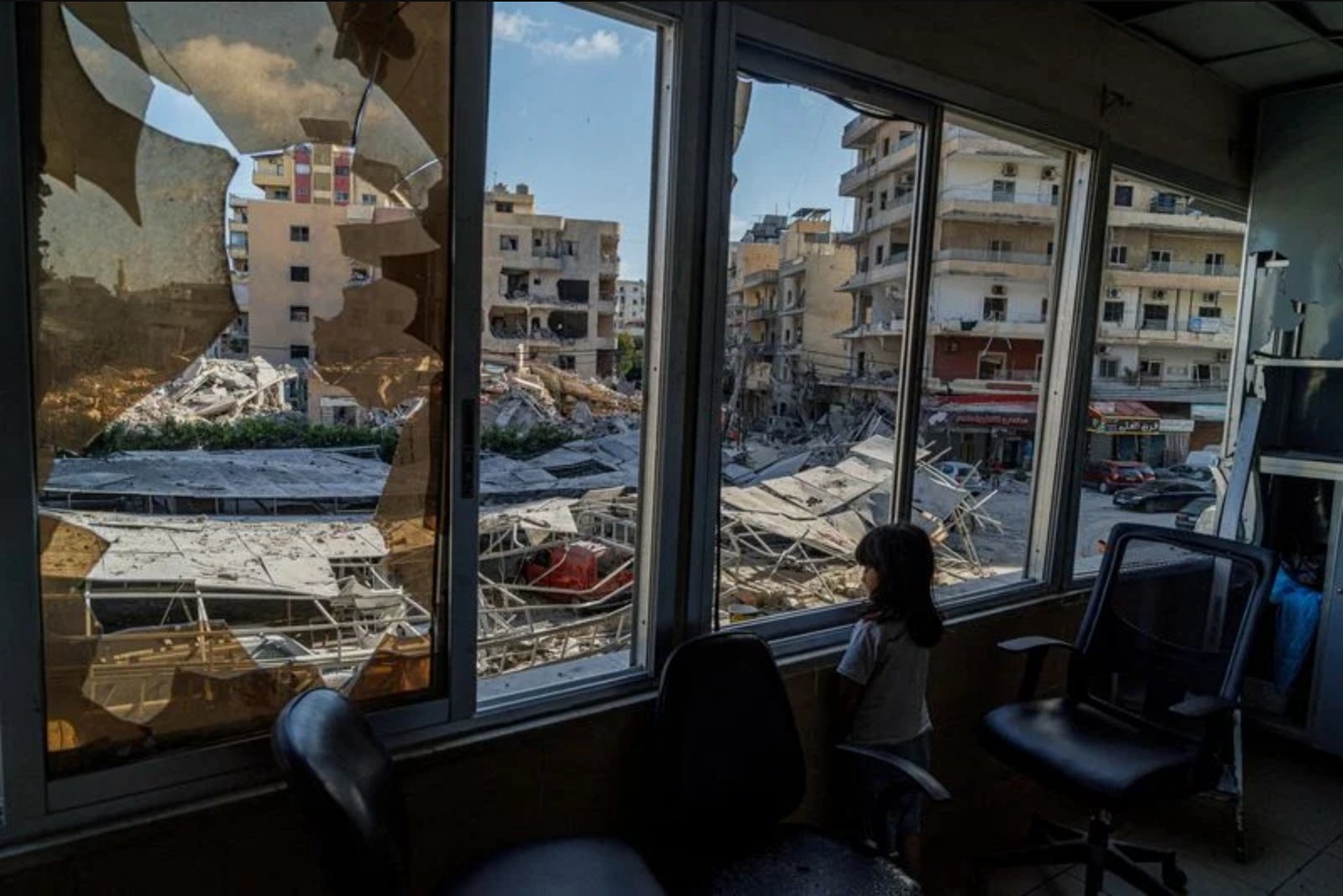
In a dim hospital ward where he has been living for months, Youssef Fares broke down as he described the destruction of his home in Tyre - once a historic city in southern Lebanon, now a mass of rubble and exposed rebar after Israeli air strikes during a three-month conflict. The interim agreement between Iran and the United States has brought a measure of calm to Lebanon - but that respite has also exposed the breadth of damage from Israel's air campaign, which it says targeted the armed group Hezbollah.
The fighting began on March 2 when Hezbollah fired at Israel in support of Iran, pulling Lebanon into the wider regional confrontation. Israel responded with a sequence of air strikes and a ground invasion that occupied parts of south Lebanon.
Fares sought refuge at Jabal Amel University Hospital in Tyre after his home was destroyed. When he returned to view the remains following the most recent ceasefire agreement, the scene overwhelmed him. "You couldn’t even look at a single room. It was dark from the soot," he said. "It was a beautiful house. Honestly, the most beautiful house was my house in Tyre."
Displacement has been extensive. Authorities report that about 1.2 million people across Lebanon have been forced from their homes, and many cannot return either because their villages lie in ruins or because they remain under Israeli control. The scale of people sheltering in makeshift accommodations and public facilities is large: at least 350 people are still living inside Jabal Amel University Hospital, including staff and their families, according to the hospital's director, Dr. Wael Mroueh.
Even institutions afforded protected status have suffered. Earlier this month an airstrike struck a nearby building and blew a hole in one of the hospital's walls. Other health facilities have been repeatedly struck - the Hiram Hospital was hit at least five times since March 2, according to a United Nations report. The World Health Organization has recorded 203 attacks on healthcare sites across Lebanon, reporting that these incidents killed more than 130 healthcare workers while on duty and forced the closure of 44 primary healthcare facilities and three hospitals.
From March 2 until June 14 - the night the U.S.-Iran deal was announced - the conflict resulted in more than 3,700 deaths and over 11,000 wounded. Lebanon has not yet completed a comprehensive assessment of damage, but figures from Lebanon's National Council for Scientific Research indicate that more than 68,000 housing units across the country were damaged or destroyed between March 2 and May 17.
Damage in the south during the first month included not only homes but also critical infrastructure - hospitals, power stations and water pumping stations sustained hits. Authorities are now considering long-term housing options for people whose homes have been destroyed or whose villages remain under occupation.
For Ahmad, the son of Youssef Fares, the ceasefire has brought only partial relief. He described a cautious feeling of safety compared with earlier days of sustained bombardment. "Before, we were afraid of dying, afraid of losing someone. Now, no, you feel there is a bit of safety ...it is safer than the days when there was shelling, bombardment, airstrikes, and everything," he said.
Yet the repeated cycles of violence and displacement have taken a cumulative toll. "Since I was born, it has been like this. We flee and we return, we return and we flee. We’ve spent our whole lives like this," Ahmad said. "We just get no rest, we get no rest."
As Lebanon moves into a fragile period of relative calm, the challenge for authorities and humanitarian actors will be to establish the full extent of the destruction, secure safe access for returns where possible, and develop housing solutions for the many whose homes are uninhabitable or remain in contested areas. The damage to healthcare infrastructure poses immediate risks to medical services, while destruction to power and water systems threatens basic service delivery across affected communities.
Local hospital directors and humanitarian agencies are confronting simultaneous needs: shelter for internally displaced families, repair and protection of health facilities, and restoration or replacement of utilities and essential services. With large numbers of people still sheltering in institutions such as Jabal Amel University Hospital, decisions on durable housing and reconstruction will be central to Lebanon's short and medium-term recovery.
The ceasefire has permitted a clearer view of the human and physical cost of the campaign. For residents like Fares and Ahmad, the immediate priorities are security, shelter, and the ability to rebuild lives after months of conflict and repeated displacements.