
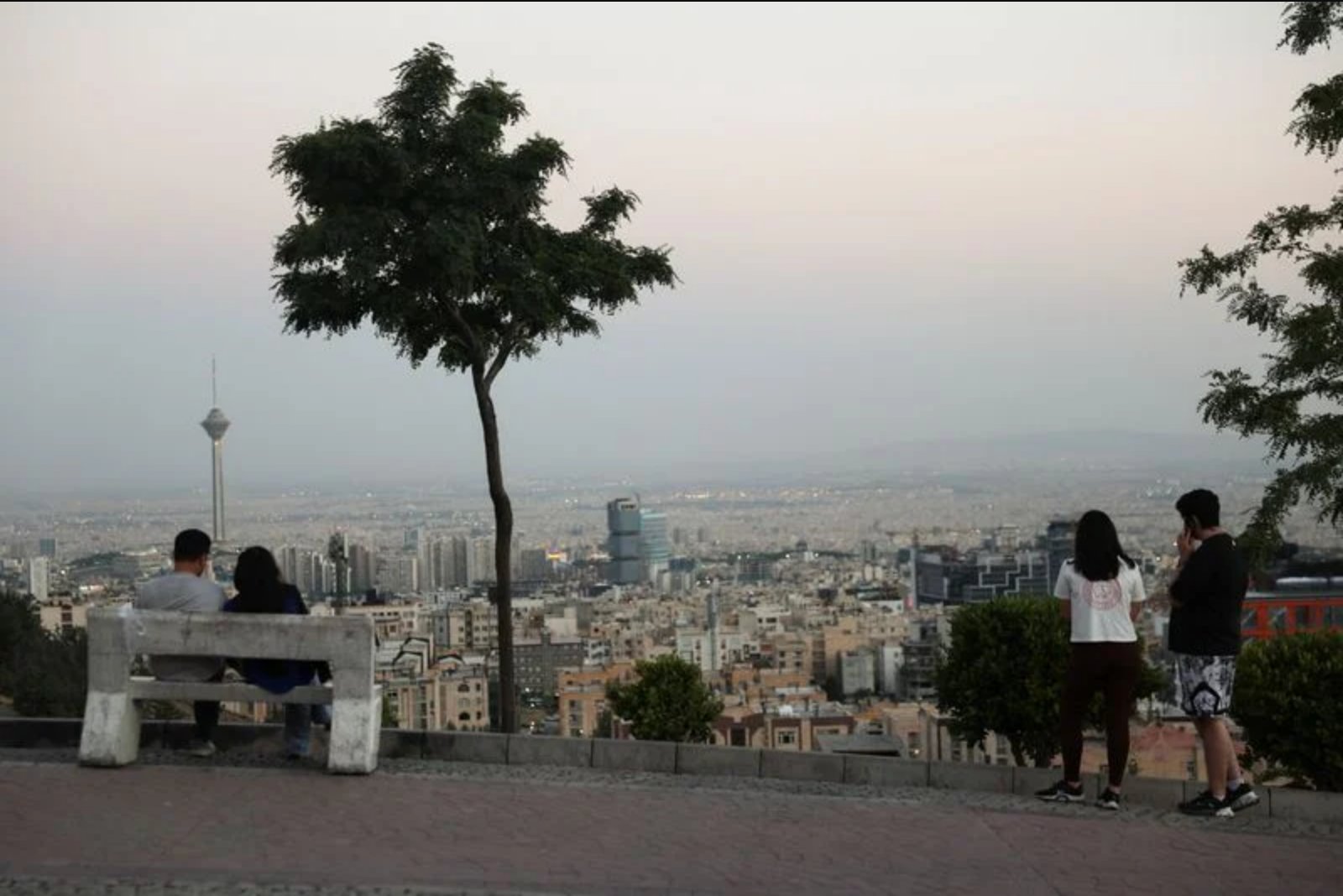
When Iran's foreign minister announced an interim agreement this week intended to halt the conflict with the United States, Tehran portrayed the outcome as a victory. For many Iranians contacted by reporters, however, the immediate reality remains bleak.
After more than three months of airstrikes by U.S. and Israeli forces and a blockade of Iranian ports, ordinary households say they face mounting hardship on top of years of sanctions. Although the fighting has paused - at least temporarily - residents are still cutting back on spending and see little sign that their circumstances will improve soon.
Few among those interviewed said they expect better times ahead. Some warned that rising economic frustration could trigger fresh waves of protest against the government, while others predicted renewed repression akin to the brutal suppression seen during the last major demonstrations in January. With negotiations over a more durable settlement pushed into future talks, many expressed doubt that the interim arrangement will survive the summer.
Economic hardship and daily survival
"I think 99% of people are in survival mode and just living day by day. I don’t think anybody has any hopes anymore. I don’t think anybody has any visions of what the future might look like," said Amir, a 34-year-old owner of a media production company in Isfahan in central Iran.
Reporters contacted Iranians using messaging apps so that they could speak more freely; several respondents requested not to be fully identified out of concern about angering the authorities. Some others interviewed on camera in Tehran did provide their full names.
Speaking on camera near a large portrait mourning Iran’s late supreme leader, Ali Khamenei, who was killed on the first day of the war, Mehdi Sabahi described the mood: "Day by day the situation of the people, the situation of people’s livelihoods, has gotten worse rather than better. Now ask anyone, who is there who would say 'I am satisfied'?
That bleak perspective is not universal. Hardline supporters of the Islamic Republic’s ruling system are presenting the halt in hostilities as a victory that demonstrates national defiance and unity, even as some among them say Iran should have secured stronger terms.
Saeed Ajorlou, managing director of the daily newspaper Sohb-e No., acknowledged popular dissatisfaction but insisted the state was not defeated. "It is not the case that we are very happy with this paper we have obtained. Our people want more than this, and we must tell them that we are facing such public opinion," he said. "Do not think that our people are tired, that our posture is one of fatigue and surrender. No, our posture is one of victory."
Persistent uncertainty about security and future attacks
A cafe owner in Tehran who described himself as neither a supporter nor an opponent of theocratic rule said he believed both Israel and U.S. President Donald Trump would seek to bomb Iran again. Speaking by messaging app, he said he did not expect the deal being finalised to be long-lasting.
Like many others, he and a 25-year-old student in Tehran described sharp declines in living standards. The student said people were trimming discretionary spending and had adopted a common Persian expression to capture their retrenchment: "We’ve adapted to making our table smaller." She added that she and her friends could no longer afford to meet in cafes because "everything got worse and exponentially more expensive."
Heightened fears among ethnic minorities
Fear of new rounds of repression is especially pronounced in regions with ethnic minority populations, where past crackdowns on demonstrations have been deadliest. Three men in Kurdistan in western Iran told reporters that the war had made them poorer and increased repression or insecurity.
One of the men, aged 40, warned that leaving the regime in its current state "increases the power of the repressive institutions." He said the bloodshed in January would likely deter protests for some time, but he expected that continued economic pain would ultimately spark further demonstrations.
A 25-year-old student in the region said that early wartime talk that the U.S. might try to prompt an armed Kurdish uprising had compounded problems in the area. "The war did nothing more than cause more problems for the Kurds," he said.
Broader implications for political freedoms and public life
People living outside ethnic minority areas also said the crisis could further limit prospects for political liberalization. Since the outbreak of the war, authorities have sought to control public spaces, deploying supporters across city and town centres to stage rallies and mourning events for those killed.
Amir, the media company owner in Isfahan, said the visible presence of state-backed crowds was a daily reminder of how deeply the state had inserted itself into citizens' lives. "The Islamic Republic is not going to go anywhere anytime soon. If they were entrenched before, now they’re 10 times more deeply entrenched. Any hope of reform or anything changing is basically right out the window," he said.
For now, the interim deal halts the immediate violence that has battered communities and commerce, but among ordinary Iranians there is little confidence that the pause will translate into relief at the grocery, the cafe or in personal security. The combination of ongoing economic strain, memories of recent repression, and doubts about the durability of the agreement leaves many people skeptical that daily life will improve in the near term.