
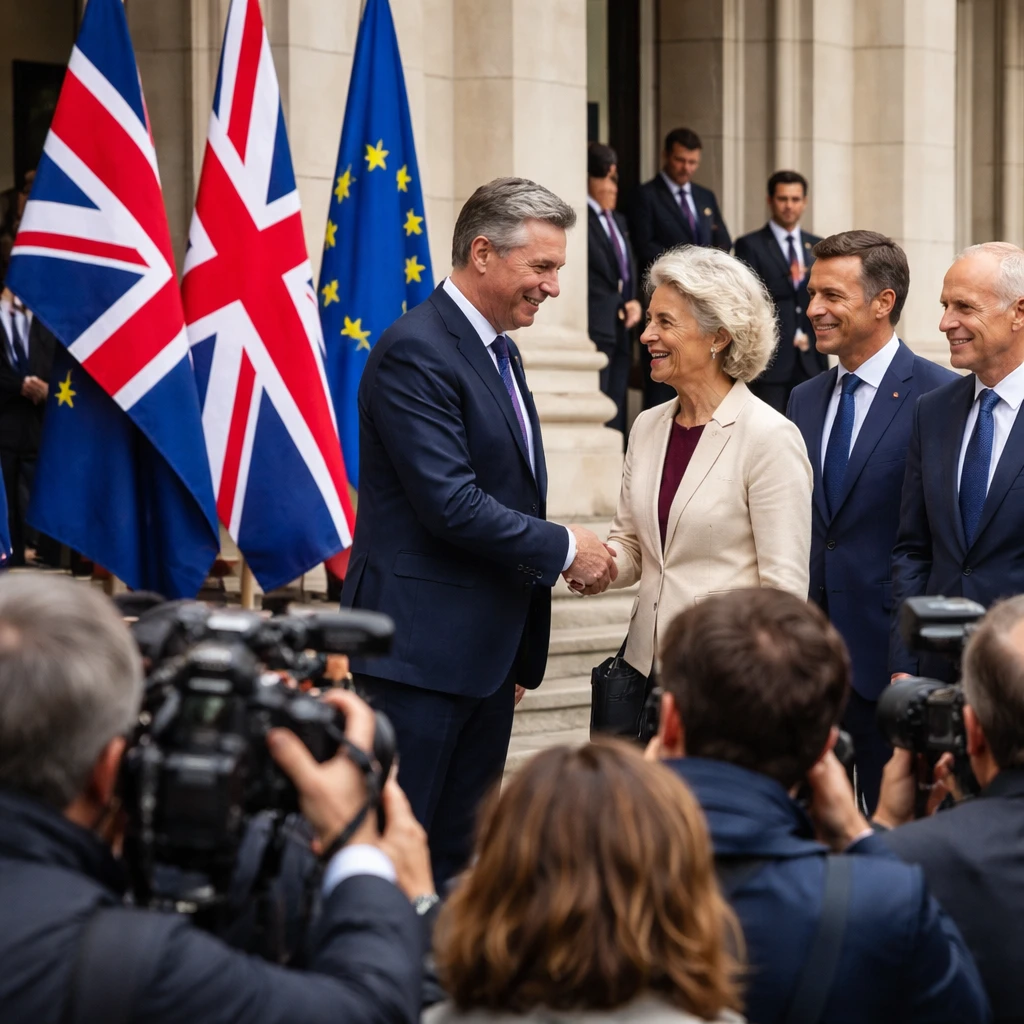
Prime Minister Keir Starmer has formally enrolled the United Kingdom in a European Union defence loan arrangement intended to bolster Ukraine, signing the participation agreement on Monday, officials said.
The announcement was made as Starmer arrived in Paris to attend a Coalition of the Willing meeting of countries supporting Ukraine. The UK’s entry into the program grants British defence manufacturers the ability to access contracts financed through the €90 billion Ukraine Support Loan, which the EU has set aside for defence-related support.
In a statement, Starmer said the agreement will “help ensure Ukraine gets the support it needs to defend itself against Russian aggression, while backing British defence companies, supporting skilled jobs and strengthening our national security.” The government highlighted those three objectives - backing Ukrainian defence, supporting the domestic defence sector and protecting jobs, and enhancing national security - as central to its decision to join the loan program.
London framed the move as part of an effort to repair and strengthen ties with the European Union after years of tensions linked to Brexit. The government emphasized the significance of participating in the EU-funded loan facility following a prior attempt to engage with a different EU defence financing initiative.
That earlier effort concerned joining a separate €150 billion EU fund dedicated to European defence investment. Talks over that fund collapsed in November after Starmer’s government rejected the level of financial contribution the bloc requested, according to government accounts. The collapse of that proposal left unresolved the question of broader UK participation in EU defence financing until the signing of the Ukraine Support Loan participation agreement.
The latest step gives British defence companies a route to compete for contracts under the Ukraine Support Loan and was presented by ministers as supporting industrial capacity and employment in the defence sector, while also contributing to the aid available to Ukraine.
Summary
The UK has joined the EU-backed Ukraine Support Loan, allowing British defence firms to bid for contracts funded through the €90 billion facility. The agreement was signed by Prime Minister Keir Starmer in Paris as he attended a Coalition of the Willing meeting, and comes after a separate attempt to join a €150 billion EU defence investment fund fell apart when the UK rejected the requested contribution.