
Stock Markets June 24, 2026 10:26 PM

White House Seeks $87.6 Billion in Supplemental Funding for Iran Conflict, Farm Aid and Health Response

Request includes major Defense allocation plus assistance for farmers, Ebola response and energy security; congressional approval required

By Ajmal Hussain
Share
Twitter Reddit Facebook LinkedIn

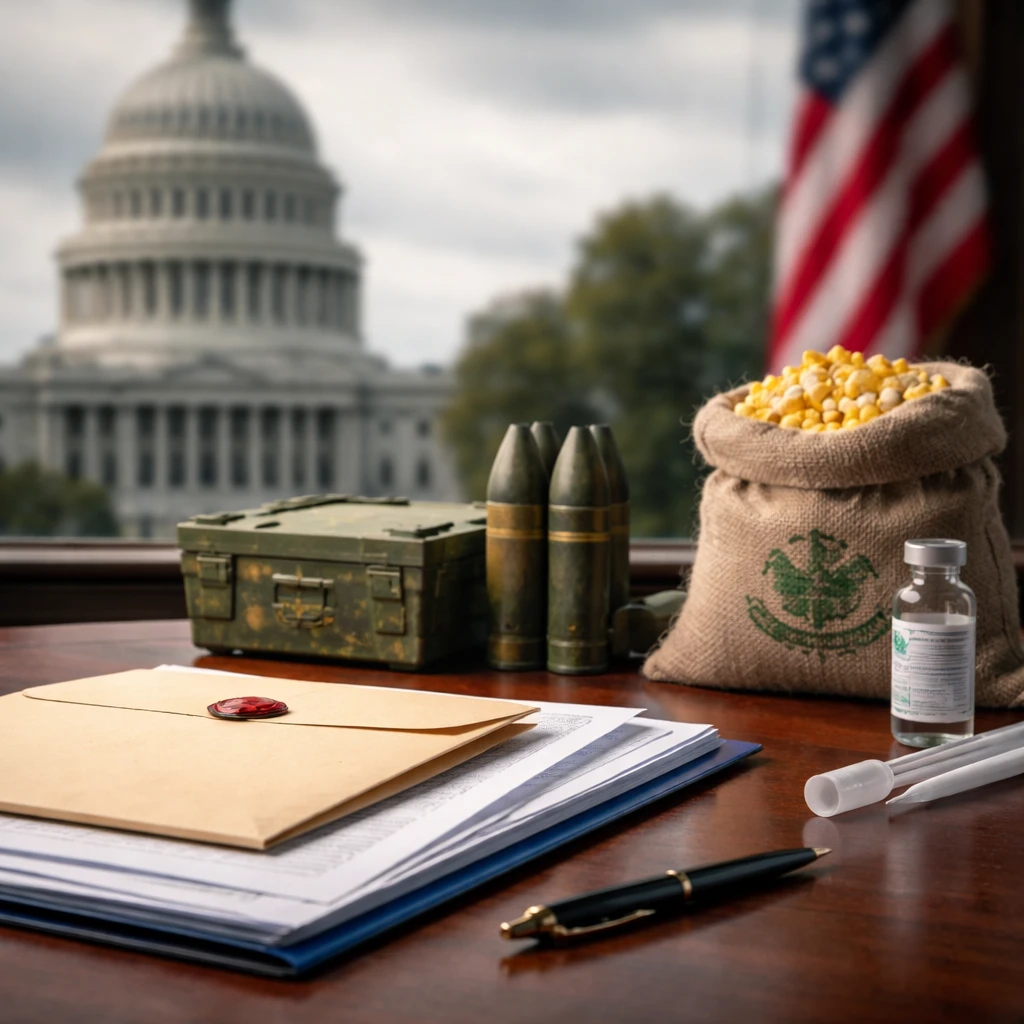
The White House has formally asked Congress for $87.6 billion in supplemental appropriations to cover wartime costs related to the Iran conflict and provide aid for farmers, Ebola response, and energy security. The package directs the largest share to the Defense Department and faces immediate opposition from congressional Democrats. Lawmakers must pass appropriations for the request to be implemented, and the proposal could present political challenges for some Republicans ahead of the 2026 midterm elections.

White House Seeks $87.6 Billion in Supplemental Funding for Iran Conflict, Farm Aid and Health Response
Summarize with
ChatGPT Perplexity Claude Grok Gemini

Key Points

  • The White House requested $87.6 billion in supplemental funding, with the largest single allocation - $21 billion - directed to the Defense Department to support capabilities, munitions procurement and the U.S. industrial base. (Sectors impacted: Defense, Industrial Manufacturing)
  • The package also includes $1.4 billion for Ebola response and $768 million for Energy Department needs tied to nuclear and energy security, plus assistance for American farmers. (Sectors impacted: Healthcare, Energy, Agriculture)
  • Congress must appropriate the funds; congressional Democrats immediately opposed the request and Republican lawmakers could face political pressure heading into the 2026 midterm elections if asked to vote for additional war-related funding. (Sectors impacted: Political risk for markets, Government budgeting)

The White House on Wednesday submitted a formal supplemental spending request to Congress totaling $87.6 billion to address costs tied to the ongoing conflict with Iran and several domestic and international needs.

Russell Vought, director of the White House Office of Management and Budget, delivered the request in a letter to House Speaker Mike Johnson. The submission lays out how the administration proposes to allocate the funds across defense, public health, energy security and agricultural assistance.

Under the plan, the Defense Department would receive $21 billion aimed at sustaining critical military capabilities, financing munitions procurement and bolstering the U.S. industrial base. The package also designates $1.4 billion for Ebola response efforts and sets aside $768 million for the Energy Department to address nuclear and other energy security needs. The request additionally mentions aid to American farmers as one of the included measures.

Defense Secretary Pete Hegseth indicated in March that the Pentagon could seek as much as $200 billion to support U.S. and allied operations related to the U.S.-Israel war on Iran, which began on February 28. The current White House submission represents a distinct supplemental request totaling $87.6 billion.

Lawmakers reacted swiftly to the proposal. Congressional Democrats opposed the request immediately. The White House request will only take effect if Congress moves to appropriate the funds, a step that remains separate from the administration's submission.

Observers note that the timing and content of the request could complicate the political landscape for some Republicans. Members of Congress facing tight electoral contests ahead of the 2026 midterm elections may confront difficult votes on additional war-related funding, particularly given the lack of broad public support for the conflict noted by critics.


Process and next steps

The request is a starting point: appropriation remains in the hands of Congress. The administration has outlined priorities and dollar amounts, but those figures now enter the legislative process where lawmakers will debate, amend and ultimately vote on whether to allocate the requested sums.

Context preserved from the request

  • The total supplemental sought is $87.6 billion.
  • $21 billion is aimed at the Defense Department for capabilities, munitions and industrial base support.
  • $1.4 billion is earmarked for Ebola response.
  • $768 million is designated for Energy Department energy and nuclear security needs.
  • The conflict referenced began on February 28 and has prompted previous statements from Pentagon officials about larger potential funding needs.

Risks

  • Passage uncertainty - Congress must appropriate the funds for the White House request to be realized, creating uncertainty about whether the $87.6 billion will be granted. (Affects: Federal budget, sectors expecting funding)
  • Political exposure for Republicans - Voting on supplemental war funding may pose electoral risks for vulnerable Republican members ahead of the 2026 midterm elections, potentially complicating legislative prospects. (Affects: Political sector, markets sensitive to legislative outcomes)
  • Immediate opposition from Democrats - Congressional Democrats have opposed the package, indicating partisan resistance that could delay or alter the requested allocations. (Affects: Appropriations process, sectors depending on the requested aid)

More from Stock Markets

Asian Markets Surge After Micron Forecast Rekindles AI Chip Optimism Jun 24, 2026 Lend Lease Shares Rise After Sale of Final Keyton Stake, Signalling Capital-Reduction Push Jun 24, 2026 Alibaba Shares Drop After Anthropic Alleges Large-Scale Extraction of Claude AI Jun 24, 2026 Fortescue Faces Class Action Alleging Widespread Sexual Harassment at Remote Sites Jun 24, 2026 BMO Lifts Take-Two Price Target After $80 GTA VI Pricing, Sees Boost to Bookings Jun 24, 2026