
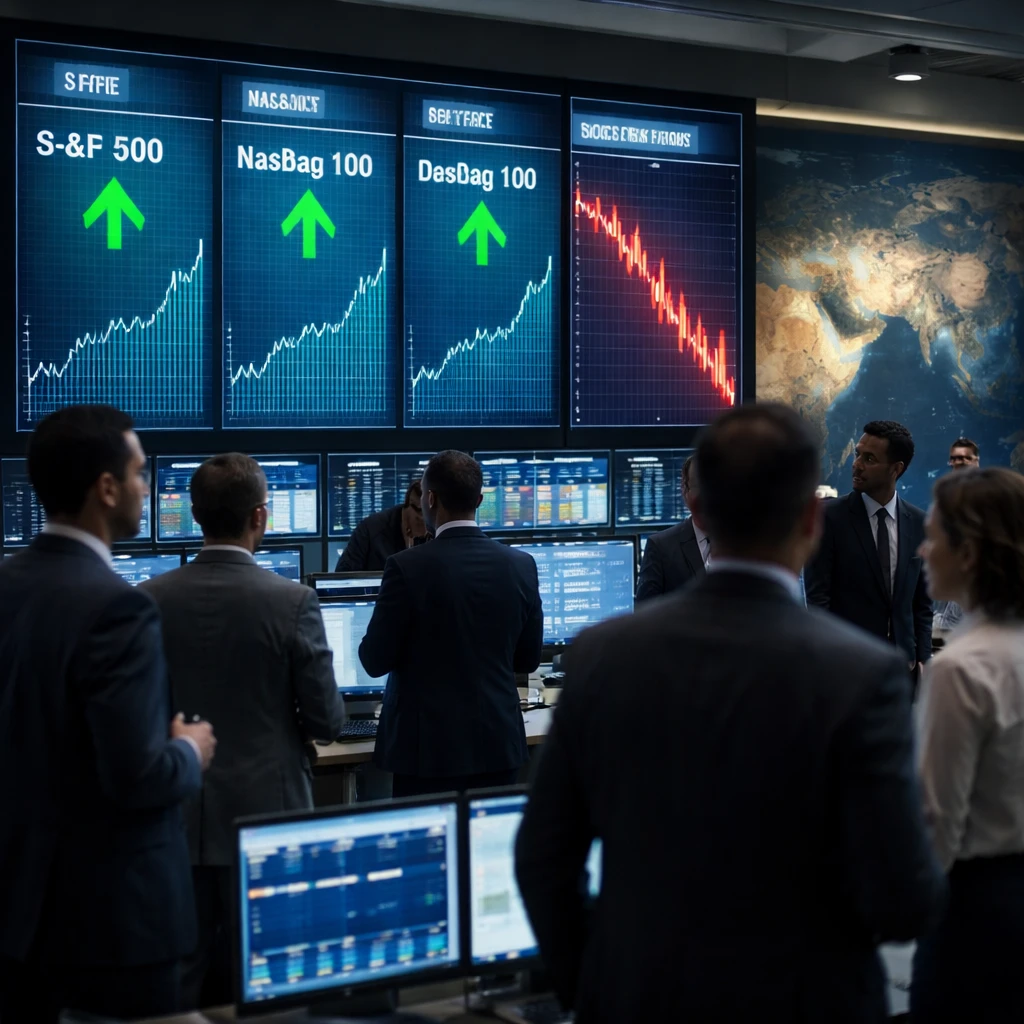
U.S. stock index futures were modestly higher on Tuesday evening as investors reacted to a mix of softer inflation data and solid bank earnings, while ongoing military action against Iran and central-bank messaging capped stronger gains.
By 20:12 ET (00:12 GMT), S&P 500 futures were up 0.17% at 7,604.25, Nasdaq 100 futures gained 0.34% to 29,892.0, and Dow Jones futures rose 0.1% to 52,847.0. The futures move followed a generally positive session on Wall Street earlier in the day.
The cash market saw the S&P 500 and the Nasdaq Composite move higher, with the Nasdaq supported by a rebound in technology stocks after recent losses. The Dow Jones Industrial Average finished the regular session essentially flat.
Banking results provided a key tailwind. Major lenders including JPMorgan Chase & Co (NYSE:JPM), Bank of America Corp (NYSE:BAC), Citigroup (NYSE:C), Wells Fargo (NYSE:WFC), and Goldman Sachs Group Inc (NYSE:GS) reported quarterly results that beat consensus expectations. Those banks benefited from robust trading and dealmaking activity during the quarter, which helped underpin investor sentiment in financials.
Not all corporate news was positive. IBM (NYSE:IBM) plunged about 25% after the company reported preliminary quarterly revenue that missed estimates, a development tied to a shift in enterprise IT spending toward hardware and infrastructure for artificial intelligence workloads.
Inflation data for June came in softer than expected on the consumer price index reading, which eased some of the market’s concern that the Federal Reserve would move to raise interest rates imminently. That relief was tempered by the fact that core CPI remains above the Fed’s 2% annual target, leaving policy still squarely in focus.
Federal Reserve Chair Kevin Warsh, in his first Congressional testimony, reaffirmed the central bank’s commitment to pursuing a 2% inflation target, language that contributed to ongoing market caution about the potential for a more hawkish stance in coming months.
Geopolitical developments limited the upside for equities. The U.S. military struck Iran for a fourth straight day, and President Donald Trump indicated that attacks would continue until an agreement was reached. In related moves, plans for a shipping fee in the Strait of Hormuz were reportedly withdrawn, but the sustained military activity kept risk sentiment restrained.
Looking ahead, a slate of notable earnings is due in the coming days. Morgan Stanley (NYSE:MS), Bank of New York (NYSE:BNY), and asset manager BlackRock Inc (NYSE:BLK) are scheduled to report, as are chip-equipment maker ASML Holding NV (AS:ASML) and pharmaceutical heavyweight Johnson & Johnson (NYSE:JNJ). ASML and other semiconductor-related reports are being watched closely for signs about demand tied to artificial intelligence hardware.
Additional companies set to report later this week include UnitedHealth Group (NYSE:UNH), GE Aerospace (NYSE:GE), Netflix Inc (NASDAQ:NFLX), Seagate Technology PLC (NASDAQ:STX), and Taiwan Semiconductor Manufacturing Co (NYSE:TSM). Observers will be looking for further signals from TSMC and ASML on the strength of AI-driven demand within the chip supply chain.
Markets continued to balance a supportive earnings backdrop in financials against geopolitical and monetary-policy-related uncertainties. Investors appear to be positioning for further corporate news while remaining attentive to inflation prints and developments in the Middle East that could influence risk appetite and sector performance.