
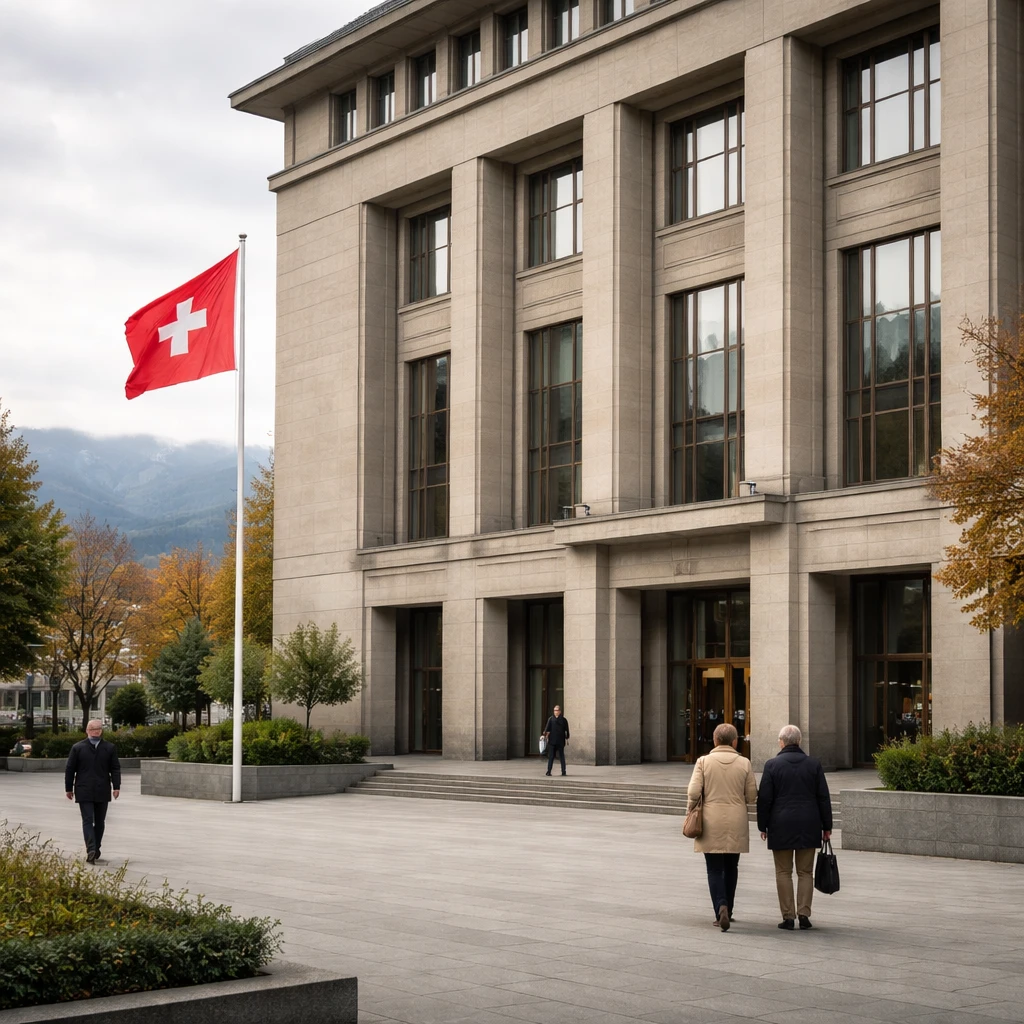
The Swiss National Bank (SNB) has kept its policy rate at 0%, opting not to follow the recent rate increases implemented by a number of its international counterparts.
This decision contrasts with actions already taken or signaled by several major central banks. The European Central Bank, the U.S. Federal Reserve and the Bank of Japan have all started raising interest rates to address inflationary pressures, and central banks in Canada and the United Kingdom are widely expected to raise rates later in the year.
Switzerland's inflation picture has remained relatively muted compared with those peers. The country's annual inflation rate reached 0.8% in August, with higher prices for gasoline, diesel and heating oil cited as primary contributors to the rise. That inflation level is substantially lower than the rates currently recorded in the United States, the United Kingdom and the euro zone.
The SNB targets an inflation range between 0% and 2%, while many of its trading partners aim for a 2% inflation target.
Despite the decision to keep rates at zero for now, markets expect the SNB will not remain on hold indefinitely. Traders assign roughly even odds to a rate increase or another hold at the SNB's December meeting. Looking further ahead, market pricing implies a probability of more than 90% that the SNB will begin tightening policy by early 2027.
Projections compiled by LSEG show traders anticipate the SNB's policy rate rising to at least 0.75% by September 2027.
For financial markets and economic sectors, the SNB's pause preserves current borrowing conditions in Switzerland for the near term, while the prospect of eventual rate rises is already being priced into longer-term expectations.
Key takeaways
- SNB maintains its key rate at 0% even as several major central banks tighten policy.
- Swiss annual inflation was 0.8% in August, fueled by higher fuel and heating oil costs.
- Markets assign roughly equal odds to a rate move in December, with a probability above 90% for the start of tightening by early 2027.
Market and sector context
- Fixed income and banking sectors may see continued low short-term rates in Switzerland.
- Exchange rate-sensitive industries and exporters could be affected by divergent monetary policies across jurisdictions.
Risks and uncertainties
- Future SNB action is uncertain - traders put equal odds on a December move versus another hold, creating near-term policy ambiguity that can affect markets.
- Although inflation is low now, changes in fuel or energy prices could alter the inflation trajectory and influence future SNB decisions.
- Differences in tightening cycles among major central banks may create exchange rate and competitive risks for Swiss trade-exposed sectors.