
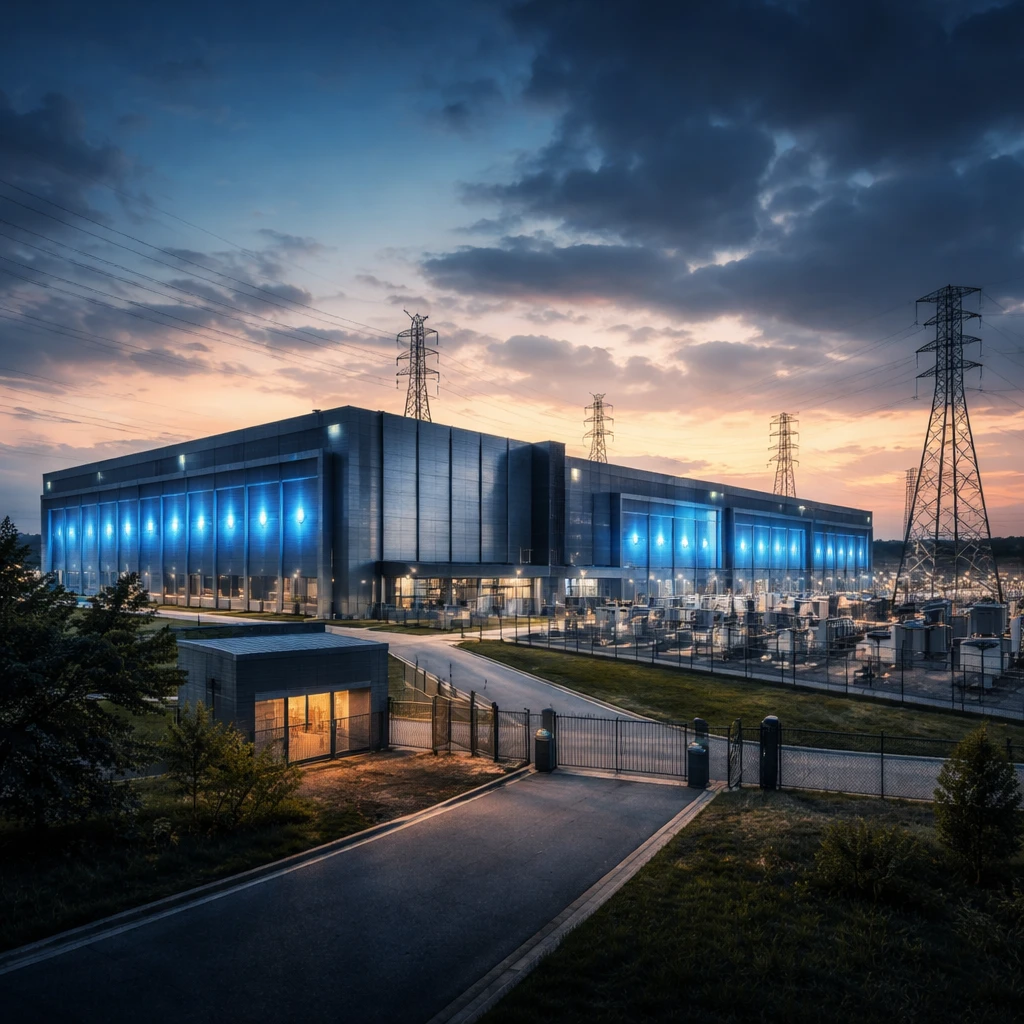
Rumble has moved decisively from its origins as a video-hosting platform into the capital-intensive business of leasing GPU compute. The company disclosed a $13.7 billion GPU services contract structured over six years in three tranches for capacity at its Maysville, Georgia facility under its Quake AI cloud unit, part of the reorganized RUM Group. That contract and the reorientation of the business were central drivers of a 64% rally in Rumble shares over a single month, lifting the stock to a 52-week high of $10.54 before it eased back to $9.37 on the most recent trading day.
At first glance the numbers present a stark contrast: Rumble’s market capitalization sits near $4.09 billion even as the firm reports negative gross margins and sub-$200 million trailing revenues. Yet management has pointed to operational shifts that they say can support a markedly larger revenue base. The company reported FY2025 revenue of $100.6 million from its legacy video platform business, and it is directing resources toward data center infrastructure intended to lease GPU cycles to AI workloads through Quake AI.
Key operational details management highlighted include the August 23 GPU deal itself, the availability of 250 MW of grid-connected power capacity expected to come online in 2027, and current hardware deployments. Rumble already operates 22,000 Hopper-generation GPUs, and reported utilization rising from below 20% to above 83% over a recent period. Management has linked the additional power capacity and rising utilization to a potential annual run rate in excess of $3 billion.
Financially, the transition remains a work in progress. The company’s quarter-to-quarter metrics show growth but also continued losses. Q2 2026 revenue was $40.4 million, up 61% year-over-year and ahead of estimates. Guidance for Q3 projects revenue of $87 million to $93 million, which would more than double Q2 and, if annualized, imply roughly $350 million-plus. Despite the top-line acceleration, FY2025 results show a gross margin of -6.7% - a material improvement from -80.5% in 2023 but still negative. EBITDA for FY2025 stood at -$98.1 million, and net income was -$81.8 million, leaving the company unprofitable and carrying a P/E metric of -23.5x by one calculation.
Corporate structure and capital relationships add further complexity. Tether is reported to own roughly 50% of RUM Group, providing both capital support in GPU acquisitions and a governance profile that some investors may view as a complication. The company also faces dilution risk: a $0.01 warrant covers 50.8 million shares, a factor highlighted by skeptics as a significant potential overhang on shareholders.
Investor views split into two broad camps. Proponents point to the tangible nature of signed contracts, the tight supply picture for high-end GPUs, the prospect of 250 MW of available power as a meaningful competitive advantage, and a valuation gap versus peers. Management argues that Rumble trades at roughly 1x enterprise value to revenue while selected AI compute peers trade near 3.5x forward revenue - implying potential re-rating if the market accepts Rumble’s repositioning as an AI infrastructure company rather than a video platform.
Critics emphasize the remaining negative margins, the need for continued substantial capital expenditure to scale the infrastructure pivot, execution risk around ramping utilization sustainably at scale, and tranche structures that may depend on customer approvals. They also cite governance questions tied to Tether’s stake and dilution from outstanding warrants. The legacy video business remains loss-making while the new AI infrastructure ambitions will require sustained investment to realize the projected run rates.
In sum, the Quake AI agreement and associated capacity commitments are material and change the narrative around Rumble’s business mix. However, the translation from a roughly $100 million trailing revenue base to a putative $3 billion-plus annual run rate relies on several variables - sustained high GPU utilization, timely commissioning of power capacity in 2027, and continued access to capital - that create execution risk. The opportunity offers asymmetric upside if Maysville and related infrastructure scale as planned, alongside meaningful downside if margins do not turn positive or dilution and governance concerns constrain investor appetite.