
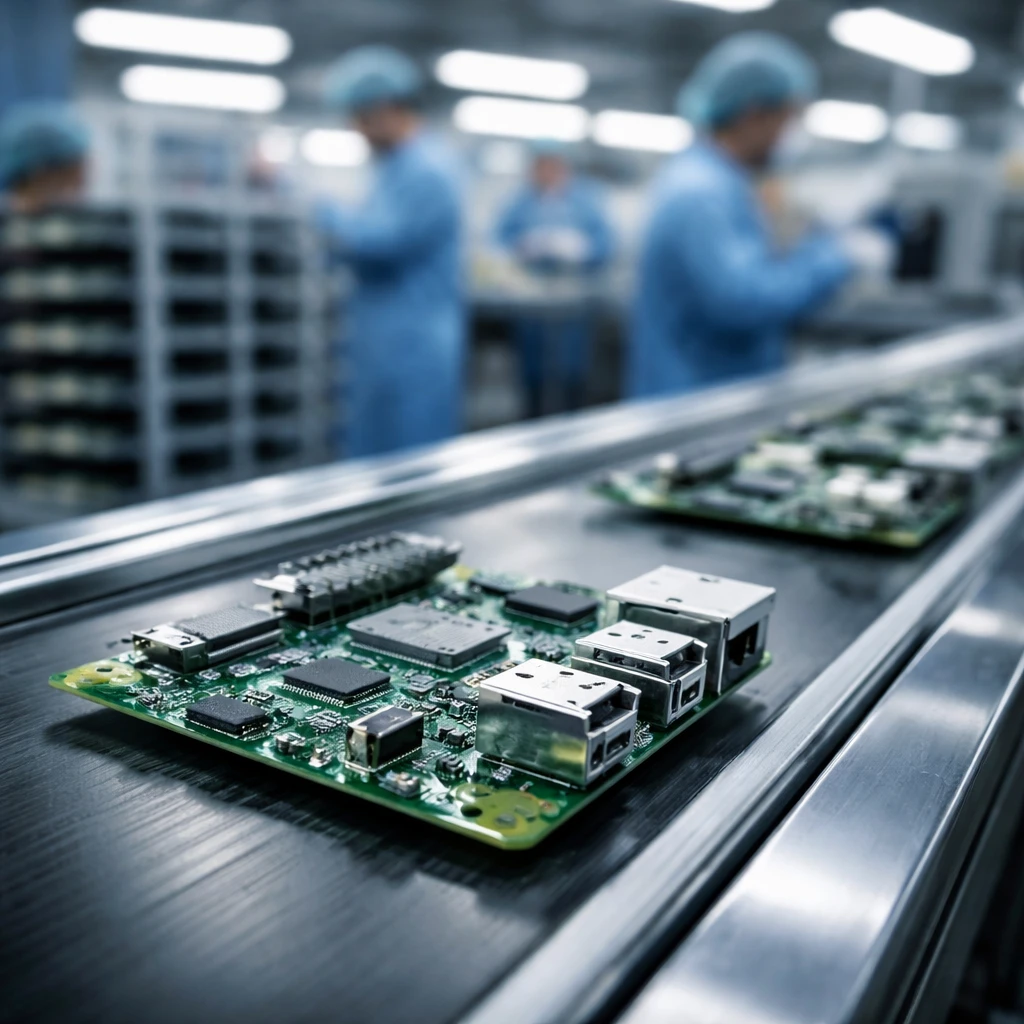
Raspberry Pi Plc saw its shares rise 5.9% after Jefferies lifted its price target to 960p from 420p, reacting to a recent company update on first-half 2026 performance.
Market reaction came after Raspberry Pi’s June 5 pre-announcement that adjusted EBITDA for the first half of 2026 is expected to reach at least $38 million, a level approaching Jefferies’ prior full-year estimate of $43.7 million. The company attributed the stronger results in part to higher average selling prices for certain boards, which rose by more than 100% as a consequence of elevated DRAM costs, and to resulting increases in gross profit per board.
Jefferies pointed to sustained customer demand despite sharp price increases. In a note, the firm said: "We believe the resilient demand for Raspberry Pi boards in H1-26, despite prices rising over 100% for many products, is the result of the company’s increasing success in its direct-to-OEM and board-to-board strategy. This is helping secure higher volume orders directly from large corporations."
The brokerage highlighted that the stronger demand profile reflects growing adoption of Raspberry Pi compute boards for higher-volume use cases among larger enterprises. Since its initial public offering, the company has been shifting its go-to-market mix toward direct engagements with larger corporate customers to capture larger, higher-volume orders and to move away from a predominantly reseller-focused approach.
Jefferies noted specific areas of traction, citing smart home applications and strengthening momentum from defense-related customers, along with emerging opportunities and improving industrial demand. These sector developments underpinned the firm’s more optimistic view on revenue potential.
Reflecting the improved pricing environment and a favorable outlook on longer-term demand, Jefferies raised its revenue forecasts for 2026 and 2027 by 18% and 16% respectively. The firm also lifted its adjusted EBITDA forecasts for those years by 26% and 13%. Importantly, Jefferies left board shipment forecasts unchanged, citing uncertainty around DRAM availability; the firm said the upside in its revisions stems entirely from higher average selling prices rather than increased unit shipments.
Implications
The share-price move and analyst upgrade signal investor and broker recognition of improved profitability per unit driven by higher selling prices, and of potential customer mix benefits from the company's strategy to cultivate larger corporate accounts.