
Overview
The Bureau of Alcohol, Tobacco, Firearms and Explosives (ATF) has proposed a rule that would permit licensed firearms dealers to ship firearms directly to in-state buyers following online identity verification and a background check, with a mandatory seven-day waiting period and notification to local law enforcement. The change would replace the widespread practice under which online firearm buyers pick up purchases at physical stores and complete in-person background checks unless they hold a qualifying permit.
If adopted, the rule would be one of the most significant alterations to federal firearms policy in roughly two decades, with agency modeling and industry commentary suggesting it could materially expand the scale of online gun commerce and shift the flow of firearms away from brick-and-mortar stores toward direct-to-consumer delivery.
Ownership and potential financial implications
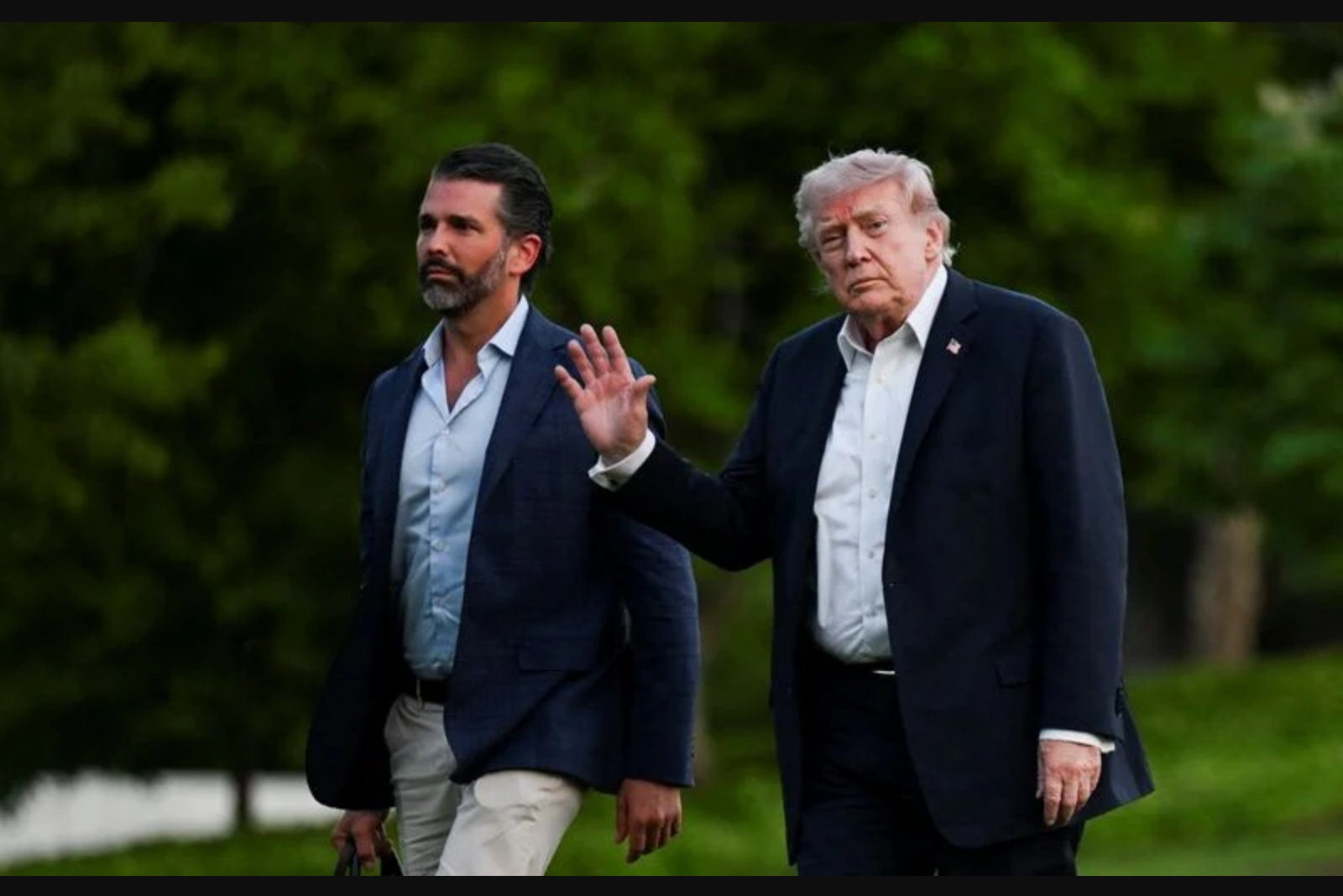
GrabAGun, an online-first firearm retailer that went public last year via a special purpose acquisition company transaction, counts Donald Trump Jr. as a shareholder and board member. According to company disclosures, Trump Jr. holds more than 300,000 shares in the business worth in excess of $700,000 at current valuations, down from a value of more than $5 million a year earlier.
GrabAGun’s initial public offering through the SPAC generated $119 million for the company, which reports approximately $100 million in annual revenue. The company’s chief executive, Marc Nemati, told company audiences in a May statement that he sees GrabAGun as well placed to capture opportunities should regulatory changes favor direct home delivery. Nemati told reporters that neither he nor Trump Jr. were aware the ATF proposal was coming and that the company is still evaluating the possible effects on its revenue.
What the ATF is proposing and the agency's rationale
The agency projects that around half of gun purchasers - nearly 3.3 million people per year - might eventually use the home-delivery option. ATF chief counsel Robert Leider described the rulemaking as a collaborative, agency-wide effort intended to align the firearms distribution system with contemporary commerce practices. The ATF also estimates consumers would save roughly $103.7 million annually in reduced travel time and lower processing costs if the change is implemented.
Asked about any connection between the proposed rule and GrabAGun’s shareholders, Leider said he became aware of the company’s investor ties only after being questioned and asserted that the president’s son had no influence on the rulemaking. He declined to comment on whether the White House participated in or directed the proposal. The White House stated it had no record or knowledge of any interaction with the president’s son concerning the topic.
The proposed rule is one of 34 deregulatory measures advanced by the ATF this spring in response to a presidential executive order issued in February 2025 that directed the agency to explore avenues to expand lawful access to firearms. The public comment period on this particular proposal is open and scheduled to close in early August. The agency notes the rule may not be finalized until late 2026 or early 2027 and could still be revised or withdrawn.
Industry reaction and safety concerns
The proposal has drawn sharply divided responses. Some industry leaders and larger retailers see the shift as an alignment with broader retail trends toward ease of online purchasing. Others - particularly small, independent gun shops and several gun-control organizations - warn that direct home delivery of firearms increases the risk of illegal trafficking, mailbox theft and straw purchases, in which someone legally eligible buys a firearm on behalf of a person who is prohibited from owning one.
Marianna Mitchem, a senior firearms industry advisor at Everytown for Gun Safety who previously served at the ATF for more than two decades, said the industry had not sought such a policy in her prior interactions with the agency and criticized the proposal for removing a historical gatekeeper role played by local stores. "ATF always says the gun store is the first line of defense in gun safety," Mitchem said, adding that the proposed change would flip that approach.
Giffords, Brady and Everytown have filed comments opposing the rule, citing potential for trafficking and theft. Aneesa McMillan of Giffords told reporters that even the most extensive virtual verification systems cannot reliably detect whether an online buyer intends to divert firearms to others.
Retail and logistical considerations
GrabAGun, founded in 2010, operates primarily as an online retailer, but the proposed change would also open the door for big-box chains and outdoor retailers with robust e-commerce platforms to ship firearms directly to consumers. Industry analysts, former ATF officials and gun shop owners told reporters that while GrabAGun could be well positioned to grow under the rule, competition from larger retailers could also intensify.
Small independent dealers have voiced particular concern about both safety and economic impacts. Many depend on transfer fees - which can run roughly $30 per weapon - charged to complete background checks and process transfers for online purchases that are currently fulfilled at their stores. Those transactions frequently generate in-store traffic for ammunition, accessories and other purchases that underpin downtown shop economics.
Chrystal Santos, who oversees operations at Bow & Barrel Sportsmen Center in Missouri, submitted a public comment opposing the rule and said her staff is trained to detect the behavioral signals of straw purchases - a kind of vetting that she argued online checks cannot replicate. "It opens a whole can of worms," Santos said. "Places like GrabAGun and others are the problem, they make it harder for shops like us."
Justin Anderson, director of online sales at Hyatt Guns - a large retailer with a physical presence in North Carolina - said physical stores often function as the "last line of defense" to prevent dangerous individuals from obtaining weapons. Anderson added that while Hyatt would likely adopt home delivery if the rule is finalized, the safety concerns give him pause.
Postal service rulemaking and delivery networks
The ATF proposal coincides with a separate regulatory move by the U.S. Postal Service that would lift a long-standing ban on mailing handguns, a change that would alter how firearms move through national delivery networks. The convergence of ATF and Postal Service proposals highlights the logistical shifts at stake, with potential implications for carriers, last-mile delivery providers and retail fulfillment strategies.
From a logistics perspective, the proposed rules could require carriers and retailers to adopt new verification and chain-of-custody practices for firearm shipments. The ATF argues that a standardized online verification mechanism could be more secure than current in-store procedures, noting that some physical shops perform little more than clerical processing of paperwork. "The people who are concerned about this being susceptible to straw purchases have an idealized view of what an in-store purchase is," ATF chief counsel Robert Leider said, characterizing certain shops as being "little more than a paperwork conduit."
Market reaction
Shares of GrabAGun are traded under the ticker PEW. The stock has fallen sharply over the past year, declining roughly 85 percent from prior levels. Economic and market participants have not reached consensus on the drivers of the decline. Company supporters argue that regulatory shifts could restore value by expanding the addressable market for online purchases, while critics highlight safety and competition concerns that could limit upside.
A spokesperson for Donald Trump Jr., Andrew Surabian, said the president’s son "had no role in the ATF proposal" and described him as a lifelong businessman and advocate for Second Amendment rights who does not represent his portfolio companies when interacting with the federal government.
What happens next
The rule is accepting public comment through early August. The ATF has indicated the rulemaking process could extend into late 2026 or early 2027, and the agency could change, delay or abandon the proposal before any final action is taken. In the meantime, regulated sellers, postal and parcel carriers, gun-control organizations and small retailers will continue to evaluate the operational, legal and safety ramifications of permitting direct home delivery of firearms.
For companies like GrabAGun and other online retailers, the proposal represents both a potential revenue catalyst and a source of controversy that could reshape customer acquisition strategies, fulfillment models, and the economics of independent dealer networks that currently provide background check services and transfer fees.
Conclusion
The ATF proposal to allow licensed dealers to ship firearms directly to verified in-state purchasers would alter longstanding fulfillment practices and could redistribute both sales volumes and revenues across online and physical retailers. It raises questions about the trade-offs between convenience, safety and the financial viability of small gun shops, and positions logistics and delivery systems at the center of an intense regulatory debate.