
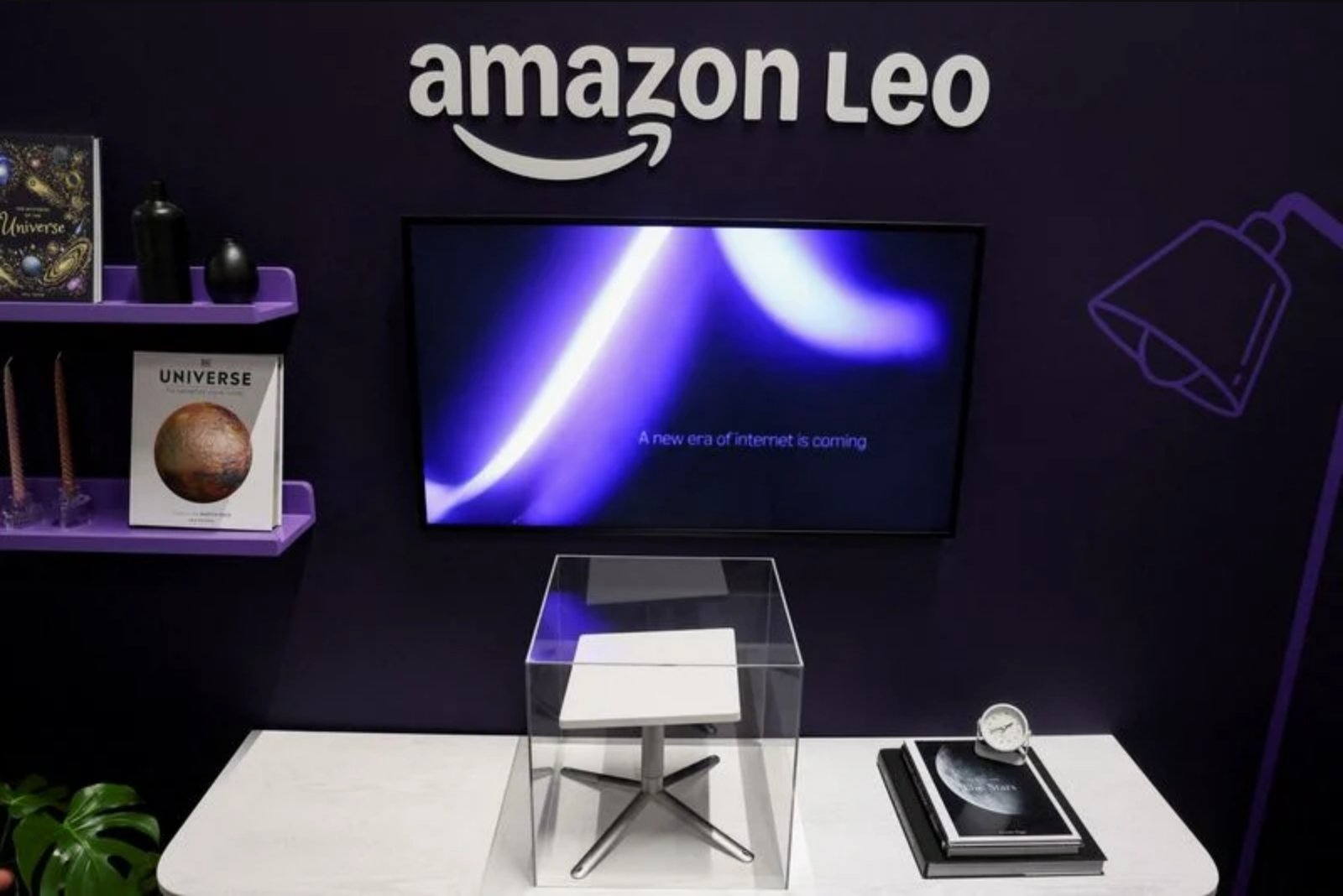
Amazon said it expects to start an initial phase of internet service from its Leo broadband satellite network later this year, after a recent launch increased the constellation's on-orbit tally to more than 390 satellites. The company launched a batch of 29 satellites early on Thursday from Florida on a United Launch Alliance Atlas V rocket, marking the 14th Leo mission as Amazon progresses toward a planned global service built from thousands of spacecraft.
In a post on X, Leo chief Chris Weber cautioned that work remains to place the newly launched satellites at their assigned altitudes, but said the program has now completed enough launches to begin initial service this year. He added that future missions will expand both coverage and capacity as the network grows.
Weber did not specify where Amazon intends to turn on the first service nodes. Company briefings have signaled that initial coverage is expected to begin near Earth's north and south poles, then move inward toward the equator as additional satellites are added.
Spaceflight analyst and Harvard astronomer Jonathan McDowell says the constellation currently has 394 satellites in orbit, out of 398 satellites that have been launched since April 2025. Amazon plans to deploy more than 3,200 satellites in total for the Leo network to provide global internet coverage from low Earth orbit.
The Leo network is being positioned as a competitor to SpaceX's Starlink, which has deployed a much larger fleet. Amazon plans to offer internet connections to consumers using Leo terminals that range in size from roughly a laptop to larger, more powerful units; it also expects to serve governments and commercial customers such as airlines.
Amazon has been targeting a broader service start around mid-2026 and is relying on a fleet of rockets that represent tens of billions of dollars in bookings to loft the remainder of its satellites. The Atlas V has become a principal launch vehicle for those missions while two other rockets Amazon planned to use - Blue Origin's New Glenn and ULA's Vulcan - are grounded.
Last month, a New Glenn rocket exploded on its launchpad, destroying the launch tower and other hardware. Amazon's CEO Dave Limp said the company expects New Glenn flights to resume by the end of the year as engineers focus on the rocket's engine section to determine the cause of the failure.
ULA's Vulcan rocket is also grounded after a solid rocket motor separation issue that emerged in February. Vulcan uses the Blue Origin-built BE-4 engines that power New Glenn, and its return to flight could be delayed further if investigations point to BE-4 engine problems as the root cause of the New Glenn mishap.
Jessica Rye, a spokeswoman for ULA, said that Blue Origin engineers "are being transparent with us as they work through the investigation. If there are crossover items with the BE-4 engines, we will collaborate with the team to find root cause and address it."
Amazon currently has roughly 100 rocket launches on its manifest, representing at least $82 billion in booked launch services to build out Leo. In addition to ULA and Blue Origin, Amazon's contracted launch providers include French launcher Arianespace's Ariane 6 and SpaceX's Falcon 9. The Falcon 9 has been central to SpaceX's deployment of its Starlink constellation.
Context and next steps
Amazon's immediate operational focus will be on raising recently launched satellites to their operational altitudes and gradually expanding service coverage as more spacecraft are introduced. The program's reliance on multiple launch providers and a large number of future missions means that return-to-flight timelines for New Glenn and Vulcan could affect the pace of Leo's full-scale deployment.