
Legal headlines have focused squarely on the $9 billion suit filed by Albertsons over a blocked $24.6 billion merger, turning the dispute into a high-profile courtroom event. Yet the litigation-centric narrative obscures a separate, concrete development: Kroger’s own operations are showing sustained improvement that supports cash flow and shareholder returns.
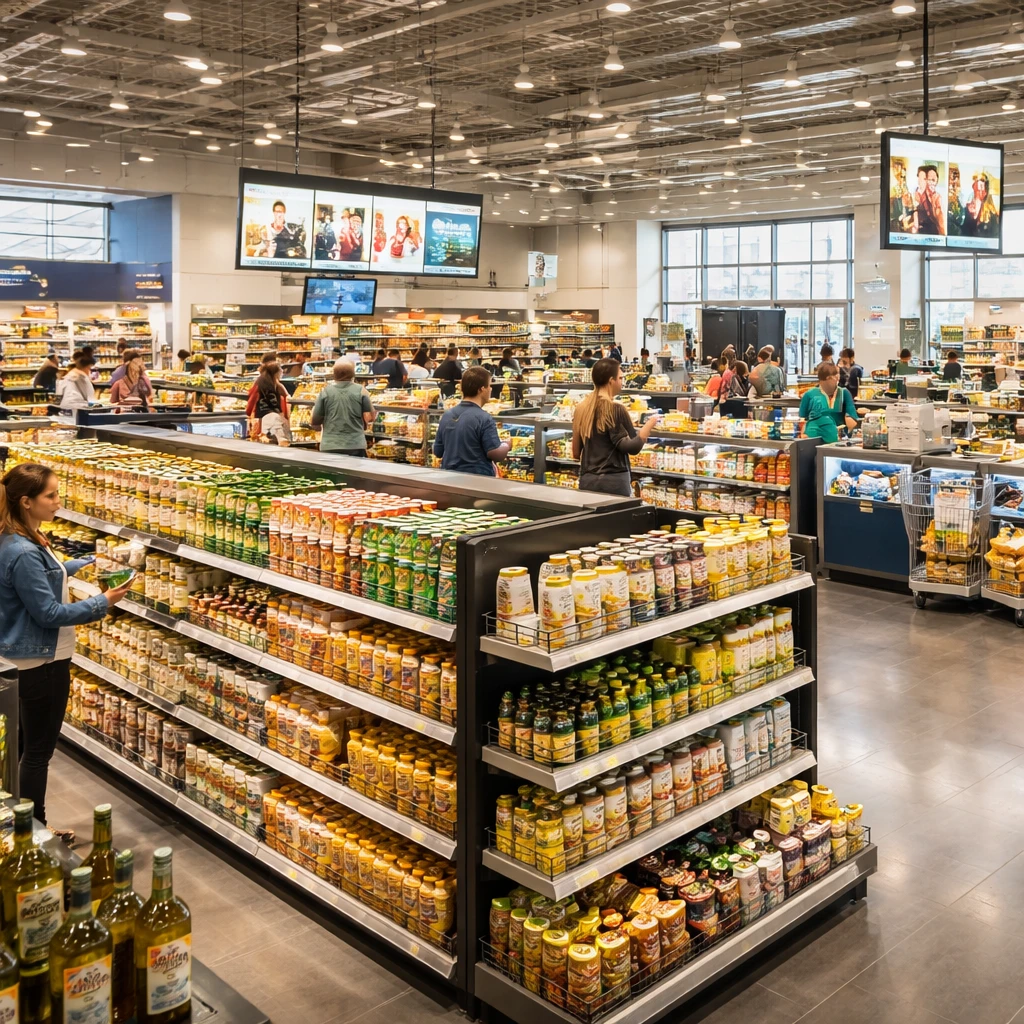
Across approximately 2,700 stores operating under more than 30 banners, Kroger’s private-label strategy is producing measurable results. The retailer’s private-label family, known as "Our Brands," now exceeds $30 billion in annual sales. In the most recent quarter, Kroger’s private-label market penetration expanded by roughly 50 basis points, and sales of its premium Private Selection line rose by more than 14%.
Complementing these assortment shifts are faster-growing, higher-margin business lines. E-commerce sales increased 20% year-over-year, marking the second consecutive quarter in which online sales were profitably growing. Retail media, which sells advertising space to packaged-goods makers, expanded 24% in the quarter, its strongest rate of growth since 2021. That improving mix boosted FIFO gross margin by 13 basis points and helped adjusted EPS come in at $1.09, ahead of the consensus estimate of $1.06.
Management under CEO Greg Foran, a former Walmart executive, is seeking to capture that momentum with a $5 billion self-funded plan designed to drive roughly 3% comparable sales growth and annual adjusted EPS growth of 7% to 11% from fiscal 2027 to 2029.
Despite operational gains, Kroger’s valuation remains relatively modest. On a forward basis the company trades at about 12.5 times earnings, while the trailing P/E is 37.5. By contrast, Walmart’s trailing P/E sits at 45.9. The difference is more pronounced on a price-to-sales basis: Kroger’s ratio is 0.27, compared with Walmart’s 1.38.
That lower multiple rests on a foundation of significant liquidity. Operating cash flow totaled $6.7 billion over the trailing twelve months, supporting a dividend that has been increased for 21 consecutive years and currently yields 2.34%. In the first half of the year management repurchased approximately $1.2 billion of shares under a $2 billion authorization. Net debt is 1.91 times adjusted EBITDA, which is below the company’s target range of 2.3 to 2.5 times and leaves room for additional buybacks, dividend increases, or investments.
Not all metrics are uniformly strong. Excluding fuel, identical sales were up just 0.2% in the most recent quarter, indicating a degree of softness that remains a macroeconomic risk. Still, analysts appear broadly constructive: the median price target among analysts is $69, with high-end targets as high as $85.
Market models tracking durable operational performance have rewarded Kroger’s progress. An AI-driven strategy added Kroger to a Best of Buffett model in December 2023, and that position has appreciated about 61.2% since inclusion. In the active November portfolio, Kroger is grouped with other resilient market leaders including an international payments network, a global beverage franchise, and a consumer credit platform.
From an investor perspective, the central question is how much the legal resolution between Albertsons and regulators will change Kroger’s intrinsic case. Whatever the court decides about the proposed deal, Kroger’s valuation and near-term outlook are primarily dependent on results from its stores and ancillary businesses. Continued private-label adoption, profitable online growth, and expanding retail media sales are the chief drivers behind the stock’s performance since its selection by the model portfolio.
For investors evaluating the company, key items to follow include private-label margin contribution, the trajectory of retail media growth, e-commerce profitability, and the company’s capacity to continue share repurchases and dividend increases without breaching leverage targets.
Summary
Kroger’s operational trajectory - highlighted by rising private-label sales, profitable e-commerce expansion, and accelerating retail media revenue - is underpinning shareholder returns even as litigation stemming from a blocked Albertsons merger draws attention. Management’s $5 billion plan targets modest comp-sales and robust EPS growth through fiscal 2029, and liquidity metrics leave room for continued capital returns.
Key points
- Kroger’s private-label business, Our Brands, now produces more than $30 billion in annual sales, with market penetration up roughly 50 basis points and Private Selection sales up over 14% in the latest quarter - impacts retail and consumer goods sectors.
- High-margin channels are expanding: e-commerce grew 20% year-over-year for a second straight quarter of profitable online growth, and retail media rose 24%, its best pace since 2021 - impacts e-commerce, advertising, and packaged goods sectors.
- Strong cash flow and conservative leverage support dividends and buybacks: $6.7 billion operating cash flow TTM, a 21-year streak of dividend increases with a current yield of 2.34%, $1.2 billion of repurchases in H1 under a $2 billion authorization, and net debt at 1.91 times adjusted EBITDA.
Risks and uncertainties
- Legal outcome uncertainty: the Albertsons lawsuit related to a blocked $24.6 billion merger may create headline risk that affects investor sentiment and sector consolidation efforts - impacts legal, regulatory, and M&A activity in the grocery sector.
- Soft comparable-sales momentum: identical sales excluding fuel rose only 0.2% last quarter, signaling sensitivity to consumer spending and macroeconomic conditions - impacts retail traffic and consumer staples performance.
- Valuation divergence: Kroger’s lower forward multiple compared with peers could reflect market concerns about sustaining growth or converting operational gains into durable earnings - impacts equity valuations and investor allocation decisions.
Note: This article presents financial and operational metrics as reported. Data points referenced include Kroger’s store count of roughly 2,700 and more than 30 banners, Our Brands annual sales above $30 billion, a 20% year-over-year rise in e-commerce sales, 24% retail media growth, a FIFO gross margin increase of 13 basis points, adjusted EPS of $1.09 versus a $1.06 consensus, a forward P/E of 12.5, trailing P/E of 37.5, operating cash flow of $6.7 billion TTM, a dividend yield of 2.34% after 21 consecutive years of increases, $1.2 billion of share repurchases in H1 under a $2 billion authorization, net debt at 1.91 times adjusted EBITDA, and analyst price targets with a median of $69 and highs to $85. The company’s management plan seeks roughly 3% comparable sales growth and 7% to 11% annual adjusted EPS growth from fiscal 2027 to 2029.