
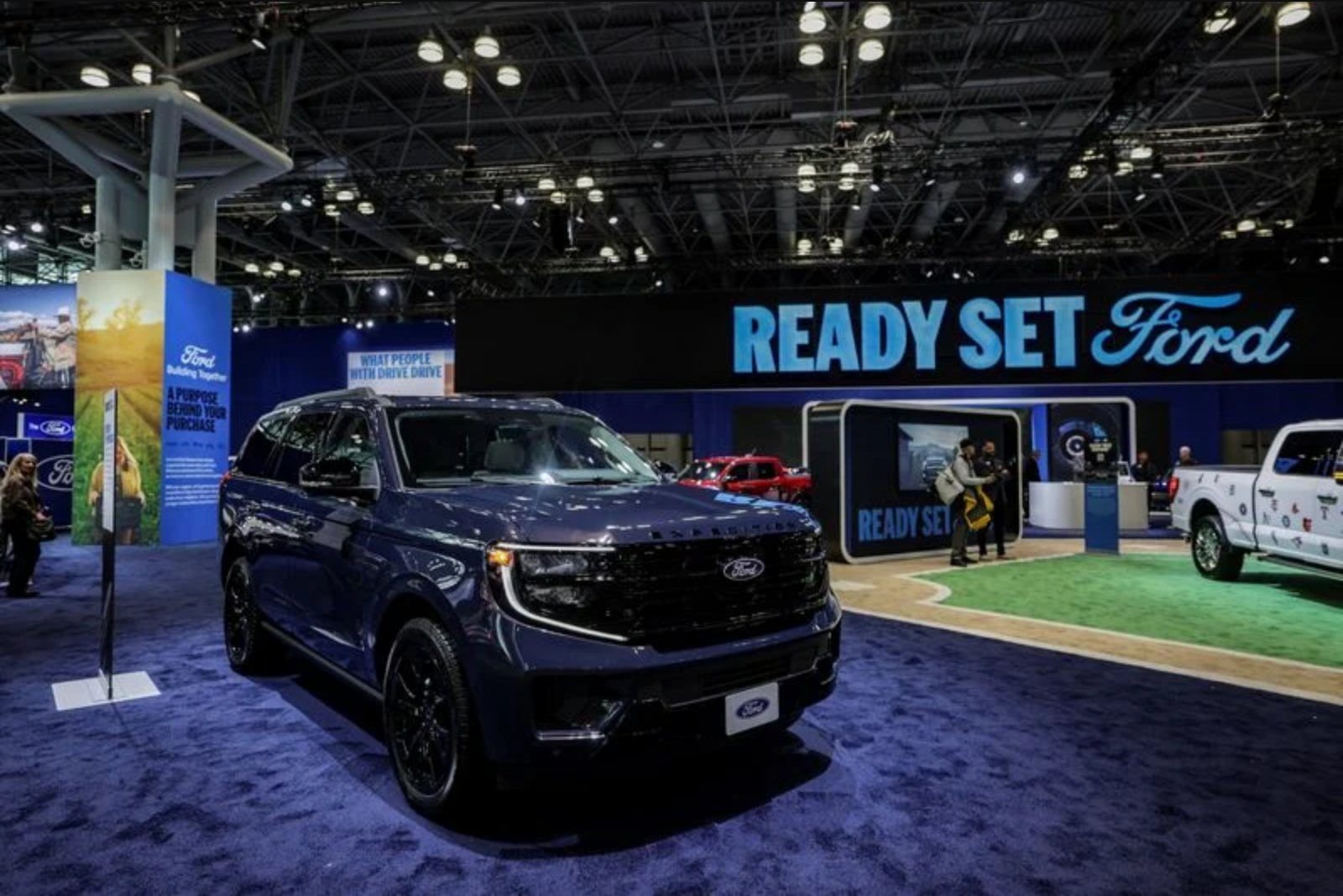
Automakers reported fewer early-owner problems overall in J.D. Power’s latest initial quality study, with Ford Motor claiming the top spot among mass-market brands as vehicle quality across the industry registered its strongest year-over-year improvement since 1997.
The consulting and analytics firm based its findings on responses from nearly 80,000 consumers who bought or leased 2026 model-year vehicles. J.D. Power measures initial quality by counting the total number of owner-reported problems occurring in the first 90 days of ownership, expressed per 100 vehicles. In the most recent report the industry score fell to 175 problems per 100 vehicles from 192 the prior year.
Ford recorded a notable advance in that metric, posting 152 problems per 100 vehicles in the new data, down from 193 in the previous year’s survey. The company said the result marks its first time leading new-vehicle quality in 16 years. "This is a culmination of a lot of hard work by thousands of our team members across North America," Ford CEO Jim Farley said during a Wednesday press conference.
Ford attributed the improvement to a sustained effort to dismantle internal silos that previously meant issues were often fixed in isolation rather than addressed at their root. The automaker consolidated functions such as engineering, supply chain and manufacturing to speed problem resolution and align teams around longer-term fixes.
Company executives have already signaled improving quality through employee compensation: earlier in the year Ford paid record bonuses, citing its best-in-decade initial quality as part of the rationale.
Recalls and regulatory pressure
Despite the stronger initial quality score, Ford continues to face a steady stream of recalls. The automaker leads all manufacturers with 51 recalls so far this year, followed by Stellantis with 19 recalls. The recent consent order from a federal auto safety regulator, which found Ford delayed recalling some vehicles with defective rearview cameras, remains part of the company’s regulatory backdrop.
Ford has logged the highest volume of recalls in the industry since 2020, the year Jim Farley began as CEO and made quality a stated priority. The company says it expects recall counts to decline over time, but cautioned that many issues emerge only after vehicles accumulate years on the road, so a material reduction in historic recall activity could take time to appear.
Ford Chief Operating Officer Kumar Galhotra noted that newer vehicles show clearer improvement when compared with vehicles designed between 2013 and 2020.
Industrywide trends
Manufacturers faced particular challenges with infotainment and connectivity systems. J.D. Power found that problems tied to Android Auto and Apple CarPlay were significant contributors to the uptick in reported issues, even as overall counts fell. At the same time, some straightforward design changes improved owners’ experiences; J.D. Power highlighted cupholders as a surprisingly large factor in the quality gains, citing more accessible placement and greater capacity to accommodate different bottle sizes.
The overall improvement comes even as vehicles increase in software complexity, a trend that industry engineers and suppliers continue to manage. Automakers have focused on simplifying feature delivery in some areas as a path to raising initial quality scores despite the growing technical demands of modern vehicles.
What the data represents
J.D. Power’s initial quality ranking captures short-term owner experiences and is based on reported problems within the first 90 days of ownership. The data set in this report reflects owner feedback from nearly 80,000 new-vehicle buyers or lessees of 2026 model-year cars and light trucks. The report does not directly measure long-term reliability or problems that appear after the initial ownership window.
For Ford, the new ranking is a notable milestone following several years of lagging performance and costly warranty issues. However, the company’s high recall count and the regulatory consent order tied to delayed rearview camera recalls add complexity to assessing longer-term progress.
Overall, the industry’s move to fewer owner-reported problems signals progress in initial quality, but connectivity-related software issues and legacy recall volumes remain areas of concern for manufacturers, suppliers and regulatory watchers.