
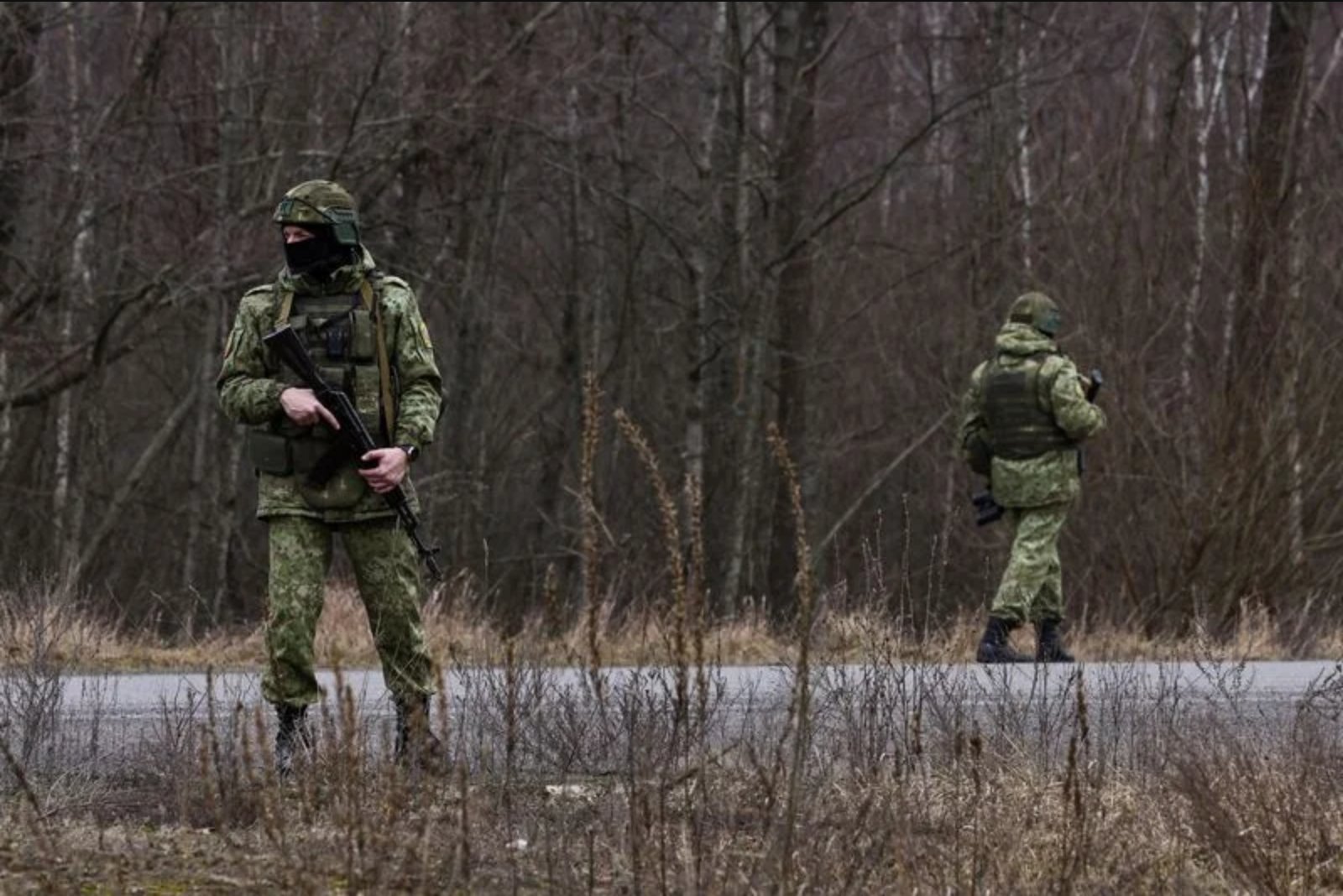
Russian officials denied on Thursday that they were applying pressure on Belarus to take a more active military role in the conflict in Ukraine, while senior Belarusian figures said it is Western policies and military trends that are risking the country being drawn into the fighting.
Belarus occupies a strategically sensitive position, closely aligned with Moscow and sharing frontiers with Russia and Ukraine as well as borders with three NATO members. Against a backdrop of stalled Russian advances and drone strikes reaching deep inside Russian territory, Ukraine's president has repeatedly suggested Moscow seeks greater Belarusian involvement on Russia's side.
A report in the Wall Street Journal said Moscow had plans to use Belarus as a springboard to intensify strikes against Ukraine and was threatening to withdraw financial support if Belarus did not cooperate. The Kremlin's spokesman dismissed that account, saying it "does not correspond to reality" and describing Belarus as "our closest ally".
Belarusian authorities point to Western activity
Belarus' defence minister argued that it is actions by Western countries that are escalating instability along Belarus' borders. In a speech to graduating officers, Defence Minister Viktor Khrenin said:
"The situation along our borders is extremely unstable, and escalating. Beyond our borders, NATO troop formations are being reinforced, infrastructure is being upgraded, the military budgets of neighbouring states are expanding, and politicians are making strident militaristic statements."
He added:
"Efforts are under way to prolong, and even expand, the hot conflict unleashed by the West in Ukraine. Today, we are acutely aware of a blatant attempt to drag Belarus into the war."
Claims about relay stations and Kyiv's warnings
Ukrainian President Volodymyr Zelenskiy has publicly asserted that signal relay stations on Belarusian soil were being used to guide Russian drone attacks inside Ukraine. He warned Belarusian President Alexander Lukashenko to remove the stations within a week, saying: "If he doesn’t do it, we’ll do it." Later statements from Ukraine's president indicated the stations had ceased operating. That claim could not be independently verified.
When asked about the technical allegation, a Kremlin spokesman said he had no information on the matter.
Military and logistical ties remain close
Belarus has not sent its troops directly to fight alongside Russian forces, but it has permitted President Putin to use Belarusian territory as a launch platform for the original invasion of Ukraine and has agreed to host Russian tactical nuclear missiles. The two countries continue frequent joint military drills, and Belarus allows Russian forces the use of its bases and training areas.
Beyond military cooperation, Belarus plays a significant role in energy logistics for Russia. The country operates two large refineries that process Russian oil and return finished products such as petrol, diesel and jet fuel to Russia. That arrangement has gained in importance this year as attacks on Russian refineries have contributed to fuel scarcity.
According to sources cited in the reporting, rail shipments of gasoline from Belarusian refineries to Russia increased nearly 13-fold in the first five months of this year compared with the same period a year earlier, while shipments of Belarusian diesel to Russia roughly tripled over the same timeframe.
Implications
The competing narratives - Moscow's denial of coercion, Minsk's accusation of Western provocation and Kyiv's allegations about relay stations - underline a complex and contested security environment. At the same time, the growing fuel flow from Belarus to Russia highlights a material interdependence that shapes logistics and market responses in the region.