
Stock Markets July 2, 2026 02:28 PM

Blackstone Unit Walks Away From Major Virginia Data Center Plot

QTS to exit its planned 800-plus acre portion of the 2,100-acre 'Digital Gateway' campus after prolonged legal and community opposition

By Avery Klein
Share
Twitter Reddit Facebook LinkedIn
BX

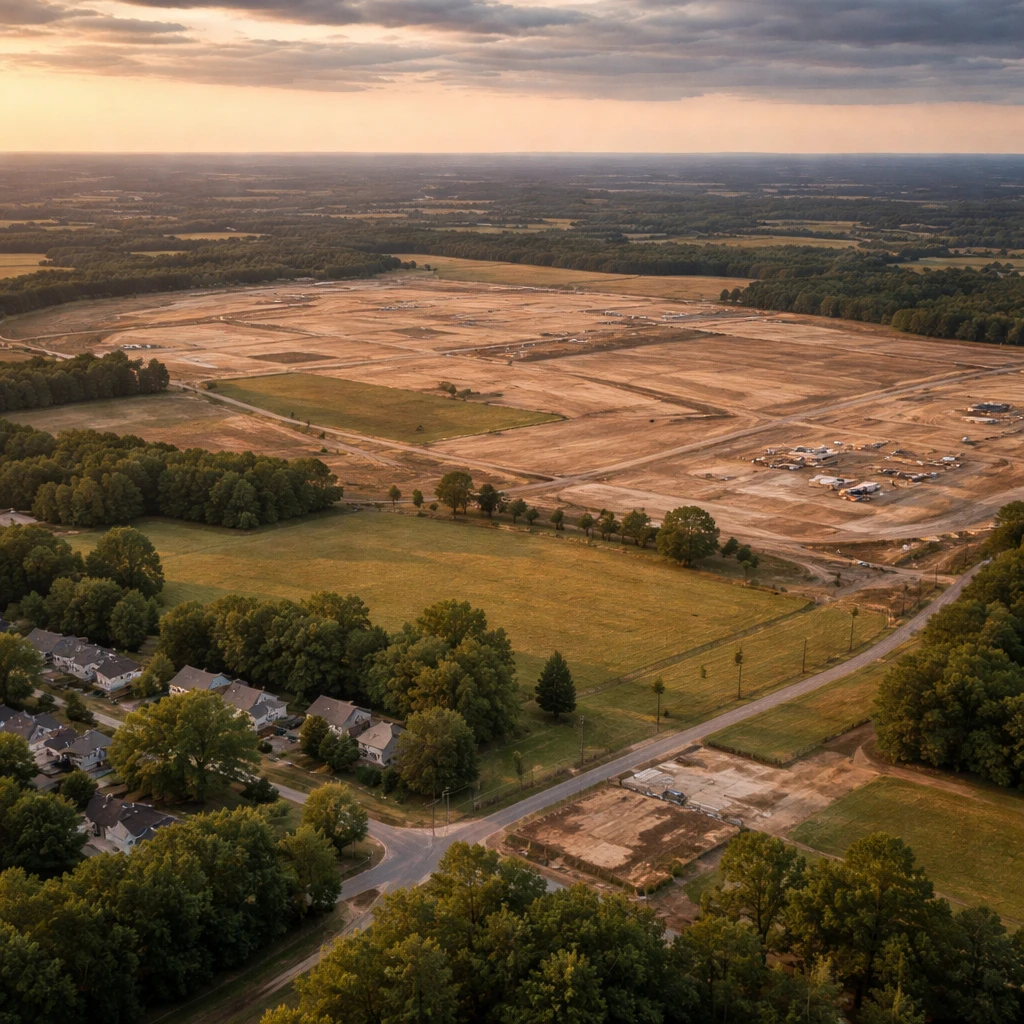
QTS, the data center business affiliated with Blackstone Inc., has elected to abandon its planned development of more than 800 acres in Prince William County, Virginia, that formed part of a proposed 2,100-acre data center campus known as the 'Digital Gateway.' The firm concluded continued litigation was not worth pursuing and will notify the court of its decision. The withdrawal marks a setback for a project envisioned to be one of the world's largest technology corridors.

Blackstone Unit Walks Away From Major Virginia Data Center Plot
BX
Summarize with
ChatGPT Perplexity Claude Grok Gemini

Key Points

  • QTS will not proceed with building its portion of a 2,100-acre data center campus in Prince William County, Virginia, relinquishing plans to convert more than 800 acres.
  • Executives determined continued litigation was not worthwhile; legal counsel will notify the court of the withdrawal in the coming days.
  • The setback affects the 'Digital Gateway' initiative, a site roughly twice the size of Central Park that carried estimated spending projections near $100 billion and power demands comparable to a city.

QTS, the data center unit linked to Blackstone Inc., has decided to abandon its planned contribution to a 2,100-acre data center campus in Virginia, company executives concluded in recent days. The move ends QTS's bid to convert in excess of 800 acres in Prince William County, in Northern Virginia, into a major component of what promoters described as a vast technology corridor.

Executives at QTS determined that persisting with the court fights surrounding the project was not warranted, and attorneys for the firm intend to inform the court of the withdrawal as soon as this week. The company had faced sustained resistance from local homeowners and a series of lawsuits tied to the site's proximity to a historic Civil War battlefield and its presence on land that previously had protections against development.

The decision represents a tangible setback for the broader "Digital Gateway" initiative. The site under consideration spans roughly twice the area of New York's Central Park and carries projected power needs comparable to those of a small city. Backers of the initiative had expected it to catalyze roughly $100 billion in spending and to help establish one of the largest concentrated technology corridors globally.

Public concern has crystallized around several issues as data center operators have pursued aggressive expansion in the region. Neighbors and other stakeholders raised questions about the potential strain on regional electricity grids and the effect such large-scale facilities could have on local housing markets. The "Digital Gateway" proposal also endured contentious and lengthy public hearings prior to these legal challenges.

QTS's withdrawal narrows the roster of developers positioned to build out the envisioned campus and raises fresh questions about the project's timetable and scale. While proponents emphasized significant economic investment tied to the campus, opponents maintained that the location and scale posed unacceptable historical, environmental and community impacts.


Contextual note: The decision to step away follows sustained opposition and litigation that focused on the site's historical proximity and prior land protections. Company attorneys plan to notify the court of QTS's change in stance imminently.

Risks

  • Legal and regulatory uncertainty - ongoing lawsuits and public hearings in Virginia can delay or derail large-scale infrastructure projects, affecting developers and contractors.
  • Grid and infrastructure strain - large data center campuses raise concerns about regional electricity supply and distribution, impacting utilities and energy markets.
  • Local economic and residential impacts - community opposition driven by worries about housing prices and land preservation can reduce the feasible footprint for projects, influencing real estate and local tax revenues.

More from Stock Markets

Chardan Picks Arrowhead as Top Biotech Investment Ahead of Major 2026 Readout Jul 2, 2026 Tesla unveils six-seat long-wheelbase Model Y L in U.S. as demand stimulus Jul 2, 2026 O’Reilly lodges cash bid for Genuine Parts’ auto-parts business Jul 2, 2026 Amazon Says Initial Leo Broadband Service Will Begin This Year as Constellation Tops Nearly 400 Satellites Jul 2, 2026 Missouri Jury Clears Mead Johnson in Case Linking Preterm Formula to Infant Bowel Disease Jul 2, 2026