
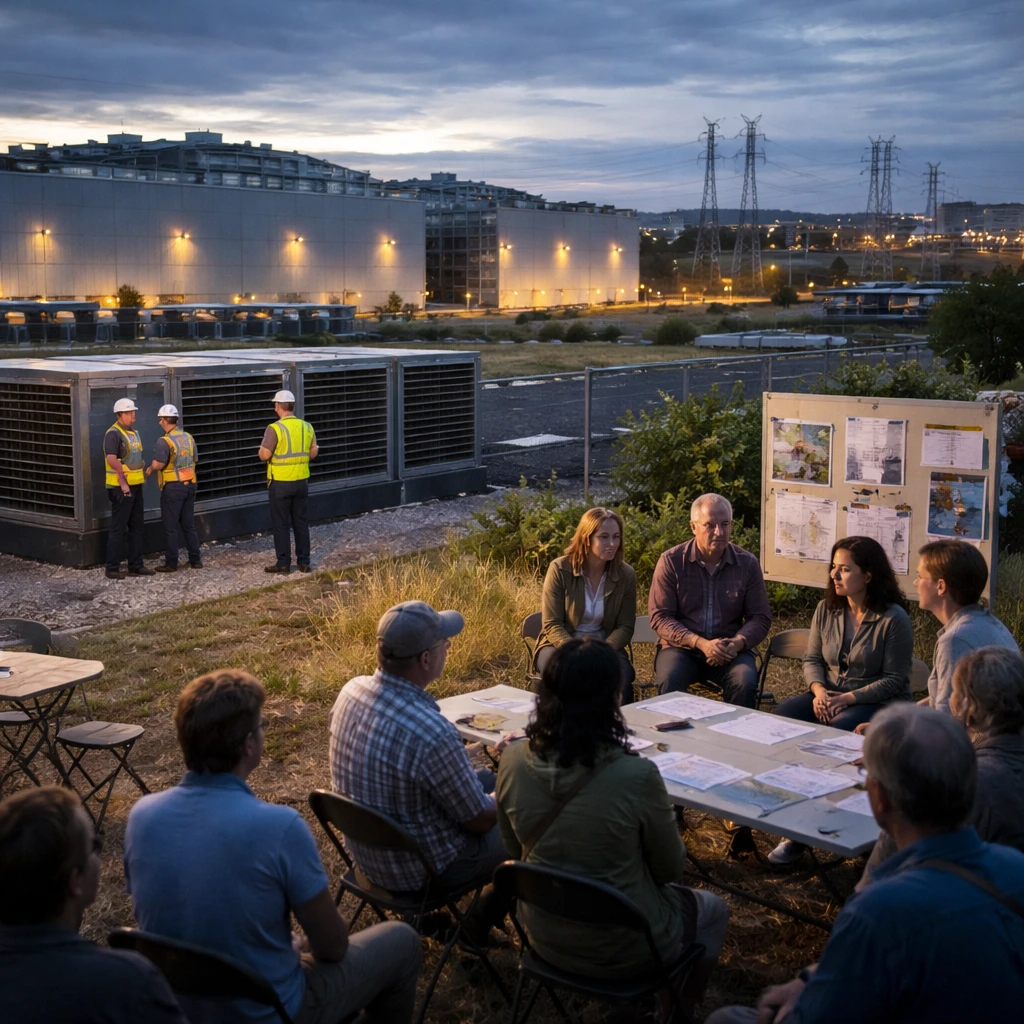
Blackstone is taking active steps to manage the social and environmental consequences of accelerating artificial intelligence development, CEO Stephen Schwarzman said on Thursday, a push that comes as opposition to new data center construction rises across the United States.
Private capital firms, including Blackstone, are directing tens of billions of dollars into companies and infrastructure intended to grow computing capacity and support energy-intensive AI models. Schwarzman said the firm is coordinating with portfolio companies - among them data center operators - to confront workforce, environmental and community issues tied to that expansion.
The CEO outlined a set of measures Blackstone is promoting through its holdings. These measures include creating union jobs and offering workforce training; deploying water-free cooling solutions to ease local resource pressures; increasing on-site or nearby power generation; and making targeted investments that benefit local economies.
Schwarzman acknowledged the unease such technological shifts can create, saying: "Major change of this type also creates anxiety due to the uncertainty of how the technology will evolve." He added that AI’s effects could trace a path similar to the industrial revolution, which ultimately raised living standards.
An example of the friction between development and communities surfaced earlier this month, when QTS - a data center operator purchased by Blackstone in 2021 for $10 billion - said it had ended a planned Virginia project after several years of planning. That project encountered strong local opposition and legal challenges even though county authorities had approved it.
The political and policy backdrop is also shaping the conversation. The Trump administration frames AI development as part of a competition with China while simultaneously seeking protections for households from potential increases in energy costs tied to the technology.
Schwarzman - a longtime Trump donor - said he has been in discussions with industry figures and policymakers to address these issues while preserving U.S. leadership in AI. He portrayed the work as an effort to reconcile national strategic priorities with local environmental and community concerns.
The steps Blackstone describes focus on aligning investment and operational practices with community and environmental expectations as the industry scales up computing infrastructure to support next-generation AI models.