
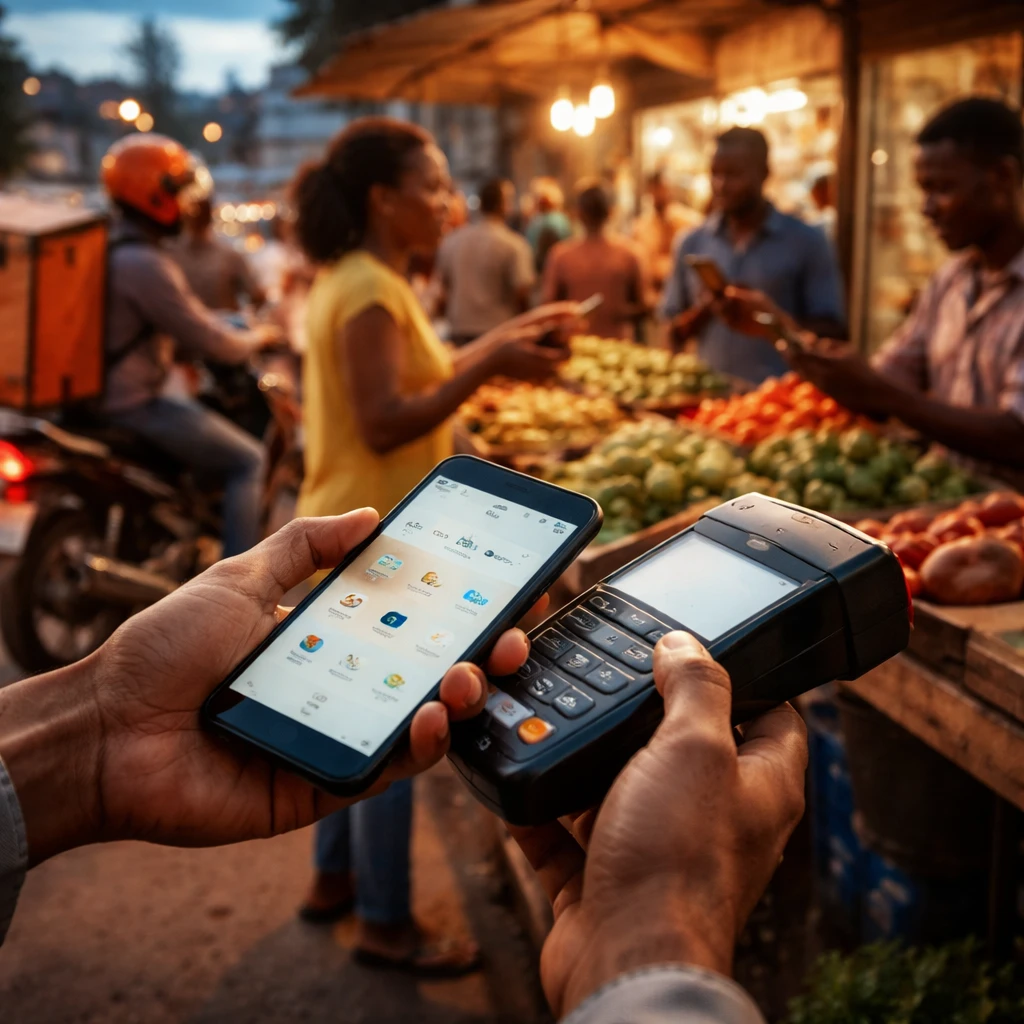
Barclays, Citi and J.P. Morgan this week initiated research coverage on Airtel Mobile Commerce with optimistic stances, assigning "buy" or "overweight" recommendations to the mobile payments business. Barclays projected revenue to grow by 24% per year from fiscal 2026 through fiscal 2029 and placed a 300 pence target on the shares.
Within Barclays forecasts, a downside scenario of 145 pence assumes revenue growth in fiscal 2028 and fiscal 2029 is 3 percentage points lower than the base case, while an upside case of 355 pence assumes growth that is 3 percentage points higher in those years.
Citi initiated coverage with a 280 pence target. J.P. Morgan set a 270 pence target for March 2028, applying a valuation multiple of 13 times fiscal 2029 earnings per share.
Airtel Mobile Commerce operates across 13 markets and reported substantial scale in the year to March 2026, processing $192 billion of transactions and generating $1.35 billion in revenue with an EBITDA margin of about 50%. The business recorded 51.4 million monthly active users, representing 41% of Airtel Africa's subscribers.
The shares began trading in London on Oct. 9 following a 100% secondary offering, with an initial allocation price of 196 pence. According to Citi, the stock fell roughly 12% to a low of 176 pence before recovering to 230 pence by the close on Nov. 16. Airtel Africa did not sell its stake and retained 77.85% ownership.
On Oct. 26 the company released fiscal second-quarter results showing revenue up 30% compared with the prior year, and up 25% on a constant-currency basis, according to J.P. Morgan. The group's EBITDA margin was 47.8%, down about 240 basis points from a year earlier, a decline J.P. Morgan attributed to renegotiated agreements with Airtel Africa.
Management has provided guidance for fiscal 2027 of constant-currency revenue growth in the mid-20s percent range, and an EBITDA margin roughly 2 percentage points lower than in fiscal 2026. This margin pressure is linked to revised commercial arrangements with Airtel Africa that will phase out retention revenue by March 2027.
The company has committed to returning at least 80% of attributable earnings as dividends. Citi estimated that the dividend yield for 2027 would be about 4.3% under that payout commitment. Barclays also models an 80% payout of net income and expects the business to maintain a net cash position on the balance sheet. Barclays noted the shares were trading at 16 times calendar 2027 earnings.
Citi highlighted a potential short-term catalyst in the form of a FTSE 100 index review. FTSE Russell confirmed UK classification for the company on Nov. 9. FTSE will announce changes on Dec. 2 using market data as of Dec. 1. The FTSE 100 inclusion threshold is a £4.4 billion market capitalization, and Airtel Mobile Commerce had a market value of £6.2 billion on Nov. 16.
Analysts also listed several risks to the investment case. Citi pointed to currency volatility across the 13 operating markets, competitive pressure from rivals such as MTN and M-Pesa, commercial ties to Airtel Africa and the regulatory environment. Barclays flagged the timing of fiscal third-quarter results, expected in January 2027, as an upcoming data point for investors.
This coverage launch frames Airtel Mobile Commerce as a fast-growing mobile-payments business with sizable transaction volume and a high-margin profile, while also identifying near-term margin transitions and market-level risks that could influence financial performance into fiscal 2027 and beyond.