
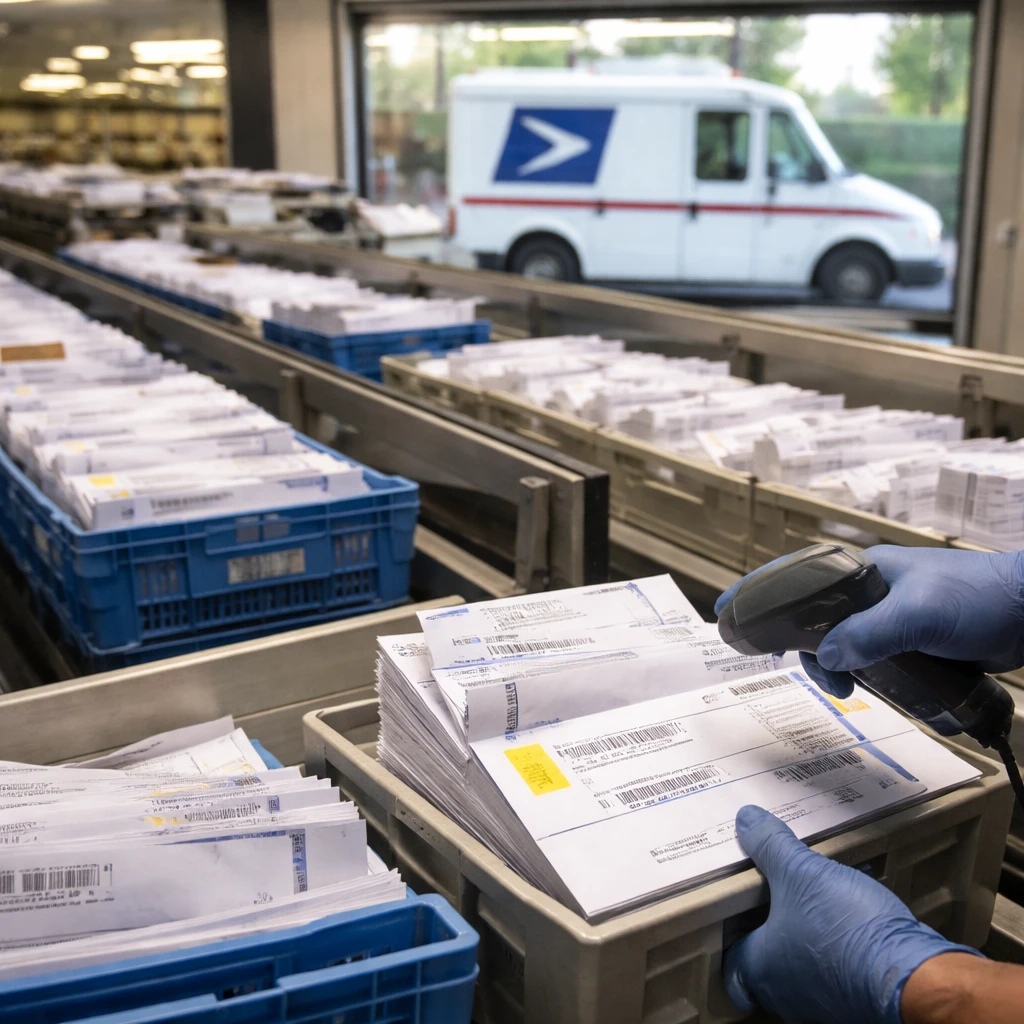
BOSTON, Aug 31 - The U.S. Department of Justice on Monday asked the 1st U.S. Circuit Court of Appeals in Boston to put on hold a federal judge's temporary restraining order that bars the U.S. Postal Service from enforcing a new rule tightening procedures for mail-in ballots ahead of the November congressional elections.
The appeal to the Boston-based appellate court came after U.S. District Judge Indira Talwani declined earlier on Monday to pause the restraining order she issued on Thursday at the request of Democratic-led states and voting rights organizations. Talwani's order will remain in force for 14 days while she weighs whether to convert it into a longer-term injunction at a hearing scheduled for Thursday.
In her original ruling, Talwani, an appointee of Democratic President Barack Obama, said the Postal Service's new rule posed a risk of disenfranchising voters and was likely unlawful because it was adopted in a manner that intruded on the states' constitutional authority to administer elections.
Justice Department attorneys urged the 1st Circuit to overturn or temporarily lift Talwani's decision, calling the judge's ruling "gravely mistaken." In their filing, DOJ lawyers said the lawsuit against the Postal Service rested on an unfounded premise that USPS intended to take control of federal election administration. They argued the rule represents "improvements and modernizations of USPS's infrastructure for supporting this particularly sensitive category of mail" and that those changes are consistent with the Postal Service's statutory and constitutional powers.
The Postal Service issued the rule to implement an executive order the Republican president signed in March. The administration's push followed long-standing calls from the president for stricter controls on voting by mail and his repeated assertions that the 2020 presidential election defeat he sustained was the result of widespread voter fraud - a claim the article describes as false.
Under the new USPS rule, states would be required to provide the Postal Service with lists of recipients of mail ballots, and every outbound and return ballot envelope would need to carry a unique barcode. The rule permits the Postal Service to refuse delivery of ballots that do not meet the prescribed standards or that are linked to voters who are not on the provided lists.
All 50 U.S. states allow some form of mail-in voting. Of those, 29 permit voters to request a mail ballot without stating a reason, and eight conduct their elections entirely by mail. North Carolina is scheduled to be the first state to send out ballots for the November election, with a mailing set to begin on Friday.
If the 1st Circuit declines to stay Talwani's order, the Justice Department could seek relief from the U.S. Supreme Court, where a 6-3 conservative majority sits. The Supreme Court last week lifted an earlier injunction that Talwani had issued which had blocked USPS from moving forward with the rule.
The case leaves the Postal Service's new mail-ballot standards in legal limbo as election officials and voting rights groups press competing legal arguments about authority, voter access, and the scope of USPS powers. The appellate court's response will determine whether the Postal Service may put the rule into effect while the lower court decides whether to enjoin it for a longer period.