
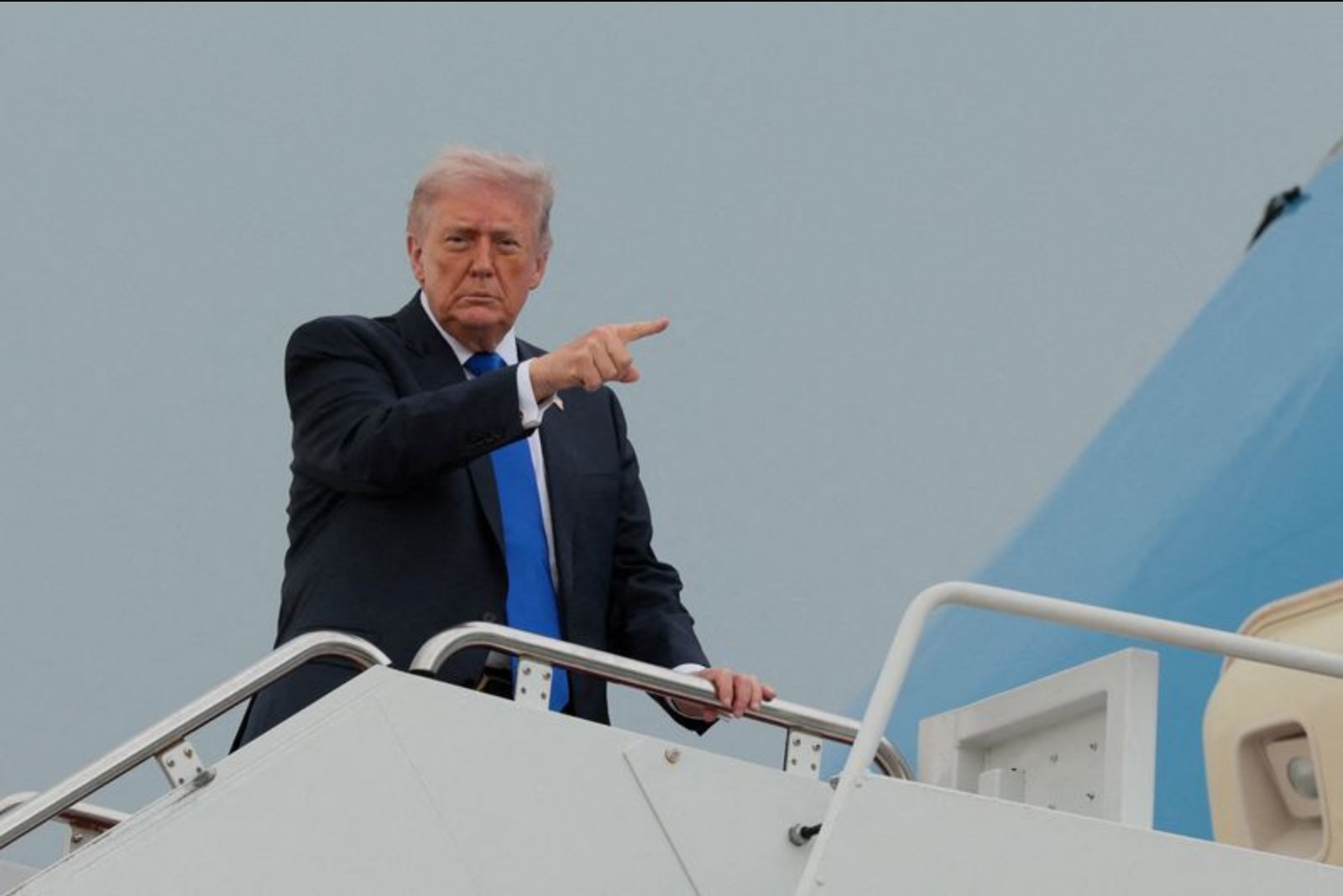
Sixteen months into his second term, Donald Trump remains deeply popular with his core Make America Great Again supporters even as his overall standing among the broader electorate appears weak. In a recent poll, his approval rating sat at 35% in a Reuters/Ipsos survey that closed on Monday, a figure tied to growing public concern over inflation and the cost of living amid a war in Iran that has pushed energy prices higher.
Over the last few weeks Trump has intensified a campaign to remove Republicans he views as insufficiently loyal, elevating hand-picked allies and turning several primaries into referendums on personal fealty. His string of intra-party victories has reinforced his grip on the Republican base. But some Republican strategists warn the purge may have the unintended consequence of making the party less competitive in November’s midterm elections.
Purges and primary upsets
Trump’s retribution drive began to produce clear results on May 5, when five Indiana state senators who opposed his directive to redraw the state’s congressional map were defeated by challengers backed by Trump. That was followed by the decisive loss of Republican U.S. Senator Bill Cassidy to a Trump-backed candidate, after Cassidy’s vote to convict Trump during his 2021 impeachment trial over the January 6 attack on the U.S. Capitol put him at odds with the former president.
On Tuesday, a Trump-endorsed loyalist defeated U.S. Representative Thomas Massie in a Kentucky nominating contest. Massie, a frequent critic of Trump whose votes had drawn the president’s ire, was among the incumbents swept aside as loyalty became a more dominant primary criterion.
At the same time, Trump intervened in the Texas U.S. Senate contest by endorsing Attorney General Ken Paxton over incumbent John Cornyn. Paxton’s candidacy has been controversial within the Senate Republican conference, and his nomination could force Republicans to devote substantial funds to defend a seat that otherwise would be considered reliably Republican in the general election.
Strategists see costs as well as benefits
Republican operatives and former advisers interviewed by sources in the campaign arena say Trump’s focus appears geared toward mobilizing his most committed supporters rather than expanding the party’s coalition to include independents and moderate Republicans who typically decide tight races.
"Anytime the party in power in the midterm elections faces headwinds, the president should be looking to grow his coalition," said Jeff Grappone, a former adviser to several Republican senators. Grappone warned that a strategy centered on purging dissenters risks narrowing the party’s appeal at the margins it will need to hold competitive seats.
Rob Godfrey, a Republican strategist in South Carolina, said that even if Paxton ultimately prevails in November, Republicans will likely have to allocate more campaign dollars to that race, drawing resources away from battleground contests in states like North Carolina and Georgia.
Chuck Coughlin, a Phoenix-based strategist who left the Republican Party in 2017 and now identifies as an independent, described the purge as a "purification exercise" that could alienate Republicans who supported figures such as Cornyn, Massie and Cassidy. "It’s addition by subtraction," Coughlin said. "He’s shrinking the party."
Trump dismissed such warnings, telling reporters on Wednesday that Republican leaders "will be alright with it," adding, "They want to win. I know how to win - I think I’ve proven that, haven’t I?"
Pressure on vulnerable incumbents
For Republicans holding vulnerable seats, Trump’s intolerance for disloyalty could create difficult political choices. The president’s approach may limit the leeway members of Congress traditionally receive from party leaders in the months before midterm elections, at a time when presidents often allow deviations from the party line to protect incumbents in swing districts.
Rachel Blum, a political science professor at the University of Oklahoma, noted that when the incumbent president is unpopular, members of the president’s party have historically been granted more latitude to distance themselves. "That’s exactly the conditions we have right now, but you aren’t seeing that kind of freedom or leeway being given to members," she said.
Those on the other side of the argument point out that Trump has largely targeted Republicans in very safe districts, such as Massie and Cassidy, while permitting some members in competitive districts to demonstrate bipartisanship or even break with him on certain issues. Trump is scheduled to campaign with Representative Mike Lawler of New York, whose district is widely seen as one of the Democratic Party’s best pickup opportunities in November. Lawler has at times sided with Democrats, including on legislation protecting Haitian immigrants from deportation.
Still, Trump has shown a readiness to criticize Republicans in more competitive races. He recently singled out Representative Brian Fitzpatrick of Pennsylvania, one of only three House Republicans to vote to end the Iran war and a target for Democrats in the midterms. "I don’t know what’s with him," the president told reporters. "He likes voting against Trump. You know what happens with that … doesn’t work out well."
Implications for governance and the midterms
Beyond electoral calculus, the purge carries potential consequences for governance in Washington. With Republicans holding narrow margins in Congress, losing even a handful of votes can imperil the majority’s ability to pass its agenda. The day after losing his primary, Sen. Cassidy reversed course and supported a Democratic measure to force the president to end the war or seek congressional authorization, a vote that helped push the measure through the Senate after seven previous failed attempts.
"Trump is certainly in command of his own party, but he’s complicated his governing position on Capitol Hill," Grappone said, noting that senators targeted by Trump may see little left to lose and therefore could be more willing to break with the president on key votes.
Arizona-based Republican strategist Brian Seitchik said the midterms will largely amount to a referendum on Trump’s record regardless of intra-party maneuvers, making it challenging for Republicans to distance themselves from him even if they wanted to. "As a general rule, the parties swim and drown together," he said.
Seitchik also observed that Trump continues to confound expectations. "It’s conventional wisdom to say if you’re not with Trump, then you lose the primary, and if you’re with Trump, you lose the general election," he said. "That’s the conventional wisdom of the day, but Trump again continues to defy gravity."
Bottom line
Trump’s recent campaign to purge the Republican Party of perceived apostates has reinforced his authority among devoted supporters and reshaped several primaries. However, party strategists warn that this emphasis on loyalty could shrink the GOP coalition, increase campaign expenditures in potentially competitive general-election contests, and complicate legislative navigation in a closely divided Congress. How these dynamics play out between now and November will be a central factor shaping the party’s electoral and governing prospects.