
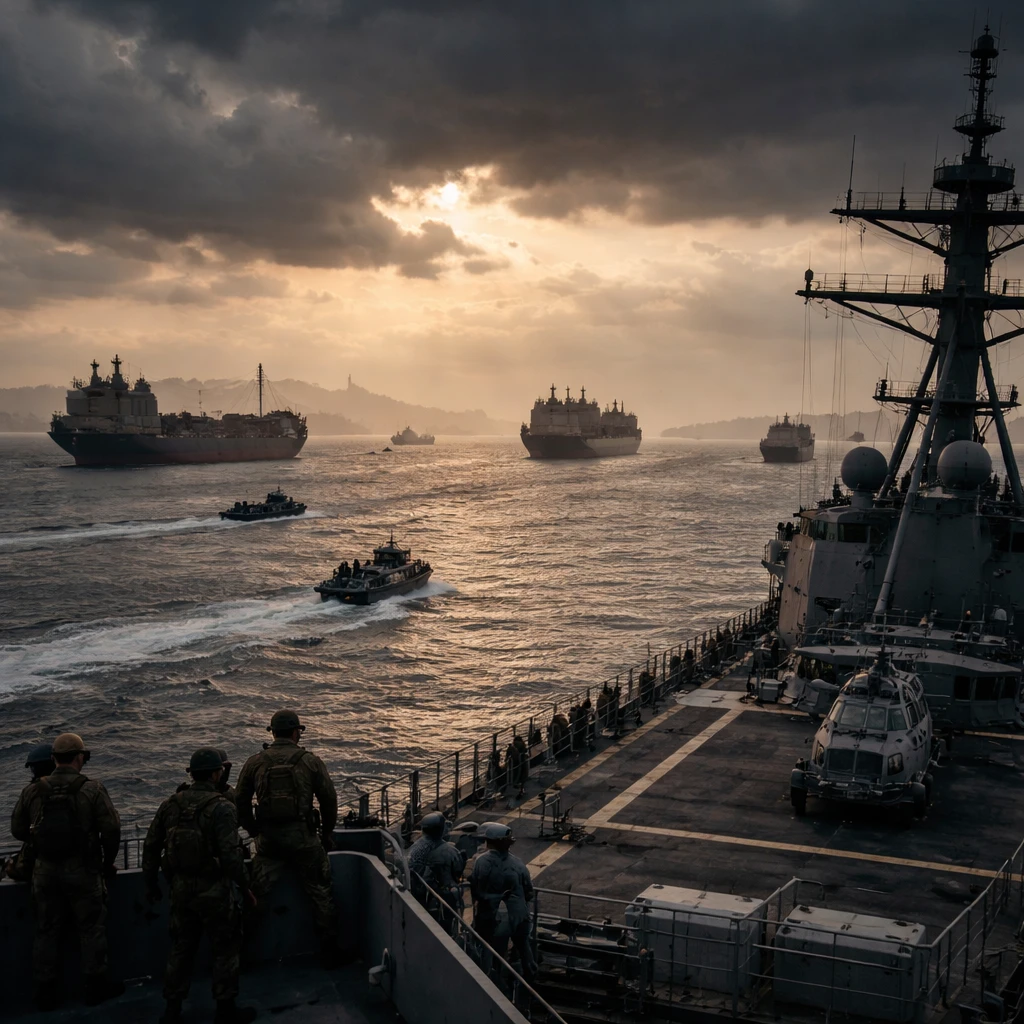
U.S. President Donald Trump said on Tuesday that the United States will pause an operation aimed at restoring commercial shipping through the Strait of Hormuz while negotiators attempt to finalize an agreement with Iran. He said the pause will be brief and framed it as a step to allow talks to conclude.
At the same time, the president made clear that the U.S. naval blockade against Iran will remain in effect. Trump said "great progress" had been made toward a "complete and final agreement" with Tehran, and that the operation known as Project Freedom "will be paused for a short period of time to see whether or not the Agreement can be finalized and signed."
The pause follows a surge in military activity after Project Freedom was launched earlier this week. According to reporting from the period, Tehran was observed attacking several vessels in the channel and also launched missiles at the United Arab Emirates. The initial deployment of Project Freedom drew a response from Iranian forces in the Strait of Hormuz.
Defense Secretary Pete Hegseth said earlier on Tuesday that Washington did not intend to re-escalate tensions with Tehran and described Project Freedom as a temporary measure. Hegseth also asserted that a ceasefire remained in place despite the renewed fighting in the Hormuz corridor.
The U.S. has said it destroyed several Iranian small boats during recent encounters, a claim that Iran has challenged, contesting both the number of vessels involved and their characterization.
Project Freedom was initiated by the president as an effort to restore commercial shipping through the Strait of Hormuz, a waterway Iran effectively blocked at the start of the war. In response to the initial escalation, the United States enacted a naval blockade aimed at applying economic pressure on Tehran to accept a negotiated settlement.
Iran's Foreign Minister, Abbas Araghchi, acknowledged some progress this week in talks brokered by Pakistan, while simultaneously warning the United States against renewed military clashes in Hormuz. The strait's closure has been a focal point of the conflict because it cut off roughly 20% of the world's oil supply, elevating the economic stakes of control over the shipping lane.
The president's announcement leaves Project Freedom on hold pending the outcome of the diplomatic process. The naval blockade remains, and senior U.S. officials continue to portray the pause as a temporary step to allow confirmation of any final agreement.