
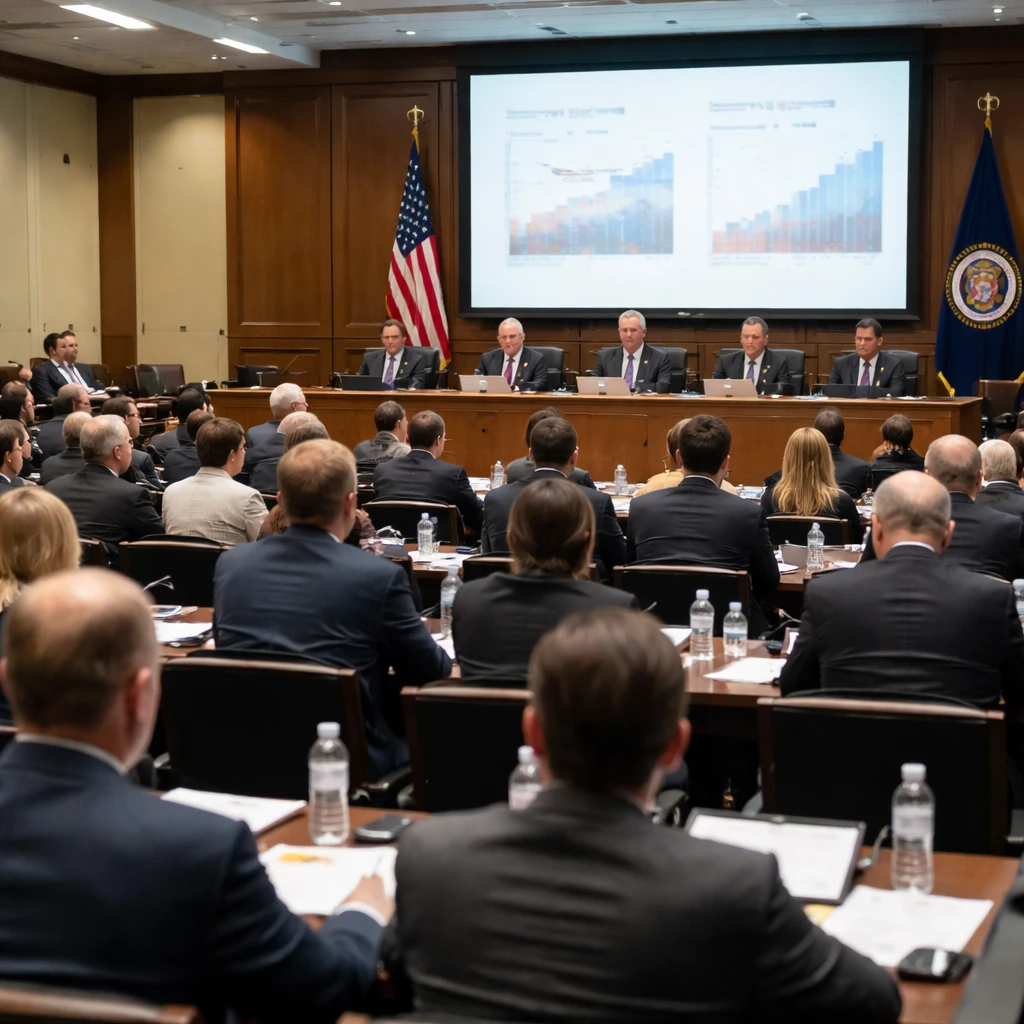
Washington - The U.S. Trade Representative began a four-day hearing on Tuesday to examine excess industrial capacity in 16 major trading partners, and domestic industry groups used the opening day to press for higher tariffs to counter rising exports from nations with excess factory capacity.
The Section 301 investigation covers a broad group of trading partners, including China, the European Union, Japan, South Korea, Mexico and Vietnam. Proponents of tougher measures argue higher import duties are needed to address competitive pressures from countries that have surplus production capabilities, while groups reliant on imports and agriculture associations urged a more cautious course to avoid unintended consequences for U.S. supply chains and farm exports.
Trade watchers widely expect the probe to lead to new duties. Administration officials are pursuing tools to restore tariff leverage they say was lost after the Supreme Court invalidated President Donald Trump's global tariffs that were applied under a national emergencies statute.
According to the USTR schedule, the agency and other government bodies will listen to testimony from nearly 150 representatives of companies, trade organizations, foreign governments and think tanks through Friday. The hearing follows a separate two-day testimony session last week on a different tariff inquiry that examined lax enforcement of anti-forced labor laws across about 60 countries.
Media accounts have cited a government official named Greer saying the probe will assess capacity utilization and profitability in countries running large and persistent trade surpluses with the United States. USTR's official notice singled out the automotive sector in China and Japan, noting that a growing number of companies in those countries were unprofitable or struggled to meet interest payments.
In prepared testimony, the Center for a New American Security recommended a focus on China, arguing that China’s expanding structural excess capacity and ambitions to dominate sectors such as legacy semiconductors pose a strategic challenge for the United States.
The coming days will bring a wide range of perspectives to the record as the USTR compiles evidence and recommendations. Industry supporters of tougher measures and groups warning of ripple effects alike will be on hand to make their cases before agency officials weigh potential policy responses.