
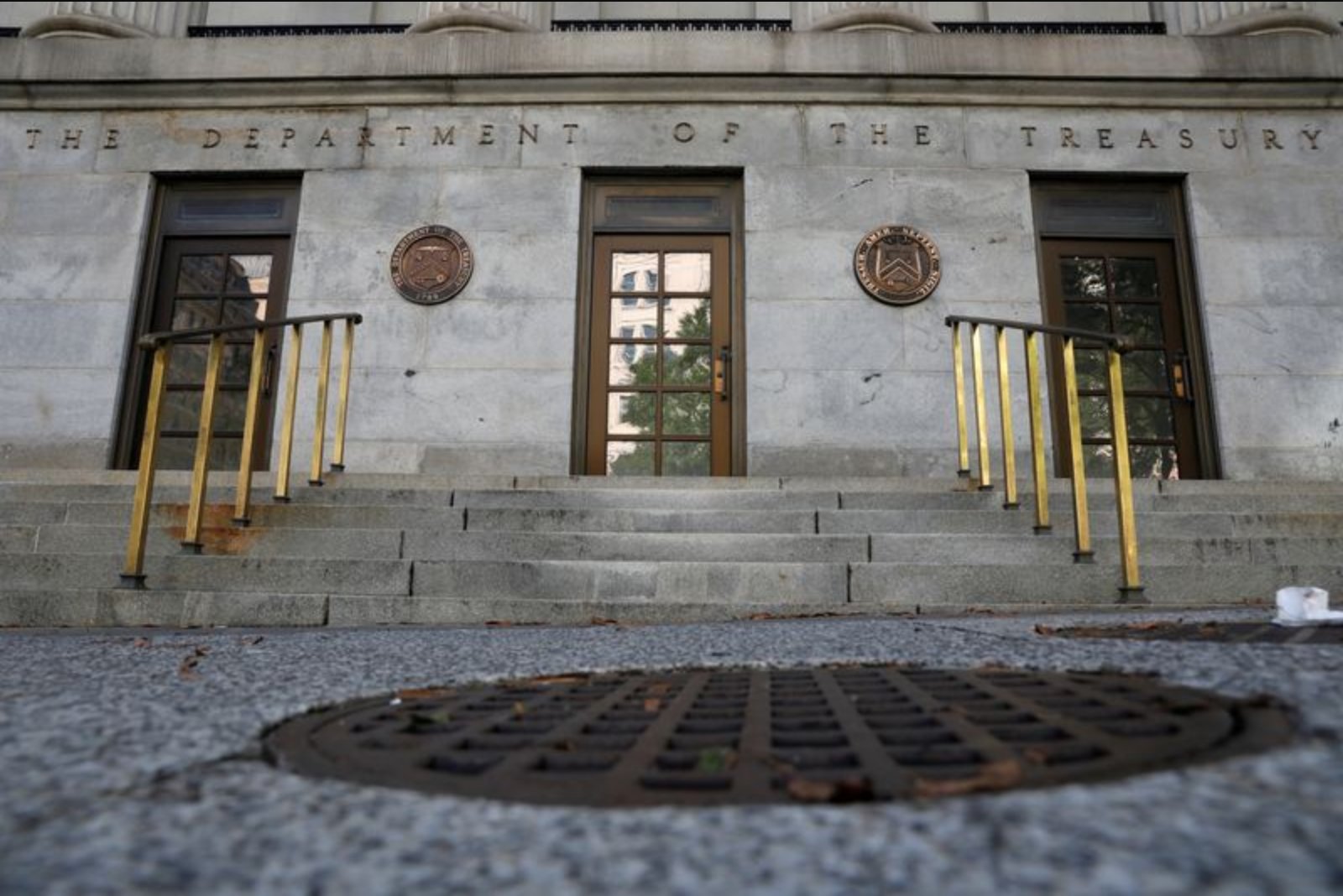
The U.S. government recorded a $215 billion budget surplus for April, the Treasury Department said on Tuesday, marking a $43 billion - or 17% - decline from the $258 billion surplus posted in the same month last year. April budget returns typically register surpluses because of the mid-month deadline for filing individual tax returns, but this year the size of the surplus was reduced by larger refund payments and rising spending.
Individual tax refunds in April totaled $101 billion, an increase of $14 billion, or 17%, from April 2025. The Treasury attributed the jump in refunds to several newly enacted tax provisions, including breaks related to tips, Social Security retirement payments, overtime premium pay, and interest on domestic car loans.
Corporate tax activity also softened. Corporate receipts for April fell by $8 billion, or 8%, from a year earlier, landing at $89 billion. At the same time, corporate refunds roughly doubled to $6 billion. Overall, the increase in refund payments accounted for more than the $13 billion decline in total receipts for April; total month receipts were $837 billion, down 2% from the same month last year.
On the spending side, outlays in April rose $31 billion, or 5%, to $622 billion. The Treasury cited higher interest costs and military spending related to the war in Iran as contributing factors to the rise in outlays.
Net customs receipts were $22.1 billion in April, essentially unchanged from March 2026 and lower than monthly peaks in the low $30 billion range recorded late last year. Nevertheless, April's customs take was above the $15.6 billion reported in April 2025, which was the first month of the emergency global tariffs labeled "Liberation Day" that were later annulled by the U.S. Supreme Court.
The customs figures for April include $2 billion in refunds. The Treasury said that number is expected to grow in May as court-ordered refund payments from U.S. Customs and Border Protection began to flow on Tuesday. The department noted that about $166 billion in tariff payments remain subject to potential refunds.
Looking at the fiscal year-to-date, the Treasury reported that the deficit for the first seven months of fiscal 2026 - the period ending September 30 - declined by $95 billion, or 9%, from the year-earlier period, to $954 billion. Year-to-date receipts were up $210 billion, or 7%, to $3.320 trillion, while outlays were higher by $114 billion, or 3%, totaling $4.274 trillion.
These figures highlight the interaction between timing of tax collections in April and evolving spending pressures across the budget. While April still produced a large surplus, increases in refunds and higher federal outlays narrowed the gap compared with the prior year.